View Article

Abstract

Dusting powders are topical solid dosage forms used to provide protective, soothing, and therapeutic effects on the skin. They are widely employed in dermatological practice due to their moisture-absorbing and friction-reducing properties. The present study aimed to formulate and evaluate a medicated dusting powder containing calamine and salicylic acid for the management of mild dermatological conditions. Calamine acts as a soothing and mild astringent agent, while salicylic acid exhibits keratolytic and antimicrobial properties. The formulation was prepared by the sifting and geometric dilution method to ensure uniform drug distribution. The prepared powder was evaluated for its physicochemical and pharmaceutical properties in accordance with pharmacopeial standards. The results indicated satisfactory flow properties and stability. The developed formulation was found safe and suitable for topical therapeutic application.

Keywords

Calamine, Salicylic acid, Dusting powder, Topical formulation, Flow properties

Introduction

× Popup Image

Topical dusting powders are finely divided solid preparations intended for external application to reduce friction, absorb moisture, and deliver medicaments locally [1,10]. These preparations are particularly useful in dermatological therapy due to prolonged skin contact and improved patient compliance [2,12]. Calamine, primarily composed of zinc oxide with a small amount of ferric oxide, exhibits soothing, protective, and antipruritic effects [3,8]. Zinc oxide acts as a mild astringent and skin protectant, reducing irritation and inflammation [16]. Salicylic acid is a beta-hydroxy acid widely used for its keratolytic, comedolytic, and antimicrobial properties [4,14]. It enhances desquamation of the stratum corneum and is effective in acne and superficial fungal infections [15]. Powder formulations require appropriate excipients to ensure stability, flowability, and uniform distribution of active ingredients [11,13]. Talc and starch function as absorbent bases, while magnesium stearate improves flow properties [13,20]. Evaluation of flow properties such as bulk density, tapped density, Carr’s index, Hausner’s ratio, and angle of repose is essential to determine powder performance [6,18,19]. The present study focuses on formulation development and systematic evaluation of calamine and salicylic acid medicated dusting powder according to pharmacopeial guidelines [3,5,9].

Types: There are 2 types of dusting powder:

1) Medical Dusting Powders:

Medical powders are intended for minor and superficial skin problems. They must be free from harmful microorganisms. Since some mineral components can carry spores responsible for infections such as tetanus or gas gangrene, proper sterilization is necessary. These powders should not be applied to open wounds or damaged skin, and this warning is clearly stated on the label.

2) Surgical Dusting Powders:

Surgical dusting powders are sterile preparations used in body cavities, deep or major wounds, burns, and on the umbilical cords of newborn babies. They are manufactured under strict sterile conditions to ensure patient safety. [21]

2. MATERIALS AND METHODS

2.1 MATERIALS

All ingredients used were of pharmaceutical grade and complied with pharmacopeial specifications [3,9]

2.2. Formulation composition

Ingredient

Quantity (% w/w)

Function

Calamine

10%

Soothing and protective agent

Salicylic acid

2%

Keratolytic agent

Zinc oxide

5%

Protective agent

Starch

10%

Diluent and absorbent base

Magnesium stearate

1%

Absorbent

Talc

q.s to 100%

Lubricant and flow enhancer

2.3. Method of Preparation

The dusting powder was prepared by sifting and geometric dilution method as described in standard pharmaceutics textbooks [1,17].

  1. All ingredients were accurately weighed.
  2. Salicylic acid was triturated to obtain fine particles.
  3. Calamine, zinc oxide, and starch were passed through sieve No. 80.
  4. The active ingredients were blended using geometric dilution technique to ensure uniform distribution [1].
  5. Talc was gradually incorporated and mixed thoroughly.
  6. Magnesium stearate was added to enhance flow properties [13].
  7. Final mixture was passed through sieve No. 100 and packed in airtight containers.

3. Evaluation Parameters

Evaluation was performed according to standard pharmacopeial and industrial pharmacy guidelines [5,6,18].

3.1 Organoleptic Properties

Color, odour, texture, and appearance were visually inspected.

3.2 Particle Size Analysis

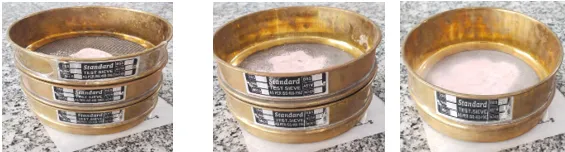
Sieve analysis was performed to ensure uniform particle distribution and better spreadability [6].

3.3 Flow Properties

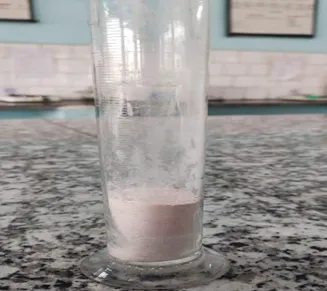
Bulk density (BD) and tapped density (TD) ,Carr’s index, Hausner’s ratio and angle repose were determined. [6,18].

Carr’s Index= TD-BD/TD×100

Hausner’s Ratio= TD/BD

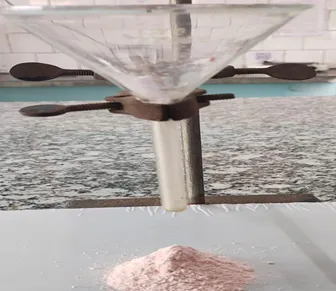
tanƟ= h/r

Angle of repose was measured using the fixed funnel method [19].

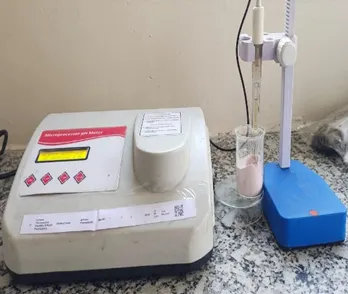
3.4 pH Determination

The pH was measured using a digital pH meter to ensure compatibility with skin (physiological pH 5.5–7) [8].

3.5 Moisture Content

Determined by loss on drying method at 105°C as per pharmacopeial standards [5].

3.6 Skin Irritation Test

Patch test was conducted according to OECD guidelines to evaluate safety [7].

RESULTS AND DISCUSSION

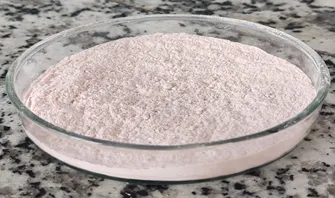
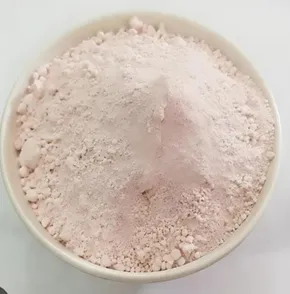
4.1 Organoleptic properties

Parameter

Observation

Colour

Light pink

Odor

Odourless

Texture

Smooth

Appearance

Fine and free flowing

Fig.1 Organoleptic Properties

4.2 Particle size distribution

Sieve No

% Retained

60

5

80

20

100

75

Fig. 2 Particle size distribution

4.3 Flow properties

Parameter

Result

Bulk Density

0.48g/cm3

Tapped Density

0.56 g/cm3

Carr’s index

14.28%

Hausner’s Ratio

1.16

Angle of repose

27.5

Fig.3 Bulk &Tapped density

Fig.4 Angle of Repose

4.4 pH and moisture content                           

Parameter

Result

pH

6.2

Moisture content

1.8%

Fig.5 Determination of pH

Fig.6 Moisture content

4.5 Skin Irritation Test

No erythema, edema, or irritation observed within 24 hours, indicating safety
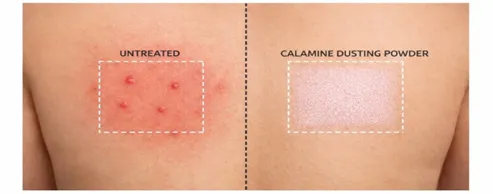
Fig.7 Skin Irritation Test

DISCUSSION

The prepared dusting powder was light pink, smooth, and free flowing. Fine particle size ensures better adhesion and therapeutic efficacy [12]. Flow property parameters indicated good powder performance with Carr’s index below 15% and angle of repose less than 30°, suggesting excellent flow characteristics [6,18]. The pH (6.2) was within acceptable range for topical use, ensuring skin compatibility [8]. Moisture content was minimal, contributing to formulation stability [5]. No signs of irritation were observed, confirming safety of the formulation [7]. The combined action of calamine and salicylic acid provides both soothing and keratolytic effects, making the formulation suitable for minor dermatological conditions [4,14,16].

CONCLUSION

The calamine and salicylic acid medicated dusting powder was successfully formulated and evaluated as per pharmacopeial and industrial standards [3,6]. The formulation demonstrated satisfactory physicochemical properties, good flow characteristics, and absence of irritation. It can be considered safe and effective for topical therapeutic application.

REFERENCES

  1. Aulton ME, Taylor KMG. Aulton’s Pharmaceutics: The Design and Manufacture of Medicines. 5th ed. Elsevier; 2018.
  2. Allen LV, Popovich NG, Ansel HC. Ansel’s Pharmaceutical Dosage Forms and Drug Delivery Systems. 10th ed. Lippincott Williams & Wilkins; 2014.
  3. Indian Pharmacopoeia Commission. Indian Pharmacopoeia. Ghaziabad: IPC; 2022.
  4. Brunton LL, Hilal-Dandan R, Knollmann BC. Goodman & Gilman’s The Pharmacological Basis of Therapeutics. 13th ed. McGraw Hill; 2018.
  5. United States Pharmacopeia 43–NF 38. Rockville, MD: USP Convention; 2020.
  6. Lachman L, Lieberman HA, Kanig JL. The Theory and Practice of Industrial Pharmacy. 3rd ed. Lea & Febiger; 1987.
  7. OECD. Guidelines for the Testing of Chemicals: Skin Irritation/Corrosion. Paris: OECD Publishing; 2015.
  8. Bolognia JL, Schaffer JV, Cerroni L. Dermatology. 4th ed. Elsevier; 2018.
  9. British Pharmacopoeia Commission. British Pharmacopoeia. London: The Stationery Office; 2023.
  10. Remington JP. Remington: The Science and Practice of Pharmacy. 23rd ed. Pharmaceutical Press; 2020.
  11. Swarbrick J. Encyclopedia of Pharmaceutical Technology. 4th ed. Informa Healthcare; 2013.
  12. Liberman HA, Lachman L, Schwartz JB. Pharmaceutical Dosage Forms: Disperse Systems. Marcel Dekker; 1989.
  13. Rowe RC, Sheskey PJ, Quinn ME. Handbook of Pharmaceutical Excipients. 7th ed. Pharmaceutical Press; 2012.
  14. Kligman AM, Mills OH. Salicylic acid as a peeling agent: A comprehensive review. Cutis. 1997;60(3):145-148.
  15. Gupta AK, Nicol K. The use of salicylic acid in dermatology. J Eur Acad Dermatol Venereol. 2004;18(5):512-518.
  16. Tripathi KD. Essentials of Medical Pharmacology. 8th ed. Jaypee Brothers; 2019.
  17. Banker GS, Rhodes CT. Modern Pharmaceutics. 4th ed. Marcel Dekker; 2002.
  18. Sinko PJ. Martin’s Physical Pharmacy and Pharmaceutical Sciences. 6th ed. Lippincott Williams & Wilkins; 2011.
  19. Allen LV. Pharmaceutical calculations and powder flow properties. Int J Pharm Compd. 2016;20(3):210-216.
  20. Sharma PP. Cosmetics: Formulation, Manufacturing and Quality Control. 5th ed. Vandana Publications; 2014.
  21. Pharmaceutics I, R.M. Mehta (2015) vallabh prakashan 6th edition pg no 3-4.

Reference

  1. Aulton ME, Taylor KMG. Aulton’s Pharmaceutics: The Design and Manufacture of Medicines. 5th ed. Elsevier; 2018.
  2. Allen LV, Popovich NG, Ansel HC. Ansel’s Pharmaceutical Dosage Forms and Drug Delivery Systems. 10th ed. Lippincott Williams & Wilkins; 2014.
  3. Indian Pharmacopoeia Commission. Indian Pharmacopoeia. Ghaziabad: IPC; 2022.
  4. Brunton LL, Hilal-Dandan R, Knollmann BC. Goodman & Gilman’s The Pharmacological Basis of Therapeutics. 13th ed. McGraw Hill; 2018.
  5. United States Pharmacopeia 43–NF 38. Rockville, MD: USP Convention; 2020.
  6. Lachman L, Lieberman HA, Kanig JL. The Theory and Practice of Industrial Pharmacy. 3rd ed. Lea & Febiger; 1987.
  7. OECD. Guidelines for the Testing of Chemicals: Skin Irritation/Corrosion. Paris: OECD Publishing; 2015.
  8. Bolognia JL, Schaffer JV, Cerroni L. Dermatology. 4th ed. Elsevier; 2018.
  9. British Pharmacopoeia Commission. British Pharmacopoeia. London: The Stationery Office; 2023.
  10. Remington JP. Remington: The Science and Practice of Pharmacy. 23rd ed. Pharmaceutical Press; 2020.
  11. Swarbrick J. Encyclopedia of Pharmaceutical Technology. 4th ed. Informa Healthcare; 2013.
  12. Liberman HA, Lachman L, Schwartz JB. Pharmaceutical Dosage Forms: Disperse Systems. Marcel Dekker; 1989.
  13. Rowe RC, Sheskey PJ, Quinn ME. Handbook of Pharmaceutical Excipients. 7th ed. Pharmaceutical Press; 2012.
  14. Kligman AM, Mills OH. Salicylic acid as a peeling agent: A comprehensive review. Cutis. 1997;60(3):145-148.
  15. Gupta AK, Nicol K. The use of salicylic acid in dermatology. J Eur Acad Dermatol Venereol. 2004;18(5):512-518.
  16. Tripathi KD. Essentials of Medical Pharmacology. 8th ed. Jaypee Brothers; 2019.
  17. Banker GS, Rhodes CT. Modern Pharmaceutics. 4th ed. Marcel Dekker; 2002.
  18. Sinko PJ. Martin’s Physical Pharmacy and Pharmaceutical Sciences. 6th ed. Lippincott Williams & Wilkins; 2011.
  19. Allen LV. Pharmaceutical calculations and powder flow properties. Int J Pharm Compd. 2016;20(3):210-216.
  20. Sharma PP. Cosmetics: Formulation, Manufacturing and Quality Control. 5th ed. Vandana Publications; 2014.
  21. Pharmaceutics I, R.M. Mehta (2015) vallabh prakashan 6th edition pg no 3-4.

Photo
Kirti Charde
Corresponding author

Assistant Professor, Adarsh Institute of Pharmacy, Nagpur, Maharashtra, India-440024

Photo
Kajal Bondre
Co-author

Assistant Professor, Adarsh Institute of Pharmacy, Nagpur, Maharashtra, India-440024

Photo
Minal Raut
Co-author

Assistant Professor, Adarsh Institute of Pharmacy, Nagpur, Maharashtra, India-440024

Photo
Rushika Jaiswal
Co-author

Assistant Professor, Adarsh Institute of Pharmacy, Nagpur, Maharashtra, India-440024

Kirti Charde*, Kajal Bondre, Minal Raut, Rushika Jaiswal, Formulation and Evaluation of Calamine and Salicylic Acid Medicated Dusting Powder, Int. J. Med. Pharm. Sci., 2026, 2 (7), 102-106. https://doi.org/10.5281/zenodo.21110365

More related articles
Formulation and Evaluation of Poly Herbal Anti-GER...
Soumallya Chakraborty, Soumyadip Maji, Sonia Samanta, Somenath Bh...
Review on Corosolic Acid: Based on its Pharmacolog...
Kanchan Chouksey, Shristi Gupta, Poonam Sharma, Himani Hirvey, As...
Development of a Polymeric Transdermal Patch Conta...
Tanveer Aalam, Subhranshu Panda, Sanjay Dhaker, Dinesh Upadhyay, ...
Uricase Enzyme: A Link Between Uric Acid Reduction and Cardiovascular Health...
Nisaruddin Ansaruddin, Umesh Bansod, Suraj Yadav, Nitin Kohale, Harigopal Sawarkar, Garima Nasre, Di...
Method Development and Validation of Curcumin, Piperine and Boswellic Acid in Po...
Deepa Mokle, Vinod Thakre, Vaibhav Uplanchiwar, Sachin Hiradeve, Pravin Suruse, Namrata Mane, Lalcha...
Related Articles
Comprehensive Review on Fast Melting Mouth Dissolving Chocolate Strip...
Ravindra Hanwate, Roshan Rathod, R. M. Kawade, Punam Payghon, N. S. Khairnar...
Formulation and Evaluation of Herbal Medicated Jelly for Mouth Ulcer...
Darshan Paraskar, Dr. Swati Deshmukh, Aditi Tikait...
Beyond Proton Pump Inhibitors: Tegoprazan and the Emergence of Potassium-Competi...
Grace N. Raju, Shaiju S. Dharan, Pavithra Biju Bijumon, Angitha Binu ...
Phytochemical Approaches in Topical Treatment of Acanthosis Nigricans...
Madhuri Patil, Vishwajit Shinde, Vedantika Shinde, Shivani Yevale, Dhanshree Thavare...
Formulation and Evaluation of Poly Herbal Anti-GERD Powder...
Soumallya Chakraborty, Soumyadip Maji, Sonia Samanta, Somenath Bhattacharya, Koushik Jana, Amit Mait...
More related articles
Formulation and Evaluation of Poly Herbal Anti-GERD Powder...
Soumallya Chakraborty, Soumyadip Maji, Sonia Samanta, Somenath Bhattacharya, Koushik Jana, Amit Mait...
Review on Corosolic Acid: Based on its Pharmacological Potential, Limitations an...
Kanchan Chouksey, Shristi Gupta, Poonam Sharma, Himani Hirvey, Ashwini Patil...
Development of a Polymeric Transdermal Patch Containing Fulvic Acid: Formulation...
Tanveer Aalam, Subhranshu Panda, Sanjay Dhaker, Dinesh Upadhyay, Ankita Raikwar...
Formulation and Evaluation of Poly Herbal Anti-GERD Powder...
Soumallya Chakraborty, Soumyadip Maji, Sonia Samanta, Somenath Bhattacharya, Koushik Jana, Amit Mait...
Review on Corosolic Acid: Based on its Pharmacological Potential, Limitations an...
Kanchan Chouksey, Shristi Gupta, Poonam Sharma, Himani Hirvey, Ashwini Patil...
Development of a Polymeric Transdermal Patch Containing Fulvic Acid: Formulation...
Tanveer Aalam, Subhranshu Panda, Sanjay Dhaker, Dinesh Upadhyay, Ankita Raikwar...