View Article

Abstract

A pentacyclic triterpenoid called corosolic acid (CA) is derived from plants like Lagerstroemia speciosa. It has been reported to shown anti-diabetic, anti-inflammatoryanti-, anticancer, antitumor effects. The individual pharmacological activity of its structural analogues, ursolic acid (UA), oleanolic acid (OA), maslinic acid (MA), asiatic acid (AA), and betulinic acid (BA), are comparable to those of CA. Nevertheless, the pharmacological actions of CA and its structural analogues have not been documented in a systematic review. Pentacyclic triterpenoids do not dissolve well in water due to their rigid scaffold and hydrophobic properties, which is a key factor limiting their application as therapeutic drugs. It has low water solubility resulting poor absorption after oral ad- ministration. Many studies were reported to have modified the structure of CA and its structural analogs, such as the introduction of water-soluble sugar group, amino group and other structures and designed formulations to improve its solubility and bioavailability, novel drug delivery system is the way by which we can improve the oral absorption of drug. This review article focusses on a variety of Corosolic acid's biological effects, limits and functionality improvement directing from published articles. It can be helpful in understanding these effects, which can be applied to maintenance and treatment of various illnesses.

Keywords

Banaba, Corosolic acid, lagerstroemia specicosa, antidiabetic.

Introduction

× Popup Image

Corosolic acid (CA) is a pentacyclic triterpenoid that is derived from plants like Lagerstroemia speciosa. Its anti-inflammatory, anti-tumor, and anti-diabetic properties have been demonstrated. The individual pharmacological actions of CA are comparable to those of its structural analogues, ursolic acid (UA), oleanolic acid (OA), maslinic acid (MA), asiatic acid (AA), and betulinic acid (BA). The structural analogues of CA have four anti-inflammatory and anticancer actions in addition to their general hypoglycemic effect. For instance, MA was utilised for colon cancer and arthritis, whereas UA was used for encephalitis and breast cancer, among other conditions. Blood sugar levels are lowered by the structural analogues of CA. When compared to other pentacyclic triterpenic acids, corosolic acid has shown a greater potential anti-diabetic impact1. Corosolic acid may function through one of two potential pathways. First, it might increase the sensitivity of the insulin receptor on every cell in the body. For blood glucose to reach the body, insulin must attach to this receptor cells. Increased insulin levels can harm the brain, eyes, nerves, and any other area of the body that is susceptible to insulin damage if it fails to connect to the receptor. It is known as insulin resistance, and it may play a significant role in the development of metabolic syndrome. By blocking a protein in the body called tyrosine phosphates, which lowers insulin receptor site activity, corosolic acid increases the sensitivity of the insulin receptor. Corosolic acid's capacity to create a completely new channel for insulin to enter cells is its second mode of action. This is known as the GLUT4 glucose transporter, and it has a positive impact on blood glucose regulation by facilitating the absorption of glucose into the body's muscles. In addition to these methods, research indicates that corosolic acid can prevent our body from producing glucose through a process known as gluconeogenesis The body's blood glucose levels may be significantly lowered as a result2. Pentacyclic triterpenoids do not dissolve well in water due to their inflexible structure and hydrophobic qualities, which is a fundamental factor restricting their applicability as medicinal medicines. After oral administration, it is poorly absorbed due to its low water solubility. Numerous research have reportedly altered the structure of CA and its structural analogues, including the addition of amino groups, water-soluble sugar groups, and other structures, and created formulations to increase their solubility and bioavailability. We can increase the oral absorption of medication by using a novel drug delivery system such as liposomes and nanoemulsions3. This review offers a summary of therapeutic corosolic acid's biological effects and limits. By highlighting corosolic acid's potential as a useful bioactive chemical and directing future research into its applications in food and medicine, it seeks to add to the expanding body of knowledge on the substance.

Pharmacological effects of corosolic acid

Numerous biological characteristics of corosolic acid have been documented, such as antidiabetic, anti-inflammatory, antiproliferative, and protein kinase C inhibitory activity. Numerous plant species contain it, most notably Lagerstroemia speciosa, sometimes known locally as banaba4,5.
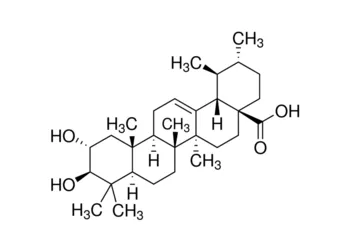
Figure 1: Structure of corosolic acid

Anti-Diabetic activity

The most widely published research on corosolic acid's ability to reduce blood sugar levels in both humans and animals. Corosolic acid has the potential to alleviate insulin resistance. Tyrosine phosphorylation regulates insulin's activity, which is started when insulin binds to the insulin receptor. By blocking specific nonreceptor protein tyrosine phosphatases, corosolic acid may function as an insulin sensitiser by indirectly increasing insulin receptor B phosphorylation. Additionally, the GLUT4 glucose transporter pathway of glucose uptake into muscle cells may be stimulated by corosolic acid6,7,8,9. According to a different study, corosolic acid increased the synthesis of the gluconeogenic intermediary fructose-2,6-bisphosphate in isolated hepatocytes, hence inhibiting gluconeogenesis. Corosolic acid may also enhance glycolysis. Alpha-glucosidase is inhibited by triterpene acids, such as corosolic acid, which was extracted from the leaves of Lagerstroemia speciosa10,11,12.

Anti-Cancer activity

Corosolic acid is hazardous to cell activity against a number of human cancer cell lines. The regulation may be connected with suppression of protein kinase C activity14. Furthermore, cytotoxic activity has been documented against various human cell lines, including Hep-G2 (hepatic cancer), MCF-7 (breast carcinoma), and HL-60 (leukaemia carcinoma)15. By promoting the N-terminal phosphorylation and subsequent proteasomal degradation of β-catenin16. Corosolic acid acts as an antineoplastic agent against colorectal cancer cells. Corosolic acid, which was also extracted from Crataegus pinnatifida fruit, was thought to be both a cytotoxic agent and a protein kinase C inhibitor14. Corosolic acid was able to inhibit the cell-cell interaction with tumorigenic macrophages and reverse the chemoresistance of epithelial ovarian cancer cells. It is recommended that because of its numerous anticancer effects17. Corosolic acid may be helpful as an adjuvant treatment for individuals with advanced ovarian and other cancers. Corosolic acid directly interacts with the ATP binding pocket of hepatocellular carcinoma cells to inhibit VEGFR2 kinase activity. Corosolic acid controls the reduction of VEGFR2/Src/FAK/cdc42 axis, subsequently decreasing F-actin synthesis and migratory activity in vitro18.

Anti-Inflammatory activity

An essential part of the immune system's defence against inflammation and infection is complement. The host can effectively defend itself against the activities of invasive antigens by activating the complement system19. Several ursane-type tritermpenoids from containing corosolic acid display anti-complementary activity20. Corosolic acid also inhibits oxidative stress, inflammation and excessive blood pressure in SHR/NDmcr-cp rats21.

Anti-Obesity activity

There is in vitro research result for corosolic acid hindering protein tyrosine phosphatase 1B; suppression of this phosphatase is indicated as for an obesity treatment22. Additionally, corosolic acid is a pancreatic lipase inhibitor, which is a necessary enzyme for the digestion of fats23. According to an animal study, corosolic acid increased fatty acid beta-oxidation in the liver and modulated the process of lipid metabolism by acting as a peroxisome proliferator-activated receptor alpha agonist24.

Activity on HIV

By blocking HIV-1 protease and reverse transcriptase activity, ellagic acid and gallic acid from Lagerstroemia speciosa prevent HIV-1 infection. This study's objectives were to evaluate the anti-HIV properties of banaba leaf extracts and to further purify and characterize the active ingredients. The active elements for anti-HIV activity were gallic acid and ellagic acid, through inhibition of reverse transcriptase and HIV protease, respectively and so might be regarded as favourable candidates for the improvement of anti-HIV-1 materials25.

Activity on Metabolic syndrome

A condition known as metabolic syndrome is characterised by the co-occurrence of multiple risk factors for cardiovascular disease, type II diabetes, abdominal obesity, hypertension, poor lipid metabolism, and insulin resistance. Corosolic acid demonstrated antihypertensive, lipid-lowering, antioxidant, and anti-inflammatory effects on rats in a metabolic syndrome investigation. In a comparable animal study, corosolic acid likewise lowered blood pressure and serum-free26,27.

Activity on Cholesterol reduction

Intestinal cholesterol production and cholesterol esterification are elevated in individuals with type II diabetes mellitus. This is crucial information since diabetes raises the risk of cardiovascular disease (CVD) when combined with elevated blood cholesterol. It has been demonstrated that corosolic acid inhibits the activity of cholesterol acyltransferase, which lowers the absorption of cholesterol in the small intestine28,29.

Negative consequences of corosolic acid

Fatigue, headaches, and skin rashes are a few of the adverse effects of corosolic acid. Research indicates that these adverse consequences are most likely to occur in people who exceed the optimum dosage. It is not advised for pregnant women or children to consume it. In clinical investigations, neither corosolic acid nor banaba were found to have any negative effects. Despite the rational anticipation that banaba's ability to reduce blood sugar would result in hypoglycemia, six clinical human trials showed no such impact. Another human study showed that GlucosolTM (soft capsule form of brand name containing 1% corosolic acid from banaba leaves, Lagerstroemia speciosa) had been applied and checked the blood sugar levels and side effects of 56 subjects. This group concluded that corosolic acid had a lowering blood sugar levels but no adverse effects such as rash, nausea and others30.

Limitations of Corosolic acid

Corosolic acid is widely recognized for its broad spectrum of biological activity, particularly its anti-diabetic characteristics. However, because of its molecular structure, its low bioavailability and poor water solubility prevent it from being used in clinical settings. Despite its potential therapeutic effects, this has limited its usage in food and medicine31.

Modification of functionality

Corosolic acid's stiff skeleton and hydrophobic pentacyclic triterpenic structure are the main causes of its poor water solubility and low bioavailability, which restricts its use as a medicinal agent and dietary supplement. Numerous approaches, advanced delivery methods, have been investigated to address these issues. These methods have the potential to increase corosolic acid's functional activity in addition to improving its solubility and bioavailability32.

Advance delivery system

Novel approaches to improve the solubility, stability, and bioavailability of triterpenic acids, such as corosolic acid, have been presented by advances in delivery systems33,34. Corosolic acid's supramolecular characteristics enable molecular self-assembly without structural alterations, facilitating further use 35,36. For instance, in aqueous organic solvents, it self-assembles into vesicles or supramolecular gels, indicating possible uses for fluorescent labelling, controlled release, and drug encapsulation37. Furthermore, corosolic acid can spontaneously form inclusion complexes with hydroxypropyl-β-cyclodextrin, which greatly increases its bioavailability and water solubility38. By decreasing hydrophobicity, corosolic acid nanoemulsions further improve its functioning and increase its antibacterial efficacy against Gram-positive bacteria. Oleanolic acid and ursolic acid, structural analogues of corosolic acid, have also been verified as stabilisers for Pickering emulsion formation39. This makes corosolic acid-based emulsions promising for applications in food, cosmetics, and pharmaceuticals. Corosolic acid-derived cholesterol-free lipid nanoparticles had better endosomal membrane fusion and tumour cell uptake, allowing for more effective cytoplasmic delivery of siRNA and mRNA40. Corosolic acid-based liposomes have a number of advantages over traditional cholesterol-based liposomes in anticancer applications. For example, corosolic acid-based liposomes loaded with doxorubicin improve membrane fusion and cellular absorption while preventing STAT3 activation and macrophage recruitment in the tumour microenvironment. Similarly, by overcoming tumour biological barriers, boosting immunogenic cell death, and attaining good treatment outcomes, corosolic acid-loaded liposomes containing paclitaxel greatly increase its anticancer efficiency41. These investigations demonstrate how corosolic acid-based delivery methods can enhance stability, solubility, antibacterial, and anticancer properties. These systems present viable substitutes for conventional drug carriers, creating opportunities for a variety of uses in food, medicine, and cosmetics.

CONCLUSION

Corosolic acid (CA), has been shown to have hypoglycemic and anti-inflammatory properties. It can also improve oxidative stress, hypertension, abnormal lipid metabolism, and the inflammatory state in SHR-cp rats, suggesting that CRA may help prevent diseases linked to atherosclerosis. The majority of studies on corosolic acid concentrate on how well the substance or extracts work with diabetes. Corosolic acid has two potential modes of action. The first is that it might make all of the body's cells' insulin receptors more sensitive. For blood glucose to enter the body's cells, insulin must attach to this receptor. Increased blood levels of insulin can harm the brain, eyes, nerves, and any other area of the body that is susceptible to insulin damage if it fails to connect to the receptor. By blocking the body's tyrosine phosphatase protein, which lowers insulin receptor site activity, corosolic acid increases the sensitivity of the insulin receptor. Corosolic acid's potential to create a completely new channel for insulin to enter cells is its second mode of action. This process, known as the GLUT4 glucose transporter, makes it easier for the body's muscles to absorb glucose. Because the body has so much muscle mass, this has a significant impact on blood glucose levels. Numerous studies on various impacts from both human and animal studies have been documented, nevertheless. Corosolic acid dramatically inhibits cell growth in a dose- and time-dependent manner, affects apoptosis, is linked to caspase activation via a mitochondrial mechanism, and may have a significant impact on the development of cancer chemotherapy for therapeutic use. By preventing both STAT3 and NF-κB activation, corosolic acid can decrease the M2 polarisation of macrophages and the proliferation of tumour cells, suggesting that it may be a novel approach to tumour prevention and therapy. In vitro, corosolic acid inhibits the enzymatic activity of various diabetes-related non-receptor protein tyrosine phosphatases (PTPs) and has antidiabetic effects, particularly in type 2 diabetes, which can improve glucose metabolism by reducing insulin resistance. Corosolic acid targets the immunosuppressive activity of myeloid-derived suppressor cells (MDSC) and significantly inhibits subcutaneous tumour development and lung metastasis in the sarcoma rat model. It can also enhance the antitumor effects of cisplatin and adriamycin in vitro. By activating AMPK in human gastric cancer cells, corosolic acid lowers the resistance to 5-fluorouracil (5-FU), one of the most widely used chemotherapeutic agents. Isolated from Eriobotrya japonica (loquat), corosolic acid exhibits anti-melanogenesis, anti-acne, anti-allergy, and anti-aging properties. As a pentacyclic triterpene, corosolic acid significantly inhibited osteosarcoma of MG-63 cells in a dose-and time-dependent manner, suggesting that corosolic acid may be a useful chemotherapeutic material for osteosarcoma. By controlling the phosphorylation of interleukin receptor-associated kinase (IRAK-2) via the NF-κB cascade in mouse BMDMs, corosolic acid has anti-inflammatory properties and may be helpful as a pharmacological treatment to avoid acute inflammation. In addition to these diverse impacts, several research have been conducted about beneficial effects on various human diseases; yet, the development of potent and effective pharmacological effects remains limited. This review provides a thorough and up-to-date analysis of corosolic acid's biological activity augmentation techniques and functional activities. However, its low bioavailability and poor water solubility continue to be major obstacles to wider use. In order to overcome these obstacles, improve therapeutic efficacy, and expand functionality, strategies like chemical alterations, microbial transformations, and sophisticated delivery systems (such liposomes and nanoemulsions) have demonstrated promise. In particular, advanced delivery technologies show great promise for concurrently enhancing biological activity, stability, and solubility. These developments highlight how crucial it is to maximise the pharmacological profile of corosolic acid for useful uses in food and medicine. Future studies should focus on improving these enhancement techniques, clarifying the molecular processes behind its various bioactivities, and guaranteeing corosolic acid's long-term efficacy and safety. By overcoming these obstacles, corosolic acid will become a very useful bioactive substance with a wide range of health and wellness applications.

REFERENCES

  1. Xu-Ping Qian, Xue-Hui Zhang, Lu-Ning Sun, Wei-Fan Xing, Yu Wang, Shi-Yu Sun, Meng-Yuan Ma, Zi-Ping Cheng, Zu-Dong Wu, Chen Xing, Bei-Ning Chen, Yong-Qing Wang. Corosolic acid and its structural analogs: A systematic review of their biological activities and underlying mechanism ofaction. Phytomedicine.2021, doi: 10.1016/j.phymed.2021.153696.
  2. Park C, Lee J-S, Review on Corosolic Acid: Based on Various Pharmaceutical Effects, Asian Journal of Pharmaceutical Research and Development. 2019; 7(3):104-107.
  3. Xiaoqin Liu, Xufeng Zang, Xiaoli Yin, Wuying Yang, Jinxiang Huang, Jianping Huang, Chunxian Yu, Chunshan Ke. Semi-synthesis of C28-modified triterpene acid derivatives from maslinic acid or corosolic acid as potential α-glucosidase inhibitors. Bioorganic Chemistry, Volume 97, April 2020, 103694.
  4. Wen X, Sun H, Liu J, Wu G, Zhang L, Wu X, Ni P. Pentacyclic triterpenes. Part 1: The first examples of naturally occurring pentacyclic triterpenes as a new class of inhibitors of glycogen phosphorylases. Bioorganic & Medicinal Chemistry Letters. 2005; 15(22):4944-8.
  5.  Jung M, Park M, Lee HC, Kang YH, Kang ES, Kim SK. Antidiabetic agents from medicinal plants. Current Medicinal Chemistry. 2006; 13(10):1203-8.
  6. Ni M, Pan J, Hu X, Gong D, Zhang G. 2019. Inhibitory effect of corosolic acid on α-glucosidase: kinetics, interaction mechanism, and molecular simulation. Journal of the Science of Food and Agriculture 99(13):5881−89.
  7. Zhang BW, Xing Y, Wen C, Yu XX, Sun WL, et al. 2017. Pentacyclic triterpenes as α-glucosidase and α-amylase inhibitors: structure-activity relationships and the synergism with acarbose. Bioorganic & Medicinal Chemistry Letters 27(22):5065−70.
  8. Rangel-Galván M, Pacheco-Hernández Y, Lozoya-Gloria E, Villa-Ruano N. 2024. Dietary natural products as inhibitors of α-amylase and α-glucosidase: an updated review of ligand-receptor correlations validated by docking studies. Food Bioscience 62:105456
  9. Khalid H, Butt MH, Ur Rehman Aziz A, Ahmad I, Iqbal F, et al. 2024. Phytobioinformatics screening of ayurvedic plants for potential α-glucosidase inhibitors in diabetes management. Current Plant Biology 40:100404 doi: 10.1016/j.cpb.2024.100404
  10.  Washino T, Kato Y, Zeida M, Minami H, inventors. Hypoglycemic banaba (Lagerstroemia speciosa ) extracts. US patent 2005-JP7255. April 14, 2004.
  11. Shi B, Sun H, Sun Z, Jia Q, Zhang H, et al. 2025. Biological activities and potential functional optimization strategies of corosolic acid: a review. Food Innovation and Advances 4(2): 228−237
  12. Egawa K, Takemoto J, Kajimoto Y, Yonaha N, Miura T, Kaneko T, Nishi Y, Mitsui R, Fujita Y, Yamada Y, Seino Y. Effect of corosolic acid on postchallenge plasma glucose levels. Diabetes Research and Clinical Practice. 2006; 73(2):174-7.
  13. Shi L, Zhang W, Zhou YY, Zhang YN, Li JY, Hu LH, Li J. Corosolic acid stimulates glucose uptake via enhancing insulin receptor phosphorylation. European Journal of Pharmacology. 2008; 584(1):21-9.
  14. Ahn KS, Hahm MS, Park EJ, Lee HK, Kim IH. Corosolic acid isolated from the fruit of Crataegus pinnatifida var. psilosa is a protein kinase C inhibitor as well as a cytotoxic agent. Planta Medica. 1998; 64(5):468-70.
  15.  Akihisa T, Kama S, Uchiyama T. Cytotoxic activity of Perilla frutescens var. japonica leaf extract is due to high concentractions of oleanolic and ursolic acids. Journal of Natural Medicine. 2006;60(4):331-3.
  16. Kim JH, Kim YH, Song GY, Kim DE, Jeong YJ, Liu KH, Chung YH, Oh S. Ursolic acid and its natural derivative corosolic acid suppress the proliferation of APC-mutated colon cancer cells through promotion of β-catenin degradation. Food and Chemical Toxicology.2014; 67:87 95.
  17. Fujiwara Y, Takaishi K, Nakao J, Ikeda T, Katabuchi H, Takeya M, Komohara Y.Corosolic acid enhances the antitumor effects of chemotherapy on epithelial ovarian cancer by inhibiting signal transducer and activator of transcription 3 signaling. Oncology Letters.2013; 1619 23.
  18. Ku CY, Wang YR, Lin HY, Lu SC, Lin JY. Corosolic Acid Inhibits Hepatocellular Carcinoma Cell Migration by Targeting the VEGFR2/Src/FAK Pathway. PLOSone. 2015; DOI: 10.1371/journal.pone.0126725.
  19. Ember JA, Hugli TE. Complement factors and their receptors. Immunopharmacology. 1997; 38:3-15.
  20. Thuong PT, Min BS, Jin W, Na M, Lee J, Seong R, Lee YM, Song K, Seong Y, Lee HK, Bae K, Kang SS. Anticomplementary activity of ursane-type triterpenoids from Weigela subsessilis. Biological Bulletin. 2006;29(4):830-3. & Pharmaceutical.
  21. Yamaguchi Y, Yamada K, Yoshikawa N, Nakamura K, Haginaka J, Kunitomo M. Corosolic acid prevents oxidative stress, inflammation and hypertension in SHR/NDmcr-cp rats, a model of metabolic syndrome. Life Sciences. 2006;79(26):2474-9.
  22. Na M, Yang S, He L, Oh H, Kim BS, Oh WK, Kim BY, Ahn JS.Inhibition of protein tyrosine phosphatase 1B by ursane-type triterpenes isolated from Symplocos paniculata . Planta Medica. 2006; 72(3):261-3.
  23. Jang DS, Lee GY, Kim J, Lee YM, Kim JM, Kim YS, Kim JS. A new pancreatic lipase inhibitor isolated from the roots of Actinidia arguta. Archives of Pharmacal Research. 2008; 31(5):666-70.
  24. Yamada K, Hosokawa M, Yamada C, Watanabe R, Fujimoto S, Fujiwara H, Kunitomo M, Miura T, Kaneko T, Tsuda K, Seino Y, Inagaki N.Dietary corosolic acid ameliorates obesity and hepatic steatosis in KK-Ay mice. Biological and Pharmceutical Bulletin. 2008; 31(4):651-5.
  25. Nutan, Modi M, Goel T, Das T, Malik S, Suri S, Rawat AK, Srivastava SK, Tuli R, Malhotra S, Gupta SK. Ellagic acid & gallic acid from Lagerstroemia speciosa L. inhibit HIV-1 infection through inhibition of HIV-1 protease & reverse transcriptase activity. The Indian Journal of Medical Research. 2013; 137(3):540-8.
  26. Yamaguchi Y, Yamada K, Yoshikawa N, Nakamura K, Haginaka J, Kunitomo M. Corosolic acid prevents oxidative stress, inflammation and hypertension in SHR/NDmcr-cp rats, a model of metabolic syndrome. Life Sci. 2006; 79(26):2474-9.
  27.  Kunitomo M. Oxidative stress and atherosclerosis [in Japanese]. Yakugaku Zasshi. 2007; 127(12):1997-2014.
  28. Aguirre MC, Delporte C, Backhouse N. Topical anti-inflammatory activity of 2 alpha-hydroxy pentacyclic triterpene acids from the leaves of Ugni molinae. Bioorganic & Medicinal Chemistry Letters. 2006; 14(16):5673-7.
  29.  Takayama H, Kitajima M, Ishizuka T, Seo S. Process for producing corosolic acid. US patent 2004-866733. June 15, 2004.
  30. William V. Judy A, Siva P. Hari B, Stogsdill A, Janet S. Judy A, Yousry MA, Naguib B, Richard P. Antidiabetic activity of a standardized extract (Glucosol™) from Lagerstroemia speciosa leaves in Type II diabetics: A dose-dependence study. Journal of Ethnopharmacology. 2003; 87(1):115-7.
  31. Niege A. J. C. Furtado, *, Laetitia Pirson , Hélène Edelberg , Lisa M. Miranda, Cristina Loira-Pastoriza, Véronique Preat, Yvan Larondelle  and Christelle M. André. Pentacyclic Triterpene Bioavailability: An Overview of In Vitro and In Vivo Studies. Molecules 2017, 22, 400; doi:10.3390/molecules22030400.
  32. Baozhu Shi1, Haixin Sun, Zhuang Sun, Qiaojun Jia, Hao Zhang, Yong Mao, Zisheng Lu. Biological activities and potential functional optimization strategies of corosolic acid: a review. Food Innovation and Advances 2025, 4(2): 228−237.
  33. Cui N, Li MJ, Wang YW, Meng Q, Shi YJ, et al. 2024. Boswellic acids: a review on its pharmacological properties, molecular mechanism and bioavailability. Traditional Medicine Research 9(10):60 doi: 10.53388/TMR20240128002 CrossRef   Google Scholar
  34. Fernandes S, Vieira M, Prudêncio C, Ferraz R. 2024. Betulinic acid for glioblastoma treatment: Reality, challenges and perspectives. International Journal of Molecular Sciences 25(4):2108 doi: 10.3390/ijms25042108 CrossRef   Google Scholar
  35. Rehman Sheikh A, Wu-Chen RA, Matloob A, Mahmood MH, Javed M. 2024. Nanoencapsulation of volatile plant essential oils: a paradigm shift in food industry practices. Food Innovation and Advances 3(3):305−19 doi: 10.48130/fia-0024-0028 CrossRef   Google Scholar
  36. Malík M, Velechovský J, Tlustoš P. 2021. Natural pentacyclic triterpenoid acids potentially useful as biocompatible nanocarriers. Fitoterapia 151:104845 doi: 10.1016/j.fitote.2021.104845 CrossRef   Google Scholar
  37. Bildziukevich U, Özdemir Z, Wimmer Z. 2019. Recent achievements in medicinal and supramolecular chemistry of betulinic acid and its derivatives. Molecules 24(19):3546 doi: 10.3390/molecules24193546 CrossRef   Google Scholar
  38. Bag BG, Garai C, Ghorai S. 2019. Vesicular self-assembly of a natural ursane-type dihydroxy-triterpenoid corosolic acid. RSC Advances 9(27):15190−95 doi: 10.1039/C9RA02801C CrossRef   Google Scholar
  39. Bao H, Sun W, Sun H, Jin Y, Gong X, et al. 2022. Liquid chromatographic study of two structural isomeric pentacyclic triterpenes on reversed-phase stationary phase with hydroxypropyl-β-cyclodextrin as mobile phase additive. Journal of Pharmaceutical and Biomedical Analysis 207:114420 doi: 10.1016/j.jpba.2021.114420 CrossRef   Google Scholar
  40. Liu S, Liu Y, Li Q, Song Y, Zhang L, et al. 2024. Oleanolic acid nanoparticles-stabilized W/O pickering emulsions: fabrication, characterization, and delivery application. Food Chemistry 444:138598 doi: 10.1016/j.foodchem.2024.138598 CrossRef   Google Scholar
  41. Liu Y, Xia H, Guo S, Lu X, Zeng C. 2022. Development and characterization of a novel naturally occurring pentacyclic triterpene self-stabilized pickering emulsion. Colloids and Surfaces A: Physicochemical and Engineering Aspects 634:127908 doi: 10.1016/j.colsurfa.2021.127908 CrossRef   Google Scholar
  42. Liu Y, Zhang R, Yang Y, Liu X, Jiang Y. 2025. Corosolic acid derivative-based lipid nanoparticles for efficient RNA delivery. Journal of Controlled Release 378:1−17 doi: 10.1016/j.jconrel.2024.11.073 CrossRef   Google Scholar
  43. Widjaya AS, Liu Y, Yang Y, Yin W, Liang J, et al. 2022. Tumor-permeable smart liposomes by modulating the tumor microenvironment to improve the chemotherapy. Journal of Controlled Release 344:62−79 doi: 10.1016/j.jconrel.2022.02.020 CrossRef   Google Scholar.

Reference

  1. Xu-Ping Qian, Xue-Hui Zhang, Lu-Ning Sun, Wei-Fan Xing, Yu Wang, Shi-Yu Sun, Meng-Yuan Ma, Zi-Ping Cheng, Zu-Dong Wu, Chen Xing, Bei-Ning Chen, Yong-Qing Wang. Corosolic acid and its structural analogs: A systematic review of their biological activities and underlying mechanism ofaction. Phytomedicine.2021, doi: 10.1016/j.phymed.2021.153696.
  2. Park C, Lee J-S, Review on Corosolic Acid: Based on Various Pharmaceutical Effects, Asian Journal of Pharmaceutical Research and Development. 2019; 7(3):104-107.
  3. Xiaoqin Liu, Xufeng Zang, Xiaoli Yin, Wuying Yang, Jinxiang Huang, Jianping Huang, Chunxian Yu, Chunshan Ke. Semi-synthesis of C28-modified triterpene acid derivatives from maslinic acid or corosolic acid as potential α-glucosidase inhibitors. Bioorganic Chemistry, Volume 97, April 2020, 103694.
  4. Wen X, Sun H, Liu J, Wu G, Zhang L, Wu X, Ni P. Pentacyclic triterpenes. Part 1: The first examples of naturally occurring pentacyclic triterpenes as a new class of inhibitors of glycogen phosphorylases. Bioorganic & Medicinal Chemistry Letters. 2005; 15(22):4944-8.
  5.  Jung M, Park M, Lee HC, Kang YH, Kang ES, Kim SK. Antidiabetic agents from medicinal plants. Current Medicinal Chemistry. 2006; 13(10):1203-8.
  6. Ni M, Pan J, Hu X, Gong D, Zhang G. 2019. Inhibitory effect of corosolic acid on α-glucosidase: kinetics, interaction mechanism, and molecular simulation. Journal of the Science of Food and Agriculture 99(13):5881−89.
  7. Zhang BW, Xing Y, Wen C, Yu XX, Sun WL, et al. 2017. Pentacyclic triterpenes as α-glucosidase and α-amylase inhibitors: structure-activity relationships and the synergism with acarbose. Bioorganic & Medicinal Chemistry Letters 27(22):5065−70.
  8. Rangel-Galván M, Pacheco-Hernández Y, Lozoya-Gloria E, Villa-Ruano N. 2024. Dietary natural products as inhibitors of α-amylase and α-glucosidase: an updated review of ligand-receptor correlations validated by docking studies. Food Bioscience 62:105456
  9. Khalid H, Butt MH, Ur Rehman Aziz A, Ahmad I, Iqbal F, et al. 2024. Phytobioinformatics screening of ayurvedic plants for potential α-glucosidase inhibitors in diabetes management. Current Plant Biology 40:100404 doi: 10.1016/j.cpb.2024.100404
  10.  Washino T, Kato Y, Zeida M, Minami H, inventors. Hypoglycemic banaba (Lagerstroemia speciosa ) extracts. US patent 2005-JP7255. April 14, 2004.
  11. Shi B, Sun H, Sun Z, Jia Q, Zhang H, et al. 2025. Biological activities and potential functional optimization strategies of corosolic acid: a review. Food Innovation and Advances 4(2): 228−237
  12. Egawa K, Takemoto J, Kajimoto Y, Yonaha N, Miura T, Kaneko T, Nishi Y, Mitsui R, Fujita Y, Yamada Y, Seino Y. Effect of corosolic acid on postchallenge plasma glucose levels. Diabetes Research and Clinical Practice. 2006; 73(2):174-7.
  13. Shi L, Zhang W, Zhou YY, Zhang YN, Li JY, Hu LH, Li J. Corosolic acid stimulates glucose uptake via enhancing insulin receptor phosphorylation. European Journal of Pharmacology. 2008; 584(1):21-9.
  14. Ahn KS, Hahm MS, Park EJ, Lee HK, Kim IH. Corosolic acid isolated from the fruit of Crataegus pinnatifida var. psilosa is a protein kinase C inhibitor as well as a cytotoxic agent. Planta Medica. 1998; 64(5):468-70.
  15.  Akihisa T, Kama S, Uchiyama T. Cytotoxic activity of Perilla frutescens var. japonica leaf extract is due to high concentractions of oleanolic and ursolic acids. Journal of Natural Medicine. 2006;60(4):331-3.
  16. Kim JH, Kim YH, Song GY, Kim DE, Jeong YJ, Liu KH, Chung YH, Oh S. Ursolic acid and its natural derivative corosolic acid suppress the proliferation of APC-mutated colon cancer cells through promotion of β-catenin degradation. Food and Chemical Toxicology.2014; 67:87 95.
  17. Fujiwara Y, Takaishi K, Nakao J, Ikeda T, Katabuchi H, Takeya M, Komohara Y.Corosolic acid enhances the antitumor effects of chemotherapy on epithelial ovarian cancer by inhibiting signal transducer and activator of transcription 3 signaling. Oncology Letters.2013; 1619 23.
  18. Ku CY, Wang YR, Lin HY, Lu SC, Lin JY. Corosolic Acid Inhibits Hepatocellular Carcinoma Cell Migration by Targeting the VEGFR2/Src/FAK Pathway. PLOSone. 2015; DOI: 10.1371/journal.pone.0126725.
  19. Ember JA, Hugli TE. Complement factors and their receptors. Immunopharmacology. 1997; 38:3-15.
  20. Thuong PT, Min BS, Jin W, Na M, Lee J, Seong R, Lee YM, Song K, Seong Y, Lee HK, Bae K, Kang SS. Anticomplementary activity of ursane-type triterpenoids from Weigela subsessilis. Biological Bulletin. 2006;29(4):830-3. & Pharmaceutical.
  21. Yamaguchi Y, Yamada K, Yoshikawa N, Nakamura K, Haginaka J, Kunitomo M. Corosolic acid prevents oxidative stress, inflammation and hypertension in SHR/NDmcr-cp rats, a model of metabolic syndrome. Life Sciences. 2006;79(26):2474-9.
  22. Na M, Yang S, He L, Oh H, Kim BS, Oh WK, Kim BY, Ahn JS.Inhibition of protein tyrosine phosphatase 1B by ursane-type triterpenes isolated from Symplocos paniculata . Planta Medica. 2006; 72(3):261-3.
  23. Jang DS, Lee GY, Kim J, Lee YM, Kim JM, Kim YS, Kim JS. A new pancreatic lipase inhibitor isolated from the roots of Actinidia arguta. Archives of Pharmacal Research. 2008; 31(5):666-70.
  24. Yamada K, Hosokawa M, Yamada C, Watanabe R, Fujimoto S, Fujiwara H, Kunitomo M, Miura T, Kaneko T, Tsuda K, Seino Y, Inagaki N.Dietary corosolic acid ameliorates obesity and hepatic steatosis in KK-Ay mice. Biological and Pharmceutical Bulletin. 2008; 31(4):651-5.
  25. Nutan, Modi M, Goel T, Das T, Malik S, Suri S, Rawat AK, Srivastava SK, Tuli R, Malhotra S, Gupta SK. Ellagic acid & gallic acid from Lagerstroemia speciosa L. inhibit HIV-1 infection through inhibition of HIV-1 protease & reverse transcriptase activity. The Indian Journal of Medical Research. 2013; 137(3):540-8.
  26. Yamaguchi Y, Yamada K, Yoshikawa N, Nakamura K, Haginaka J, Kunitomo M. Corosolic acid prevents oxidative stress, inflammation and hypertension in SHR/NDmcr-cp rats, a model of metabolic syndrome. Life Sci. 2006; 79(26):2474-9.
  27.  Kunitomo M. Oxidative stress and atherosclerosis [in Japanese]. Yakugaku Zasshi. 2007; 127(12):1997-2014.
  28. Aguirre MC, Delporte C, Backhouse N. Topical anti-inflammatory activity of 2 alpha-hydroxy pentacyclic triterpene acids from the leaves of Ugni molinae. Bioorganic & Medicinal Chemistry Letters. 2006; 14(16):5673-7.
  29.  Takayama H, Kitajima M, Ishizuka T, Seo S. Process for producing corosolic acid. US patent 2004-866733. June 15, 2004.
  30. William V. Judy A, Siva P. Hari B, Stogsdill A, Janet S. Judy A, Yousry MA, Naguib B, Richard P. Antidiabetic activity of a standardized extract (Glucosol™) from Lagerstroemia speciosa leaves in Type II diabetics: A dose-dependence study. Journal of Ethnopharmacology. 2003; 87(1):115-7.
  31. Niege A. J. C. Furtado, *, Laetitia Pirson , Hélène Edelberg , Lisa M. Miranda, Cristina Loira-Pastoriza, Véronique Preat, Yvan Larondelle  and Christelle M. André. Pentacyclic Triterpene Bioavailability: An Overview of In Vitro and In Vivo Studies. Molecules 2017, 22, 400; doi:10.3390/molecules22030400.
  32. Baozhu Shi1, Haixin Sun, Zhuang Sun, Qiaojun Jia, Hao Zhang, Yong Mao, Zisheng Lu. Biological activities and potential functional optimization strategies of corosolic acid: a review. Food Innovation and Advances 2025, 4(2): 228−237.
  33. Cui N, Li MJ, Wang YW, Meng Q, Shi YJ, et al. 2024. Boswellic acids: a review on its pharmacological properties, molecular mechanism and bioavailability. Traditional Medicine Research 9(10):60 doi: 10.53388/TMR20240128002 CrossRef   Google Scholar
  34. Fernandes S, Vieira M, Prudêncio C, Ferraz R. 2024. Betulinic acid for glioblastoma treatment: Reality, challenges and perspectives. International Journal of Molecular Sciences 25(4):2108 doi: 10.3390/ijms25042108 CrossRef   Google Scholar
  35. Rehman Sheikh A, Wu-Chen RA, Matloob A, Mahmood MH, Javed M. 2024. Nanoencapsulation of volatile plant essential oils: a paradigm shift in food industry practices. Food Innovation and Advances 3(3):305−19 doi: 10.48130/fia-0024-0028 CrossRef   Google Scholar
  36. Malík M, Velechovský J, Tlustoš P. 2021. Natural pentacyclic triterpenoid acids potentially useful as biocompatible nanocarriers. Fitoterapia 151:104845 doi: 10.1016/j.fitote.2021.104845 CrossRef   Google Scholar
  37. Bildziukevich U, Özdemir Z, Wimmer Z. 2019. Recent achievements in medicinal and supramolecular chemistry of betulinic acid and its derivatives. Molecules 24(19):3546 doi: 10.3390/molecules24193546 CrossRef   Google Scholar
  38. Bag BG, Garai C, Ghorai S. 2019. Vesicular self-assembly of a natural ursane-type dihydroxy-triterpenoid corosolic acid. RSC Advances 9(27):15190−95 doi: 10.1039/C9RA02801C CrossRef   Google Scholar
  39. Bao H, Sun W, Sun H, Jin Y, Gong X, et al. 2022. Liquid chromatographic study of two structural isomeric pentacyclic triterpenes on reversed-phase stationary phase with hydroxypropyl-β-cyclodextrin as mobile phase additive. Journal of Pharmaceutical and Biomedical Analysis 207:114420 doi: 10.1016/j.jpba.2021.114420 CrossRef   Google Scholar
  40. Liu S, Liu Y, Li Q, Song Y, Zhang L, et al. 2024. Oleanolic acid nanoparticles-stabilized W/O pickering emulsions: fabrication, characterization, and delivery application. Food Chemistry 444:138598 doi: 10.1016/j.foodchem.2024.138598 CrossRef   Google Scholar
  41. Liu Y, Xia H, Guo S, Lu X, Zeng C. 2022. Development and characterization of a novel naturally occurring pentacyclic triterpene self-stabilized pickering emulsion. Colloids and Surfaces A: Physicochemical and Engineering Aspects 634:127908 doi: 10.1016/j.colsurfa.2021.127908 CrossRef   Google Scholar
  42. Liu Y, Zhang R, Yang Y, Liu X, Jiang Y. 2025. Corosolic acid derivative-based lipid nanoparticles for efficient RNA delivery. Journal of Controlled Release 378:1−17 doi: 10.1016/j.jconrel.2024.11.073 CrossRef   Google Scholar
  43. Widjaya AS, Liu Y, Yang Y, Yin W, Liang J, et al. 2022. Tumor-permeable smart liposomes by modulating the tumor microenvironment to improve the chemotherapy. Journal of Controlled Release 344:62−79 doi: 10.1016/j.jconrel.2022.02.020 CrossRef   Google Scholar.

Photo
Kanchan Chouksey
Corresponding author

Medicaps University, Indore

Photo
Poonam Sharma
Co-author

Medicaps University, Indore

Photo
Ashwini Patil
Co-author

Medicaps University, Indore

Photo
Himani Hirvey
Co-author

Medicaps University, Indore

Photo
Shristi Gupta
Co-author

Medicaps University, Indore

Kanchan Chouksey*, Poonam Sharma, Ashwini Patil, Shristi Gupta, Himani Hirvey, Review on Corosolic Acid: Based on its Pharmacological Potential, Limitations and Functionality Improvement Approach, Int. J. Med. Pharm. Sci., 2026, 2 (7), 47-54. https://doi.org/10.5281/zenodo.21107319

More related articles
Method Development and Validation of Curcumin, Pip...
Deepa Mokle, Vinod Thakre, Vaibhav Uplanchiwar, Sachin Hiradeve, ...
A Novel Genomic Strategy Against Hyperuricemia: CR...
P. Hariharan, S. Swarnalatha, J. Karthi, G. Hemalatha...
Development of a Polymeric Transdermal Patch Conta...
Tanveer Aalam, Subhranshu Panda, Sanjay Dhaker, Dinesh Upadhyay, ...
Analytical Strategies for the Isolation and Identification of Bioactive Boswelli...
Mohammed Shakir Ghouse, Syed Waleed Hussain, Syed Afnanuddin Kirmani, Siddiqui Hajra Yasmeen, Pathan...
Formulation and Evaluation of Mefenamic Acid Emulgel for Topical Delivery...
Pradnya Patil, Saniya Samreen, H. Doddayya, Chetan Kumar G., Charulatha...
Related Articles
Beyond Proton Pump Inhibitors: Tegoprazan and the Emergence of Potassium-Competi...
Grace N. Raju, Shaiju S. Dharan, Pavithra Biju Bijumon, Angitha Binu ...
Uricase Enzyme: A Link Between Uric Acid Reduction and Cardiovascular Health...
Nisaruddin Ansaruddin, Umesh Bansod, Suraj Yadav, Nitin Kohale, Harigopal Sawarkar, Garima Nasre, Di...
Method Development and Validation of Curcumin, Piperine and Boswellic Acid in Po...
Deepa Mokle, Vinod Thakre, Vaibhav Uplanchiwar, Sachin Hiradeve, Pravin Suruse, Namrata Mane, Lalcha...
More related articles
Method Development and Validation of Curcumin, Piperine and Boswellic Acid in Po...
Deepa Mokle, Vinod Thakre, Vaibhav Uplanchiwar, Sachin Hiradeve, Pravin Suruse, Namrata Mane, Lalcha...
A Novel Genomic Strategy Against Hyperuricemia: CRISPR-CAS9-Mediated Restoration...
P. Hariharan, S. Swarnalatha, J. Karthi, G. Hemalatha...
Development of a Polymeric Transdermal Patch Containing Fulvic Acid: Formulation...
Tanveer Aalam, Subhranshu Panda, Sanjay Dhaker, Dinesh Upadhyay, Ankita Raikwar...
Method Development and Validation of Curcumin, Piperine and Boswellic Acid in Po...
Deepa Mokle, Vinod Thakre, Vaibhav Uplanchiwar, Sachin Hiradeve, Pravin Suruse, Namrata Mane, Lalcha...
A Novel Genomic Strategy Against Hyperuricemia: CRISPR-CAS9-Mediated Restoration...
P. Hariharan, S. Swarnalatha, J. Karthi, G. Hemalatha...
Development of a Polymeric Transdermal Patch Containing Fulvic Acid: Formulation...
Tanveer Aalam, Subhranshu Panda, Sanjay Dhaker, Dinesh Upadhyay, Ankita Raikwar...