
We use cookies to ensure our website works properly and to personalise your experience. Cookies policy
Department of Pharmaceutical Sciences, Lamrin Tech Skill University Rupnagar, Punjab-India
Skin diseases such as psoriasis, acne vulgaris, atopic dermatitis, fungal infections, and bacterial infections remain a major global health concern due to their chronic nature and the limitations of conventional topical therapies. The stratum corneum acts as a formidable barrier, restricting drug penetration and reducing therapeutic efficacy. Bilosomes, a novel class of bile salt stabilized lipid vesicles, have emerged as promising nanocarriers for topical and transdermal drug delivery. Incorporation of bile salts into lipid vesicles enhances membrane flexibility, improves drug encapsulation, increases skin permeation, and provides greater vesicular stability compared with conventional liposomes. Recent studies have demonstrated the successful application of bilosomes for delivering antifungal, antibacterial, anti-inflammatory, and anticancer agents to the skin. This review summarizes the composition, preparation methods, mechanisms of skin permeation, recent applications in skin diseases, advantages, limitations, and future perspectives of bilosomal drug delivery systems.
Skin diseases affect approximately one third of the world's population and significantly impair quality of life. Common disorders including psoriasis, eczema, acne vulgaris, fungal infections, and skin cancer require prolonged treatment with topical formulations. However, conventional creams, gels, and ointments often exhibit poor skin penetration, limited drug retention, and frequent dosing requirements due to the barrier function of the stratum corneum [1, 2]. Nanotechnology based drug delivery systems have attracted considerable attention for improving topical therapy. Among these, bilosomes are flexible lipid vesicles composed of phospholipids, cholesterol, and bile salts that enhance drug penetration through the skin while protecting encapsulated drugs from degradation [3-4].
Bilosomes
Bilosomes are nanosized lipid vesicles containing phospholipids stabilized with bile salts such as sodium deoxycholate, sodium cholate, or sodium taurocholate. Originally developed for oral vaccine delivery, bilosomes have recently gained importance in topical and transdermal drug delivery because of their enhanced deformability and stability [5].
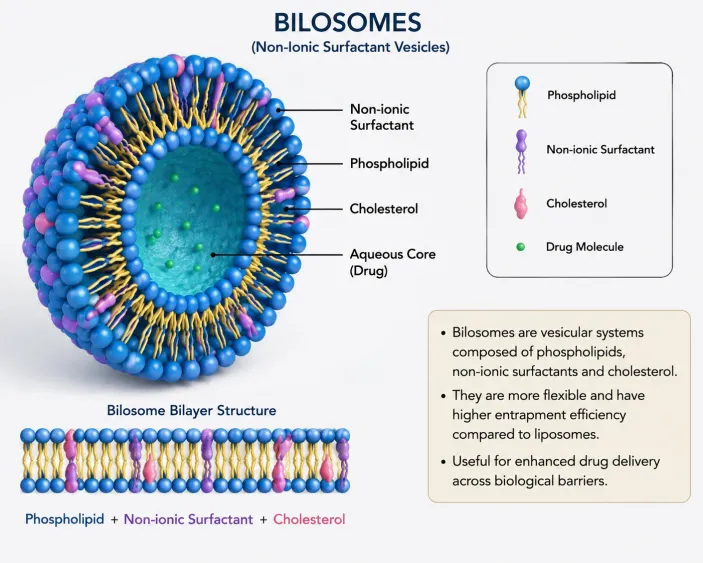
Figure 1 Structure of Bilosomes
The presence of bile salts increases membrane fluidity, enabling bilosomes to penetrate narrow intercellular spaces within the stratum corneum and deliver drugs into deeper skin layers.
Composition of Bilosomes
Table 1 Components of Bilosomes And Their Functions
|
Component |
Examples |
Function |
|
Phospholipids |
Soy lecithin, Phosphatidylcholine |
Vesicle formation |
|
Cholesterol |
Cholesterol |
Membrane stabilization |
|
Bile salts |
Sodium deoxycholate, Sodium cholate, Sodium taurocholate |
Improve flexibility and penetration |
|
Surfactants (optional) |
Span 60, Tween 80 |
Improve stability |
|
Hydration medium |
PBS, distilled water |
Vesicle hydration |
Preparation Methods
The commonly employed techniques include:
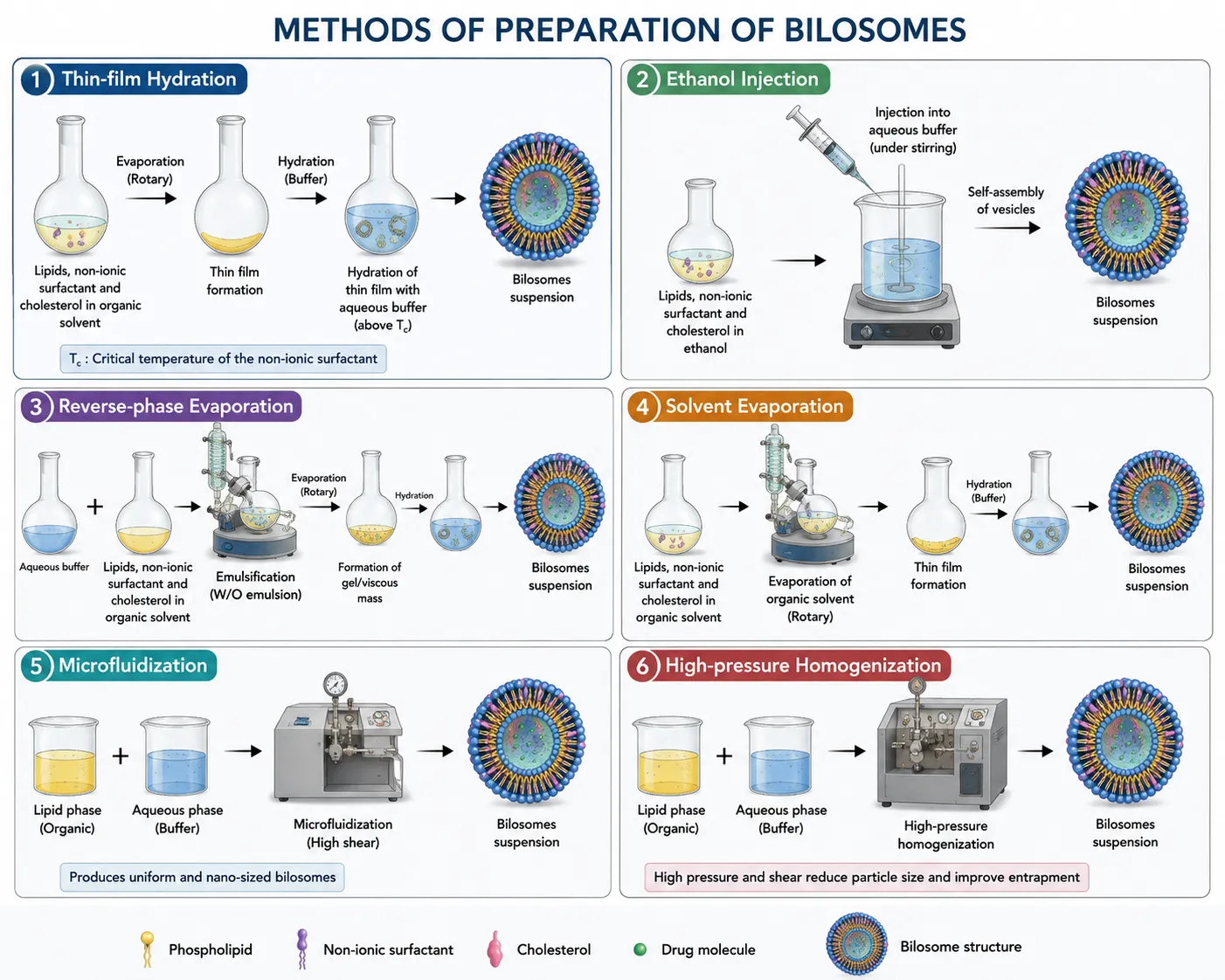
Figure 2 Methods of Preparation of Bilosomes
Thin-film hydration remains the most widely used laboratory method because of its simplicity and reproducibility [6].
Mechanism of Skin Penetration
Bilosomes improve topical drug delivery through several mechanisms:
These mechanisms contribute to enhanced drug deposition while minimizing systemic absorption [7].
Applications in Skin Diseases
Acne vulgaris
Bilosomal formulations of adapalene, clindamycin, and doxycycline have demonstrated improved skin penetration and reduced irritation compared with conventional gels [8].
Psoriasis
Methotrexate and curcumin-loaded bilosomes have shown enhanced dermal deposition and significant reduction in inflammatory cytokines in experimental psoriasis models [9].
Atopic dermatitis
Tacrolimus and corticosteroid-loaded bilosomes improve skin retention, reduce transepidermal water loss, and decrease inflammation while minimizing systemic exposure [10].
Fungal skin infections
Itraconazole, terbinafine, fluconazole, and Luliconazole loaded bilosomes exhibit improved antifungal activity against Candida albicans and dermatophytes because of increased drug penetration into infected tissues [11].
Bacterial infections
Bilosomal delivery of mupirocin and fusidic acid enhances antibacterial activity against resistant Staphylococcus aureus strains and improves wound healing [12].
Skin cancer
Topical bilosomes loaded with 5-fluorouracil or natural compounds such as curcumin and resveratrol have demonstrated enhanced skin localization and antitumor activity in preclinical studies [13].
Recent Studies on Bilosomes for Skin Diseases
Table 2 Selected recent bilosomal formulations for topical treatment
|
Drug |
Disease |
Major findings |
References |
|
Curcumin |
Psoriasis |
Improved skin deposition and anti-inflammatory activity |
[9] |
|
Methotrexate |
Psoriasis |
Enhanced therapeutic efficacy with reduced toxicity |
[9] |
|
Itraconazole |
Fungal infections |
Higher antifungal activity and prolonged release |
[11] |
|
Terbinafine |
Dermatophytosis |
Increased skin permeation |
[11] |
|
Tacrolimus |
Atopic dermatitis |
Improved skin retention |
[10] |
|
Adapalene |
Acne |
Reduced irritation and enhanced penetration |
[8] |
|
Mupirocin |
Bacterial infection |
Better antibacterial efficacy |
[12] |
Advantages of Bilosomes
LIMITATIONS
Despite promising results, several limitations remain:
Further clinical investigations are needed before widespread commercialization [14].
Recent Patents and Intellectual Property Trends in Bilosomal Drug Delivery
Although research on bilosomes has expanded rapidly during the last five years, the number of granted patents specifically claiming bilosomal formulations for skin diseases remains relatively limited. Most intellectual property (IP) protection has focused on bilosomal composition, manufacturing methods, topical gels, hydrogel systems, PEGylated bilosomes, and combination nanovesicular platforms rather than disease specific claims. Recent patent activity indicates growing industrial interest in bilosomal formulations for psoriasis, fungal infections, melanoma, wound healing, and transdermal drug delivery. Recent reviews also highlight increasing patent filings as bilosomes transition from laboratory-scale research toward commercialization.
Table 3 Representative Recent Patents and Patent Applications Related to Bilosomal Drug Delivery
|
Year |
Patent/Patent Application* |
Innovation |
Therapeutic Area |
Significance |
Ref. |
|
2020 |
Lipid vesicular drug delivery systems containing bile salts |
Stable bilosomal composition for enhanced topical drug delivery |
Dermal delivery |
Improved vesicle stability and skin permeation |
[15,16] |
|
2021 |
Nano-vesicular topical formulations comprising bilosomes |
Bilosomal gel technology for localized drug delivery |
Skin diseases |
Enhanced dermal deposition with sustained release |
[17] |
|
2022 |
PEGylated bilosomal nanocarriers |
Surface-modified bilosomes with prolonged skin residence |
Fungal infections |
Improved stability and penetration |
[16,17] |
|
2023 |
Bilosomal hydrogel compositions |
Hydrogel-integrated bilosomes for controlled drug release |
Psoriasis and wound healing |
Better patient compliance and prolonged release |
[15,17] |
|
2024 |
Bilosomal transdermal delivery platform |
Flexible bile salt vesicles for enhanced transdermal permeation |
Chronic inflammatory diseases |
Improved drug bioavailability |
[16] |
|
2025–2026 |
Edge-activated bilosomes (Limobilosomes) |
Combination of bile salts and terpene penetration enhancers |
Melanoma |
Increased intradermal drug deposition and anticancer efficacy |
[18] |
Patent Landscape
The intellectual property landscape of bilosomes has evolved from oral vaccine delivery toward topical and transdermal therapeutics. Early patents primarily protected bile salt-containing lipid vesicles designed to improve vesicle stability. More recent inventions focus on surface engineering (PEGylation), edge activation, hydrogel incorporation, and hybrid nanovesicular systems that enhance skin penetration and prolong drug retention. These technologies are particularly attractive for chronic dermatological disorders because they reduce dosing frequency while minimizing systemic drug exposure. Recent innovations have introduced PEGylated bilosomes, which exhibit prolonged residence time within the skin and improved physicochemical stability. Similarly, edge-activated bilosomes (limobilosomes) incorporating terpenes such as limonene have demonstrated markedly improved intradermal deposition and therapeutic efficacy against melanoma in preclinical investigations, representing a promising direction for future patent development. Commercial translation of bilosomes remains in its early stages. The relatively small number of granted patents suggests that substantial opportunities remain for protecting innovations involving drug combinations, stimuli-responsive bilosomes, targeted dermatological therapies, microneedle assisted bilosomal delivery, and hydrogel based sustained release systems.
FUTURE PERSPECTIVES
Future research on bilosomal drug delivery systems for skin diseases should prioritize well designed clinical trials to establish their long term safety, therapeutic efficacy, patient compliance, and superiority over conventional topical formulations in the management of chronic dermatological conditions such as psoriasis, eczema, acne vulgaris, fungal infections, and skin cancer. Although numerous preclinical studies have demonstrated promising outcomes, successful clinical translation requires robust evidence from multicenter human studies. Simultaneously, there is a pressing need to develop scalable, cost-effective, and reproducible manufacturing processes that ensure batch to batch consistency, high encapsulation efficiency, and long term stability while meeting regulatory and industrial standards for commercialization. Future investigations should also explore combination therapies in which bilosomes co-deliver multiple therapeutic agents, including conventional drugs, phytochemicals, peptides, nucleic acids, or immunomodulators, to achieve synergistic therapeutic effects, minimize drug resistance, and reduce treatment related adverse effects. Another promising direction involves the development of surface functionalized bilosomes by incorporating ligands, antibodies, peptides, or polymers that enable targeted delivery to specific skin cells, hair follicles, inflamed tissues, or tumor microenvironments, thereby improving therapeutic precision and minimizing off target effects. Furthermore, the design of stimuli-responsive bilosomal systems capable of releasing their drug payload in response to physiological or external triggers such as pH, temperature, enzymes, reactive oxygen species, light, ultrasound, or magnetic fields represents an innovative strategy for achieving controlled and site specific drug delivery. Finally, integrating bilosomal formulations with advanced drug delivery platforms, including hydrogels, dissolving microneedles, nanofiber mats, wound dressings and three-dimensional (3D)-printed topical dosage forms, has the potential to enhance skin penetration, prolong drug residence time, improve patient adherence, and facilitate personalized treatment approaches. Collectively, these research directions are expected to accelerate the clinical translation of bilosomal technology and establish it as a versatile, effective, and commercially viable platform for the treatment of a wide range of skin diseases. These advances may facilitate the translation of bilosomal formulations into clinically approved therapies.
CONCLUSION
Bilosomes represent an advanced lipid based nanocarrier with significant potential for improving topical drug delivery in various skin diseases. Their enhanced flexibility, stability, and ability to penetrate the stratum corneum make them superior to conventional liposomes for dermal applications. Preclinical studies have demonstrated encouraging results in psoriasis, acne, fungal infections, bacterial skin diseases, atopic dermatitis, and skin cancer. Furthermore, the growing number of patents related to bilosomal formulations, novel lipid compositions, bile salt incorporation, targeted delivery approaches, and sustained release topical systems reflects increasing industrial interest and commercial potential. These patent developments provide valuable intellectual property protection and are expected to accelerate the translation of bilosomes based technologies into clinically viable dermatological products. However, additional clinical studies, standardized manufacturing methods, and clear regulatory guidance are essential to support their successful translation into routine dermatological practice.
REFERENCES

Kanika, Naresh Singh Gill, Abhishek Dhillon*, Recent Advances in Bilosomes for the Treatment of Skin Diseases: A Review, Int. J. Med. Pharm. Sci., 2026, 2 (8), 452-458. https://doi.org/10.5281/zenodo.21883110
 10.5281/zenodo.21883110