

We use cookies to ensure our website works properly and to personalise your experience. Cookies policy
Pallavan Pharmacy College, Kanchipuram
Diabetes mellitus (DM) is a chronic metabolic disorder characterized by persistent hyperglycemia and associated complications such as cardiovascular disease, nephropathy, and neuropathy. Among natural therapeutic agents, the medicinal mushroom Inonotus obliquus has gained attention for its potential anti-diabetic properties. This review highlights the bioactive compounds of I. obliquus, including triterpenoids, polysaccharides, phenols, and flavonoids, and their role in managing diabetes and related metabolic disorders. These compounds exhibit significant biological activities such as α-glucosidase inhibition, enhanced insulin sensitivity, improved glucose uptake, and antioxidant effects. Polysaccharides, in particular, activate the PI3K/Akt signaling pathway and promote GLUT4 expression, contributing to glucose homeostasis. Additionally, the mushroom demonstrates anti-obesity, antimicrobial, and cytotoxic effects without toxicity to normal cells. Overall, I. obliquus represents a promising natural source for the development of novel anti-diabetic therapies.
Diabetes Mellitus (DM)
Diabetes mellitus (DM) is a non-communicable disease marked by chronic hyperglycemia resulting from impaired insulin secretion and/or action [1]. It is classified into type 1 diabetes mellitus (T1DM), type 2 diabetes mellitus (T2DM), gestational DM, and specific types linked to genetic, pharmacological, or disease factors. T2DM, which constitutes over 90% of all cases, arises from progressive insulin deficiency amidst peripheral insulin resistance [2]. DM is a leading cause of cardiovascular diseases, blindness, kidney failure, and amputations globally. [3,4]. In 2017, T2DM affected 6.28% of the population, with an estimated global prevalence of about 7.08% by 2030. The high prevalence of DM and its complications imposes a significant burden on healthcare systems worldwide [5].
Inonotus Obliques
Mushrooms have been part of the human diet for thousands of years, valued for their unique flavor and texture [6]. There are around 150,000–160,000 mushroom species, with only 10% scientifically classified. About 700 are edible and have pharmacological uses [7]. Since the 1970s, global mushroom production has surged over 30 times, with China as the leading producer. Beyond culinary use, mushrooms are recognized for their medicinal properties, showing promise in cancer prevention, inflammation reduction, immunomodulation, and managing metabolic diseases like diabetes and cardiovascular issues [8] (Fig 1). Some research even suggests their potential role in COVID-19 treatment [9]. Potassium, magnesium, calcium, and sodium, with potassium being the most abundant. They also include vitamins such as ascorbic acid, B vitamins, tocopherols, vitamin D2, pigments, and phenolics [10].
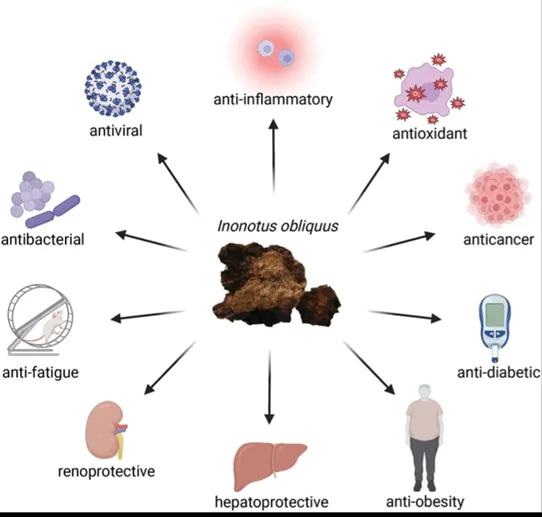
Fig 1: Inonotus obliquus
Bioactive Compounds and Their Therapeutic Properties of Inonotus Obliquus
(a) Triterpenoids,
(b) Polysaccharides,
(c) Phenols and flavonoids.
a) Triterpenoids
Enzymatic assays showed that triterpenoids from I. obliquus significantly inhibit the α-glucosidase enzyme, indicating their anti-diabetic potential[11].Additionally, betulinic acid (BA), a triterpenoid in I. obliquus, demonstrated anti-obesity effects in a high-fat diet mouse model[12] .Despite similar caloric intake across groups, BA-treated mice had 10% lower body weight and improved serum lipid, insulin, and leptin levels[13] .RT-PCR analysis indicated increased expression of genes related to energy expenditure and reduced expression of triglyceride synthesis enzymes in BA-treated 3T3-L1 adipocytes, highlighting betulinic acid's protective role against obesity[14].
b) Polysaccharides
Studies indicate that polysaccharides are the key bioactive components of I. obliquus that contribute to its anti-diabetic effects. Research on type 2 diabetes mellitus (T2DM) mice has shown that IOP enhances insulin sensitivity, restores liver glycogen, improves glucose tolerance, and has antihyperglycemic properties. These effects are linked to increased GLUT4 expression in adipose tissues and the activation of the PI3K/Akt signaling pathway. Additionally, IOP significantly boosts glucose uptake in both wild-type and insulin-resistant HepG2 cells, with one polysaccharide (IOEP2) demonstrating a greater stimulatory effect on glucose consumption than the hypoglycemic drug metformin at concentrations of 40 μg/mL and80 μg/mL[15].
c) Phenols & flavonoids
Phenols and flavonoids significantly contribute to the antioxidant activity of I. obliquus extracts, with hydrophilic phenolics being primary contributors. These phenolic compounds exhibit substantial radical-scavenging abilities and exhibit strong binding to the superoxide dismutase 1 (SOD1) enzyme, particularly styrylpyranone polyphenols like Phelligridin E [16]. This indicates their potential to enhance antioxidant enzyme activity. Polyphenols extracted from I. obliquus using optimized aqueous ethanol extraction and purified with macroporous resin demonstrate effective scavenging of DPPH and hydroxyl radicals, as well as robust ferric-reducing activity, thereby representing a valuable source of natural antioxidants [17].
METHODOLOGY
Preclinical Evaluation of Chromium (III)-Enriched Inonotus Obliquus Polysaccharides
Chromium, vital for human health, primarily exists as the active trivalent form (Cr 3+) and the toxic hexavalent form (Cr 6+). Known since 1959 for its role in glucose tolerance, chromium has been extensively researched for its effects on glucose and lipid metabolism. The mushroom Inonotus obliquus, used traditionally in China, Russia, and Japan, contains beneficial polysaccharides with hypoglycemic and hypolipidemic effects (Fig 2). This study is the first to synthesize a polysaccharide-chromium (III) complex from ultrafiltration polysaccharide of I. obliquus (UIOPS), examining its physicochemical properties, anti-diabetic effects in a high-fat diet and STZ-induced T2DM mouse model, and assessing its subacute toxicity in normal mice [18].
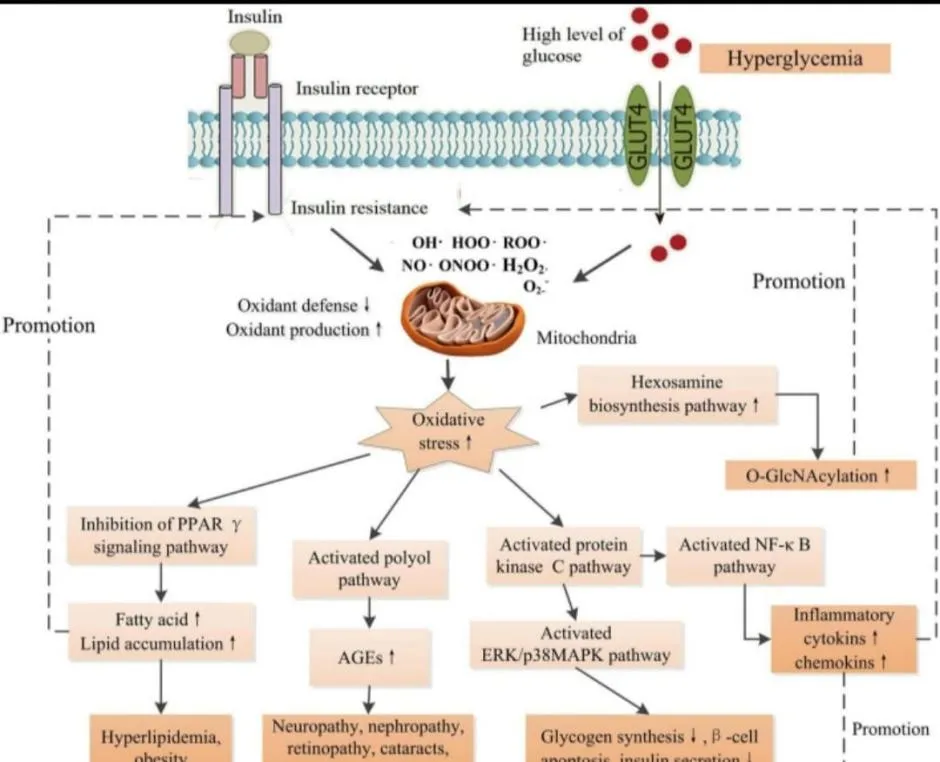
Fig 2: Mechanism of Action (MOA)
Inhibitory Activity and Kinetics of Inotodiol On Α-Glucosidase
α-Glucosidase is an essential enzyme that breaks down disaccharides into monosaccharides. α-Glucosidase inhibitors can help reduce glucose production and lower hyperglycemia. Inotodiol has been identified as a potent α-glucosidase inhibitor, with its effectiveness increasing with concentration (0.1–2.0 mmol L−1). At 2 mmol L−1, it can inhibit the enzyme by 70.12 ± 1.42% [19,20].
RESULT
Preclinical Evaluation of Chromium (III)-Enriched Inonotus Obliquus Polysaccharides
UIOPC had a molecular weight of approximately 11.5 × 10⁴ Da and contained 13.01% chromium, which was connected to the polysaccharides through a coordination bond. Following four weeks of UIOPC treatment, diabetic mice showed significant reductions (p < 0.05) in body weight, fasting blood glucose (FBG), and plasma insulin levels. Analyses of serum profiles and antioxidant enzyme activities indicated that UIOPC exhibited beneficial hypoglycemic and antioxidant properties [18].
CONCLUSION
Inonotus obliquus exhibits notable pharmacological activities, particularly in diabetes management. Its bioactive compounds, especially polysaccharides and triterpenoids, enhance insulin sensitivity, improve glucose uptake, regulate glucose metabolism, and provide antioxidant protection against oxidative stress. Furthermore, triterpenoids and inotodiol demonstrate potent α-glucosidase inhibitory activity, reducing carbohydrate digestion and postprandial blood glucose levels. These findings suggest that Inonotus obliquus is a promising natural source of anti-diabetic agents with significant enzyme inhibitory and metabolic regulatory effects.
ACKNOWLEDGMENT
I would like to thank my guide and faculty for their support in completing this article. I also thank my institution, family, and friends for their encouragement.
REFERENCES


Sakthivel A.*, Hemaltha G., Swarnalatha S., Karthi J., Therapeutic Potential of Inonotus Obliquus in Diabetes Management and Mechanisms of Action, Int. J. Med. Pharm. Sci., 2026, 2 (7), 404-408. https://doi.org/10.5281/zenodo.21264134
 10.5281/zenodo.21264134