

We use cookies to ensure our website works properly and to personalise your experience. Cookies policy
Department of Pharmaceutics, Sir Issac Newton College of Pharmacy, Nagapattinam, Tamil Nadu – 611 102
Acalypha indica (family Euphorbiaceae), commonly known as Indian copperleaf, is a widely distributed medicinal herb extensively used in traditional medical systems across Asia and Africa. This review critically compiles and evaluates available scientific literature on the ethnobotanical significance, phytochemical composition, and pharmacological properties of Acalypha indica. Traditionally, various parts of the plant, particularly the leaves and roots, have been utilized in the management of respiratory disorders, dermatological conditions, gastrointestinal disturbances, inflammatory diseases, parasitic infestations, and certain neurological ailments. Phytochemical analyses have identified a diverse array of bioactive constituents, including flavonoids, alkaloids, phenolic compounds, tannins, saponins, glycosides, and terpenoids, which are believed to underlie its broad therapeutic applications. Experimental pharmacological studies have reported multiple biological activities such as antimicrobial, anti-inflammatory, antioxidant, antidiabetic, hepatoprotective, analgesic, wound-healing, and antiparasitic effects. In addition, emerging evidence suggests potential cytoprotective and immunomodulatory properties of Acalypha indica extracts. However, despite extensive preclinical investigations, the majority of studies are limited to in vitro and animal models, with insufficient data on toxicity profiles, pharmacokinetics, and clinical efficacy. This review highlights existing research gaps, including the need for standardized extraction methods, identification of active principles, elucidation of molecular mechanisms of action, and well-designed clinical trials. Overall, Acalypha indica represents a promising medicinal plant with considerable potential for the development of novel therapeutic agents and its integration into evidence-based healthcare systems.
Acalypha indica a member of the Euphorbiaceae family, is a well-known ethnomedicinal plant that is widely found in tropical and subtropical parts of the world, especially in South and Southeast Asia and Africa [1,2]. One of the greatest families of flowering plants is the Euphorbiaceae family, which is distinguished by the presence of species that are important economically, toxicologically, and medicinally. The genus Acalypha in this family includes over 400 species, many of which are used in traditional medicine; Acalypha indica holds a prominent place because of its wide range of therapeutic uses [3,5].
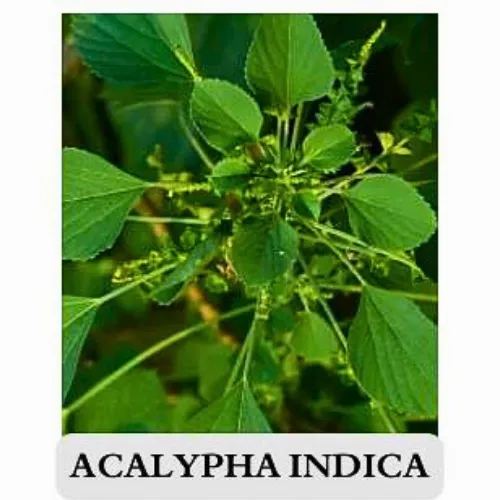
Acalypha indica has been used for ages in many indigenous healing techniques as well as traditional medical systems like Ayurveda, Siddha, and Unani. According to historical accounts and ethnobotanical research, it can be used to cure respiratory conditions such bronchitis, asthma, breathing difficulties, and persistent mucus-producing coughs [18]. Additionally, ringworm, dermatitis, eczema, scabies, and other inflammatory skin problems have historically been treated with the plant [19]. Additionally, the plant's various parts are often used to treat gastrointestinal problems such indigestion, constipation, discomfort in the abdomen, and parasite infections [20]. Acalypha indica's remarkable medicinal versatility is largely due to its rich and diverse phytochemical composition. Phytochemical study has identified alkaloids, flavonoids, phenolic compounds, tannins, saponins, terpenoids, fatty acids, and sterols [22, 24]. Many of these compounds have well-known antibacterial, anti-inflammatory, antioxidant, analgesic, antidiabetic, and wound-healing qualities [25–29]. In recent decades, there has been a resurgence of interest in plant-based medicines and natural products due to concerns about adverse drug reactions, antimicrobial resistance, and the high cost of synthetic treatments. Acalypha indica has therefore attracted a great deal of scientific attention, leading to numerous pharmacological, phytochemical, and toxicological studies. Despite this growing amount of research, the knowledge that is currently available is still scattered and fragmented across several scientific disciplines, necessitating a comprehensive and current appraisal. This article's goals are to highlight Acalypha indica's therapeutic potential, provide an overview of what is already known about it, and talk about potential future research directions.
Botanical Description
MORPHOLOGY
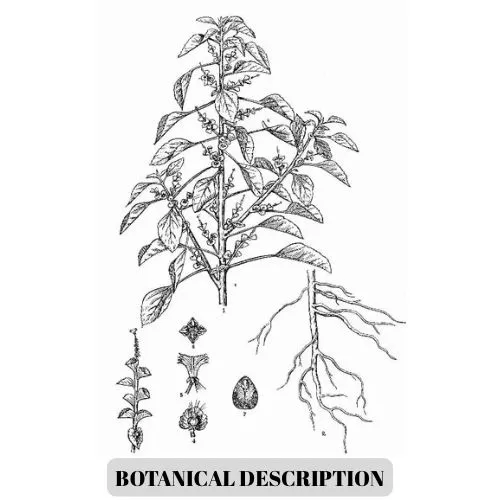
The erect, annual herb Acalypha indica typically reaches a height of 30 to 60 cm. It is commonly observed growing as a weed by the sides of highways, in gardens, and in fields. The stem is cylindrical, glabrous or sparsely hairy, greenish in color, and sometimes reddish or purplish depending on the environment [7]. Simple, alternating leaves are elliptical to broadly ovate, with serrated edges and a sharp to acuminate tip. The species' distinctive pinnate venation, which consists of three to five basal veins, can be used to identify it [7,12].
Inflorescence and Flowers
The axillary, spike-like inflorescence is composed of unisexual flowers arranged over a narrow axis [8]. Female flowers are larger, found at the base of the spike, and have a trilocular ovary with leafy bracts; male flowers are found toward the spike's apex and have four stamens. The sexual dimorphism of Euphorbiaceae has been thoroughly studied in relation to floral appearance and pollination biology.
Odor and Exudates
The strong, characteristic odor that Acalypha indica emits when crushed is caused by volatile substances present in the plant tissues [9]. This scent is widely used as a practical field identifying feature.
Seed and Fruit
The fruit is a little capsule that contains one to three seeds. Seed micromorphology, including reticulate surface patterns, has been documented for taxonomic and systematic studies [10].
Taxonomy and Nomenclature
Acalypha indica belongs to the order Malpighiales and the family Euphorbiaceae. Phylogenetic studies and taxonomy revisions have demonstrated its systematic position within the genus Acalypha [11,13]. The species is known by several vernacular names, such as Indian Nettle (English), Kuppaimeni (Tamil), Khokali (Hindi), and Kuppameniya (Sinhala), due to its widespread cultural significance [12]. Many authors have discussed regional ecotypes, synonymy, and morphological distinctions, emphasizing the significance of accurate botanical authentication [13,14].
|
Parameter |
Description |
|
Kingdom |
Plantae |
|
Order |
Malpighiales |
|
Family |
Euphorbiaceae |
|
Genus |
Acalypha |
|
Species |
Acalypha indica |
|
Common / vernacular names |
Indian Nettle (English); Kuppaimeni (Tamil); Khokali (Hindi); Kuppameniya (Sinhala) |
|
Taxonomic notes |
Presence of regional ecotypes, synonymy, and morphological variations; importance of accurate botanical authentication |
Geographical Distribution and Ecology
Previously found only in tropical Africa, Acalypha indica is now widely distributed throughout Southeast Asia, including Bangladesh, Myanmar, Malaysia, Indonesia, India, Sri Lanka, and other nations [12,15]. The species may thrive in a range of habitats due to its remarkable ecological flexibility.
Environmental Adaptability
Roadsides, wastelands, and agricultural fields are examples of disturbed environments where the plant thrives in nitrogen-rich soils [16]. Although it can withstand full sun and a range of moisture levels, it favors damp, somewhat shaded environments [16,17]. Acalypha indica is sometimes considered an invasive weed because of its quick growth and abundant seed production [17].
Distribution Patterns
Geobotanical study indicates that Acalypha indica usually thrives in regions that are typical of tropical monsoon ecosystems, with mean temperatures between 20 and 35°C and annual rainfall between 700 and 2,000 mm [15,16].
Ethnomedicinal Uses
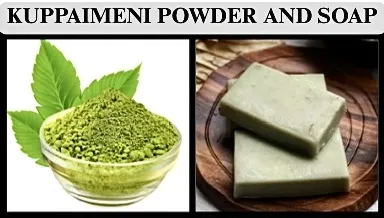
Kuppaimeni powder helps treat:
• Skin diseases
• Itching and fungal infections
• Dandruff and scalp issues
Kuppaimeni soap is used for:
• Cleansing skin naturally
• Reducing pimples, rashes, and allergies
• Improving overall skin health
• Has antibacterial and antifungal properties
• Suitable for herbal and natural skincare
• Commonly used for external application only
Respiratory Applications
Acalypha indica has been used historically to treat a variety of respiratory disorders, including bronchitis, asthma, dyspnea, and productive cough [1,18]. Fresh leaf juice is used as an expectorant, while decoctions are used to reduce chest congestion and airway inflammation.
Dermatological Uses
Dermatitis, ringworm, eczema, scabies, and other skin conditions are commonly treated topically using crushed leaves or poultices. The herb is highly valued for its antibacterial, anti-inflammatory, and anti-itching qualities [19]
Gastrointestinal Benefits
Leaf and root preparations are used to treat intestinal worm infestations, dyspepsia, constipation, and stomach pain [20]. These mixtures exhibit modest laxative and anthelmintic qualities.
Ethnoveterinary Applications
In ethnoveterinary medicine, Acalypha indica is used for deworming, wound healing, and livestock fever [21].
Phytochemical Profile
Phytochemical screening studies have identified a variety of secondary metabolites in Acalypha indica, including alkaloids (such acalyphine), flavonoids, phenolic compounds, tannins, saponins, terpenoids, sterols, and glycosides. GC-MS studies have also identified fatty acids such oleic acid, linoleic acid, stearic acid, and palmitic acid [23]. The plant's antibacterial, antioxidant, anti-inflammatory, and cytotoxic properties are collectively attributed to these phytoconstituents [24].
Pharmacological Activities
|
Pharmacological Action |
Active Constituents |
Mechanism of Action |
|
Antibacterial |
Flavonoids, tannins, phenolic compounds |
Disrupt bacterial cell wall integrity and inhibit essential bacterial enzymes, leading to cell death |
|
Anti-inflammatory |
Flavonoids, sterols |
Inhibits cyclooxygenase (COX) and lipoxygenase pathways, reducing prostaglandin and leukotriene synthesis |
|
Antifungal |
Alkaloids, phenolics |
Alters fungal cell membrane permeability and inhibits ergosterol synthesis |
|
Antioxidant |
Polyphenols, flavonoids |
Scavenges free radicals and reactive oxygen species (ROS), preventing lipid peroxidation |
|
Expectorant |
Saponins |
Reduces surface tension of mucus, facilitating expulsion of bronchial secretions |
|
Anthelmintic |
Alkaloids, tannins |
Causes paralysis and death of intestinal worms by interfering with neuromuscular activity |
|
Wound healing |
Flavonoids, tannins |
Enhances collagen synthesis, promotes fibroblast proliferation, and accelerates epithelialization |
|
Antidiabetic |
Flavonoids |
Improves insulin sensitivity and inhibits intestinal glucose absorption |
|
Analgesic |
Flavonoids |
Reduces pain by inhibiting prostaglandin synthesis and peripheral pain mediators |
|
Diuretic |
Potassium salts, flavonoids |
Increases renal blood flow and glomerular filtration, enhancing urine output |
Extensive experimental research supports several of Acalypha indica's pharmacological activities and validates its traditional medicinal use [25].
Antimicrobial Activity
Extracts from Acalypha indica show antibacterial and antifungal qualities against pathogens such Staphylococcus aureus, Escherichia coli, and Candida albicans [25]. Among the mechanisms include membrane breakage, protein denaturation, and the development of oxidative stress in microbial cells [25].
Anti-inflammatory and Analgesic Effects
Flavonoids found in Acalypha indica suppress the cyclooxygenase and lipoxygenase pathways, reducing prostaglandin production and inflammatory cytokines such TNF-α and IL-6. These activities give it analgesic and anti-inflammatory qualities [26].
Antioxidant Activity
Acalypha indica's antioxidant activity has been demonstrated by DPPH, FRAP, and ABTS tests, indicating a notable ability to scavenge free radicals [27].
Anthelmintic Activity
Anthelmintic study indicates that the tannins and alkaloids of Acalypha indica interfere with energy metabolism and neuromuscular activity, paralyzing and killing helminths [28].
Antidiabetic Activity
Because Acalypha indica formulations have been shown to improve insulin sensitivity and lower fasting blood glucose levels in experimental mice studies, they have long been utilized to treat diabetes [29].
Wound-Healing and Cytotoxic Effects
Increased collagen production and fibroblast proliferation are associated with Acalypha indica's ability to heal wounds [30]. Certain extracts have also demonstrated cytotoxic effects on cancer cell lines by inducing apoptosis [30].
Traditional Preparation Methods
Traditional Acalypha indica medicines include decoctions, poultices, dried leaf powder, and fresh leaf juice. Leaf juice is often used for respiratory disorders, whereas poultices are used for skin ailments [31]. Dried leaf powders and decoctions are used for digestive,anthelmintic purposes [32].
Nutritional Composition
|
Nutrient component |
Major examples |
Physiological role |
Health relevance |
|
Dietary fiber |
Insoluble and soluble fibers |
Enhances bowel motility; supports gut microbiota |
Improves digestion; aids glycemic control |
|
Vitamins |
Vitamin A, Vitamin C |
Antioxidant activity; immune modulation; epithelial protection |
Enhances immunity; protects against oxidative stress |
|
Minerals |
Calcium, phosphorus |
Bone mineralization; enzymatic functions |
Supports skeletal health |
|
Electrolytes |
Potassium |
Maintains electrolyte balance; neuromuscular function |
Cardiovascular and muscle health |
|
Overall nutritional value |
Combined macro- and micronutrients |
Synergistic nutritional support |
Contributes to general health-promoting effects |
Acalypha indica is a nutrient-dense plant that contains dietary fiber, vitamins A and C, and important minerals like calcium, potassium, and phosphorus [33–35]. Its overall health-promoting effects may be attributed to these nutritional qualities.
Toxicity and Safety Considerations
At standard dosages, Acalypha indica is generally regarded as safe; nevertheless, excessive consumption might cause gastrointestinal distress. The few studies that suggest potential hemolytic effects in susceptible individuals underline the necessity for comprehensive toxicology and safety evaluations [22, 24].
Cultivation, Industrial Applications, and Future Prospects
Acalypha indica takes little care and thrives effectively in humid tropical environments [16]. Additionally, it is simple to duplicate from seeds. Its extracts are utilized in herbal treatments for skin and respiratory ailments because to their antibacterial properties, and they are increasingly being researched for application in herbal cosmetics [18,19]. The plant also shows potential as a natural insecticidal agent [25]. Future study should focus on clinical validation, extract standardization, molecular studies, and comprehensive safety evaluations in order to facilitate its integration into modern medicine [ 30].
CONCLUSION
The importance of Acalypha indica. as an ethnomedical plant is supported by a growing body of scientific evidence. Its diverse phytochemical composition and broad range of pharmacological activity validate many of its traditional uses. Even though preclinical research shows that it has therapeutic potential, more systematic research is required for its successful integration into modern pharmaceutical development and medical practice. This includes carefully planned clinical trials, extract standardization, and comprehensive safety evaluations.
REFERENCES

Prema Rathinam*, Senthil Kumar Chelladurai, Florence Kumar, Mohamed Musammeel Mujifur Rahman, Ganesh Karunakaran, Latchiya Packrisamy, Dhanush Suresh, A Comprehensive Review of Acalypha Indica, Int. J. Med. Pharm. Sci., 2026, 2 (9), 533-539. https://doi.org/10.5281/zenodo.22973755
 10.5281/zenodo.22973755