

We use cookies to ensure our website works properly and to personalise your experience. Cookies policy
Pharm D Intern, Shree Devi College of Pharmacy, Mangaluru (Affiliated to Rajiv Gandhi University of Health Sciences, Bengaluru)
Azathioprine is a purine analog used to treat several immunological disorders. It inhibits DNA synthesis and cell multiplication. However, bone marrow suppression is a serious complication associated with azathioprine. A 36-year-old female patient presented with intermittent fever, recurrent headache, and itchy skin rashes over both forearms and lower limbs. The patient had previously been diagnosed with prurigo, for which the patient had been started on azathioprine as immunosuppressive therapy. After starting treatment, the patient developed high-grade fever and severe headache, and laboratory investigations revealed leukocytopenia. On admission, total leukocyte count was below the normal range, while the platelet count remained within the normal range throughout the hospital stay. CT of the paranasal sinuses showed severe pansinusitis with bilateral osteomeatal complex obstruction, while MRI showed no significant intracranial abnormality. In view of persistent leukocytopenia during azathioprine therapy, drug-induced bone marrow suppression was suspected. Azathioprine was discontinued, and the patient was managed with antibiotics, analgesics, nasal decongestants and supportive care. Despite withdrawal of azathioprine, the leukocyte count remained low, so the patient was treated with Granulocyte colony-stimulating factor (G-CSF). Following G-CSF therapy, an increase in white blood cells was observed. The patient’s fever and headache reduced, and general condition improved and was discharged in a stable haemodynamic condition. The patient was advised not to restart azathioprine unless specifically prescribed by the consulting physician. This case highlights the importance of regular haematological monitoring during azathioprine therapy.
Azathioprine is a thiopurine immunosuppressive drug widely used in the treatment of autoimmune and inflammatory disorders. It is a purine analog that acts by interfering with nucleic acid synthesis, thereby inhibiting proliferation of rapidly dividing cells, including hematopoietic cells. Although effective, azathioprine may cause serious hematological toxicity, particularly leukocytopenia, neutropenia, anaemia, thrombocytopenia and, in severe cases, pancytopenia. [1,2] Azathioprine-induced leukocytopenia is influenced by dose, treatment duration, concomitant medicines, and genetic variability in thiopurine metabolism. Thiopurine S-methyltransferase [TPMT] and nudix hydrolase 15 [NUDT 15] are important determinants of thiopurine toxicity, and reduced-function variants can increase the risk of severe myelosuppression. [1] A case-control study from Eastern India emphasized leukopenia as the most common adverse effect of azathioprine and investigated TPMT and NUDT-15 variants in affected patients, [2] and a case report further demonstrated severe bone-marrow aplasia and neutropenic fever after azathioprine dose escalation and, recovery after drug withdrawal, supportive treatment and filgrastim. [3] A recent case report has also demonstrated severe leukopenia or pancytopenia requiring withdrawal of azathioprine and treatment with granulocyte colony- stimulating factor. [4] Here we report a case of azathioprine-induced bone marrow suppression presenting as leukocytopenia in a 36-year-old female treated for prurigo; the patient developed high-grade fever and severe headache, with severe pansinusitis. Persistent leukocytopenia improved following azathioprine withdrawal and G-CSF therapy.
CASE REPORT
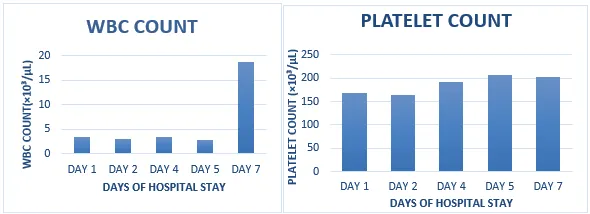
A 36-year-old female presented with a six-month history of intermittent fever, recurrent headache, and itchy skin rashes involving both forearms and lower limbs. The patient was well before six months before admission, following which the patient developed a low-grade intermittent fever associated with pruritic skin lesions and recurrent headaches. Dermatological examination led to a diagnosis of prurigo, for which azathioprine was given as immunosuppressive therapy. A few days prior to admission, the patient developed a high-grade fever accompanied by a severe headache and was admitted for further evaluation. On admission, the patient was evaluated with a complete blood count and other laboratory investigations. Initial investigations revealed a haemoglobin level of 10.6 g/dL, a total white blood cell count of 3.48×10³/µL, neutrophils of 71.1%, lymphocytes of 19.4%, and a platelet count of 168×10³/µL. During the hospital stay, the white blood cell count remained below the normal range, decreasing from 3.09×10³/µL on 24 July to 2.94×10³/µL on 27 July. In contrast, the platelet count remained within the normal range, with serial values of 165×10³/µL, 191×10³/µL and 202×10³/µL. Thus, there was no evidence of significant thrombocytopenia despite the presence of persistent leukocytopenia. Elevated ESR and C-reactive protein levels suggested an ongoing inflammatory process. Further evaluation with computed tomography of the paranasal sinuses showed severe pansinusitis with bilateral osteomeatal complex obstruction. MRI of the brain showed no significant intracranial abnormality and confirmed the presence of pansinusitis. Infectious and autoimmune investigations were also performed, with no significant alternative cause identified during the examination. Based on the temporal association between azathioprine therapy and the persistent leukocytopenia, together with the absence of significant thrombocytopenia, the patient was diagnosed with azathioprine-induced leukocytopenia secondary to bone marrow suppression.
Treatment given
The patient was managed with a multidisciplinary approach, primarily targeting azathioprine-induced leukocytopenia and acute severe pansinusitis. As azathioprine was considered the likely cause of bone marrow suppression and persistent leukocytopenia, azathioprine was discontinued immediately to prevent further haematological toxicity. Despite withdrawal of the offending drug, the leukocyte count remained low, reaching 2.94×10³/µL, following which a haematology consultation was obtained, and granulocyte colony-stimulating factor (G-CSF; filgrastim/Neukine) was administered to stimulate granulocyte production and facilitate recovery of the leukocyte count. Following G-CSF therapy, the WBC count increased to 18.78×10³/µL, indicating a favourable haematological response. Throughout this period, the platelet count remained preserved and increased to 202×10³/µL.
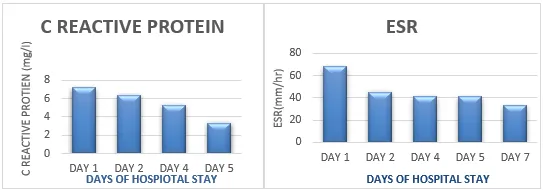
Imaging of the paranasal sinuses demonstrated severe pansinusitis with bilateral osteomeatal complex obstruction. The patient was therefore managed with antibiotics, analgesics, nasal decongestants, anti-inflammatory and supportive care. The patient initially received intravenous broad-spectrum antibacterial therapy for the severe sinus infection, which was discontinued after completion of the planned course, and then switched to antimicrobial therapy for continuation of treatment. Analgesic and antipyretic medications were administered to reduce headache, pain, and fever. The nasal saline and decongestant therapy were started to reduce nasal obstruction and improve sinus drainage. Systemic corticosteroids were administered to control the inflammation and reduce associated sinonasal edema. Additional anti-allergic therapy was provided for associated upper respiratory symptoms, while a mucolytic agent was prescribed to increase the clearance of respiratory secretions. During treatment, ESR decreased from 68 mm/hr to 33 mm/hr, and CRP decreased from 7.2mg/L to 3.3 mg/L, indicating improvement in the inflammatory response.
Gastric protection was provided during the treatment, along with symptomatic management of nausea and vomiting. Additional symptomatic treatment was administered for dizziness and vertigo. The patient showed clinical and laboratory improvement and was subsequently discharged in a stable haemodynamic condition. At discharge, the patient was advised not to restart azathioprine unless specifically prescribed by the consultant.
DISCUSSION
Azathioprine is an immunosuppressive medication widely used in the management of various immune- mediated diseases. In dermatology, it is commonly prescribed for conditions such as immunobollous disease, atopic dermatitis, vasculitis, connective tissue disorders and vitiligo. It is a purine analogue that interferes with DNA synthesis and cellular proliferation. Since rapidly dividing cells, particularly hematopoietic cells, are highly sensitive to this effect, azathioprine produces both its therapeutic immunosuppressive effects and several adverse effects. The most common adverse effect is bone marrow suppression, which can be potentially life-threatening and may manifest as leukopenia. The clinical presentation can be variable and may include fever, recurrent infections, headache, malaise and other symptoms. [5] In the present case, a 36-year-old female receiving azathioprine for prurigo developed high-grade fever and severe headache, and laboratory investigations demonstrated persistent leukocytopenia. The patient’s WBC count showed a progressive decline from 3.54×10³/µL on July 2026 to 2.94×10³/µL on 27 July 2026, while the platelet count remained within the normal range. The progressive decrease in the leukocyte count was clinically important because azathioprine-induced bone-marrow suppression most commonly results in leukocytopenia. A case report by Singh et al. reported that leukopenia accounted for 96% of cases developing azathioprine-associated myelosuppression, showing the importantance of serial CBC assessment. The same report also demonstrated that there was a progressive reduction in the haematological parameters after the initiation of azathioprine, with TLC declining from 8.10×10³/µL to 0.30×10³/µL, together with a reduction in haemoglobin and RBC count. Importantly, the authors performed regular CBC monitoring and discontinued azathioprine when severe bone marrow suppression became evident. This supports the approach used in our patient, where serial WBC measurements identified persistent leukopenia and prompted discontinuation of azathioprine. [6] The causes of leukopenia are numerous. In this case, previous blood counts were evaluated to assess the progression of leukopenia. The red blood cell and platelet counts were also reviewed to determine whether other haematological cell lines were affected. The persistent reduction in leukocyte count with a relatively preserved platelet count supported a predominantly leukocytic abnormality rather than bi-cytopenia or pancytopenia. Considering the clinical course and temporal association with azathioprine therapy, azathioprine-induced leukocytopenia secondary to bone-marrow suppression was diagnosed. [7] As the leukocyte count remained low even after discontinuation of azathioprine, filgrastim (G-CSF) was administered to stimulate the production of granulocytes and support the recovery of WBC count. A significant improvement was observed following treatment, with the WBC count increasing from 2.94×10³/µL to 18.78×10³/µL after administration of filgrastim. This response is consistent with the findings reported by Singh et al., in which G-CSF was administered following withdrawal of azathioprine, resulting in a progressive increase in the TLC from 0.3×10³/µL, 0.4×10³/µL, 0.6×10³/µL, and 1.0×10³/µL, indicating the recovery of granulocytes. The authors showed the importance of regular CBC monitoring and need for G-CSF in cases of significant bone-marrow induced leukocytopenia. [6] In addition, the patient was treated with appropriate antibiotics and nasal decongestants to manage the associated severe pansinusitis. Overall, the temporal relationship with azathioprine, progressive leukopenia, improvement after drug withdrawal and marked WBC recovery following G-CSF strongly support the clinical diagnosis of azathioprine-associated myelosuppression. The case emphasizes the importance of baseline assessment, regular CBC monitoring, early recognition of falling leukocyte counts and prompt withdrawal of azathioprine when significant haematological toxicity develops.
CONCLUSION
Azathioprine-induced leukopenia is a potentially serious but manageable adverse drug reaction. In this patient, early recognition of persistent leukocytopenia led to early management of the leukocytopenia and associated pansinusitis. The rapid increase in WBC count following G-CSF, together with improvement in fever and headache, demonstrated a favourable clinical and haematological response. This case highlights that Azathioprine is a very useful drug but can have serious side effects like bone marrow suppression. Since no tests can accurately predict the risk of bone marrow toxicity, regular monitoring of complete blood count is very important.
REFERENCES


Sapthashri*, Kalavathi Bai, Azathioprine-Induced Bone Marrow Suppression Presented as Leukocytopenia, Int. J. Med. Pharm. Sci., 2026, 2 (10), 1-5. https://doi.org/10.5281/zenodo.23077498
 10.5281/zenodo.23077498