
We use cookies to ensure our website works properly and to personalise your experience. Cookies policy
Department of Pharmaceutics, College of Pharmaceutical Sciences, Govt. Medical College Kozhikode
Periodontitis is a chronic inflammatory disease associated with the accumulation of dental plaque (a biofilm comprised of a complex microbial community that grows on tooth surfaces) and characterised by progressive destruction of the supporting structures of the teeth. The unique properties of chitosan, a natural polymer obtained by deacetylation of chitin, include biodegradability, biocompatibility, mucoadhesion and antibacterial and antifungal activity. These diverse attributes of chitosan have attracted increasing attention in the pharmaceutical and biomedical fields worldwide. The objective of this study is to provide an overview of the application of chitosan as an agent for the treatment of periodontitis.
Periodontitis is a highly prevalent, chronic inflammatory condition, that occurs due to gram-negative anaerobic bacteria that destroy the supporting structures of teeth and can often lead to tooth loss if left untreated (Figure 1).[1,2] The initiation as well as advancement of periodontitis are chiefly associated with three key oral pathogens: Porphyromonas gingivalis, Tannerella forsythia, and Treponema denticola. These microorganisms, known as the red complex, coexist in periodontal pockets and cause significant damage to periodontal tissues. These oral pathogens can create biofilms on the surface of teeth and within the periodontal pocket. They trigger an inflammatory response in the host.[3] These harmful bacteria produce several virulence factors, including collagenase enzymes, antigens, lipopolysaccharides (LPS), endotoxins, ammonia, and hydrogen sulfide, which contribute to the destruction of periodontal tissue. Their presence triggers an inflammatory response and increases gingival crevicular fluid (GCF) flow. In response to bacterial plaque, the host immune system releases various inflammatory mediators, enzymes such as β-glucuronidase and elastase, prostaglandins, neutrophils, prosteoglycans, etc., which, when produced in excess, exacerbate gingival inflammation and damage periodontal tissue.[2] Even though systemic antibiotics show beneficial effects in the treatment of periodontitis, their use is largely confined to aggressive or refractory cases owing to inadequate drug concentration at the target site, rapid decline to subtherapeutic levels, systemic adverse effects, and the risk of antimicrobial resistance. These limitations led to the development of local intra-pocket drug delivery systems. The periodontal pocket serves as an ideal site for localised therapy, with gingival crevicular fluid facilitating drug release and distribution. Compared to systemic therapy, local delivery systems provide higher drug concentrations at the diseased site, minimise systemic side effects, improve therapeutic efficacy, and enhance patient compliance.[4]
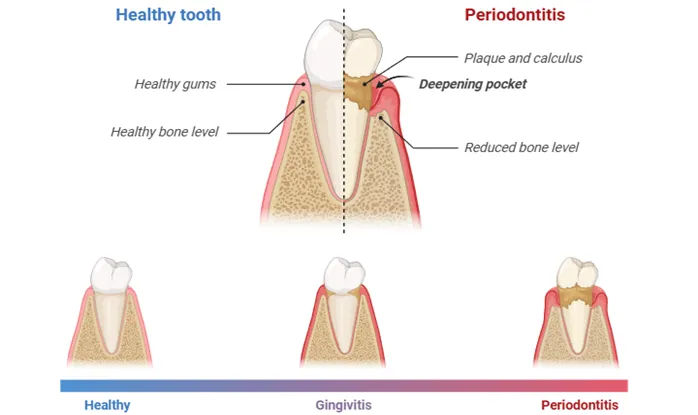
Figure 1. Healthy versus pocket formed tooth (created with Biorender.com)
Periodontal disease significantly impairs quality of life by causing halitosis, painful gums, tooth mobility, and eventual tooth loss, leading to functional and aesthetic deficits. Restoring lost periodontal tissues remains a major therapeutic goal, and advances in biomaterials have expanded regenerative treatment options. Among these, chitosan has gained considerable attention as a promising biopolymer for periodontal tissue engineering and regeneration.[5]
Chitosan
Chitosan is a linear polysaccharide obtained by the deacetylation of chitin, composed of varying amounts of (β1→4)-linked residues of N-acetyl-2-amino-2-deoxy-D-glucose (glucosamine, GlcN) and 2-amino-2-deoxy-D-glucose (N-acetyl-glucosamine, GlcNAc) residues. They naturally occur in the exoskeletons of crustaceans, insect cuticles, and cell walls of some fungi (Figure 2). [6,7] Chitosan is a biodegradable, and non-toxic biopolymer with several beneficial properties, including selective permeability, polyelectrolyte behavior, antimicrobial activity, and hemostatic potential.[8] Additionally, Chitosan is highly biocompatible with living tissues and body fluids and possesses strong mucoadhesive properties, enabling prolonged retention on mucosal surfaces such as those of the gastrointestinal tract and eye, thereby supporting sustained drug release and enhanced wound or ulcer healing. Furthermore, a recent study by Punarvasu and Prashant (2023) reported that low-molecular-weight chitosan is suitable for oral administration in pharmaceutical and food applications.[9] The hemostatic potential of chitosan has been harnessed in topical formulations that enhance blood coagulation and facilitate wound healing, making it an important biomaterial for surgical and emergency medical applications.[10]
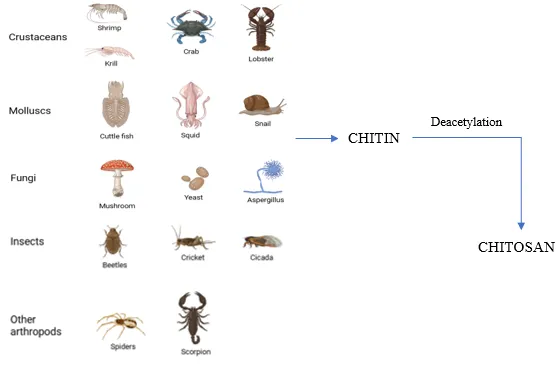
Figure 2. Various natural sources of Chitosan (created with Biorender.com)
History
The discovery of chitosan dates back to the late eighteenth century. In 1799, British chemist Charles Hatchett isolated chitin by decalcifying crustacean shells. Later, in 1859, French physiologist Charles Marie Benjamin Rouget demonstrated that treating chitin with potassium hydroxide removed its acetyl groups, producing a modified, acid-soluble derivative. This compound was subsequently named chitosan by German chemist Felix Hoppe-Seyler in 1894.[11]
Chemistry
Glucose is one of the most abundant natural sugars and serves as the building block of cellulose, the main structural component of plant cell walls. N-acetylglucosamine (GlcNAc), which is the basic building block of chitin, is a modified form of glucose in which an acetylated amino group replaces one hydroxyl group. Both cellulose and chitin are β-(1→4)-linked homopolysaccharides, Cellulose consisting of repeating glucose units and Chitin consisting of repeating N-acetylglucosamine (GlcNAc) units.[12]
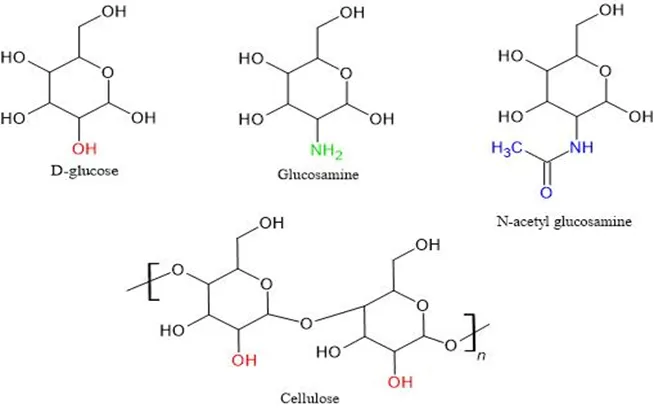
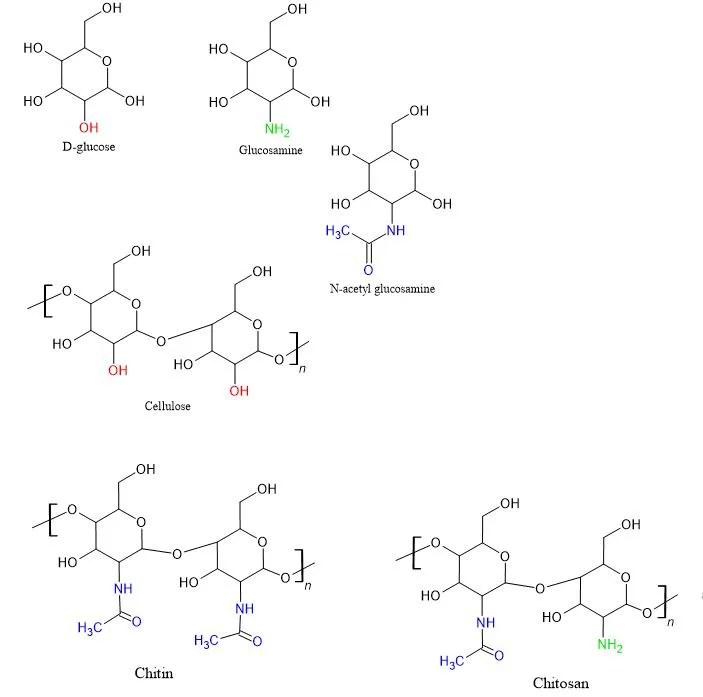
Figure 3. Structural relationship between D-glucose, Cellulose, N-acetyl glucosamine, Chitin & Chitosan
Chitosan in Dentistry
Chitosan has been extensively investigated in biomedicine, particularly in dentistry, owing to its regenerative properties and its ability to restore or enhance the function of various tissues. The antibacterial, bioadhesive, biodegradable and biocompatible qualities of Chitosan has attracted more attention in the field of dentistry. Its use has been studied for diverse dental applications such as tissue engineering, implantology, endodontics, drug delivery and periodontics (Figure 4).[13]
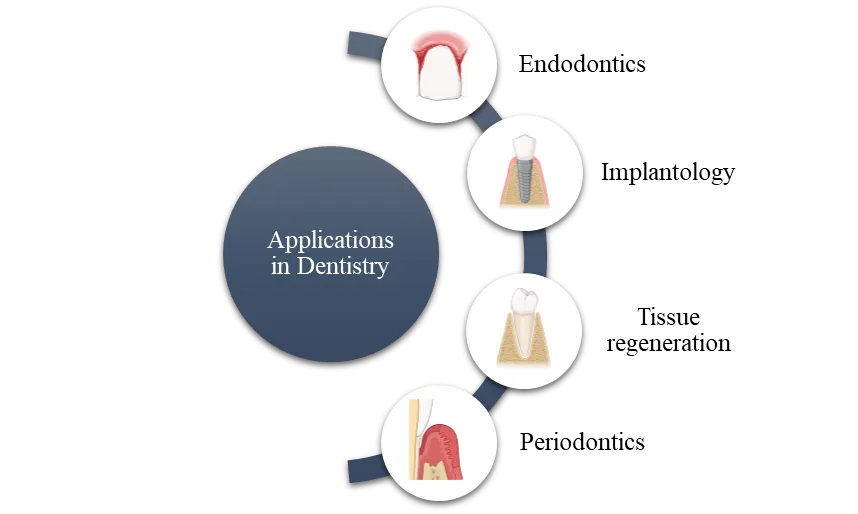
Figure 4. Applications of Chitosan in dentistry (created with Biorender.com)
Chitosan in endodontics
To effectively treat dental caries, it is essential to comprehend the dynamics of endodontic biofilms. During endodontic therapy, pulp tissue is removed, the root canal is cleaned with irrigants, intracanal drugs are administered, and the canal is sealed with an inert substance.[14] Recent studies have explored the application of chitosan nanoparticles as a biocompatible alternative for root canal disinfection, demonstrating their ability to reduce microbial load significantly and enhance antimicrobial efficacy. [15] In addition, chitosan has been explored as a component of endodontic sealers owing to its antimicrobial and biocompatible properties. Chitosan-based sealers have demonstrated improved antibacterial activity, enhanced sealing ability, and the potential to improve the long-term outcomes of root canal therapy.[13]
Chitosan in implantology
Continuous improvements in modern dentistry have led to the development of innovative surgical techniques and a diverse range of biomaterials for dental implants. Patients with partial or complete edentulism frequently use these implants to replace lost teeth, thereby restoring oral function and aesthetics.[16] The efficacy of dental implants may be compromised by peri-implant infections such as peri-implantitis and peri-implant mucositis, which can present significant clinical difficulties. This can be overcome by the use of Chitosan, which exhibits excellent antimicrobial activity.[17] Chitosan-based biomaterials have been used in implantology to enhance the osseointegration of dental implants, fostering the development of bone tissue and cell proliferation. The surface functionalization of dental implants with chitosan has emerged as a promising approach for the controlled delivery of growth factors and antimicrobial agents, thereby enhancing bone regeneration and minimizing the risk of implant-associated infections.[13]
Chitosan in tissue regeneration
Biologically active natural materials have recently gained significant attention as possible materials for tissue engineering. Because of their physical and chemical similarities, they can mimic the structure of human tissue. For successful application in tissue engineering, bioactive materials must possess several essential characteristics, including: (i) excellent biocompatibility with surrounding tissues; (ii) a biodegradation rate that is synchronized with new tissue regeneration; (iii) nontoxic and nonimmunogenic behaviour; (iv) appropriate mechanical strength to support tissue repair; and (v) suitable porosity and structural morphology to facilitate the transport of cells, gases, nutrients, metabolites, and signalling molecules within the scaffold and between the material and the host tissue.[18] Chitosan has been thoroughly investigated as a potential biomaterial for hard and soft tissue regeneration. [13] Because of their biocompatibility, biodegradability, and diverse biological roles, chitosan-based sponges have attained significant attention in dentistry in recent years. Their interconnected porous three-dimensional architecture creates a favourable microenvironment for tissue regeneration while supporting controlled drug delivery and effective hemostasis within the oral cavity. Consequently, chitosan sponges have emerged as promising biomaterials for diverse dental applications, including wound healing, periodontal regeneration, pulp and bone tissue engineering, and the management of post-extraction sites.[19] The use of suitable stem cells, which can differentiate into specific tissue types, plays a crucial role in tissue regeneration. In tissue engineering, chitosan-based scaffolds provide a supportive matrix that promotes cell attachment, proliferation, and growth.[19] Recent developments in chitosan-based biomaterials have resulted in the fabrication of functionalized membranes for bone regeneration, demonstrating the ability to enhance osteoblastic differentiation and facilitate mineralized matrix deposition.[13] 3D bioprinting is an advanced tissue engineering technique that creates customised three-dimensional scaffolds layer by layer using computer-aided design (CAD). These scaffolds are intended to repair or replace damaged tissues. Chitosan is a promising bioink component for 3D bioprinting due to its biocompatibility, biodegradability, and drug delivery capability; however, because of its poor mechanical strength and printability, it is typically blended with polymers such as polycaprolactone to fabricate scaffolds for tissue engineering and regenerative medicine.
Chitosan in periodontics
Periodontitis is a polymicrobial, chronic inflammatory illness that damages the tissues that support teeth and, if ignored, results in tooth loss. Different periodontal infections are found in periodontal pockets.[20] Because of its antimicrobial activity, which helps control pathogenic microbiota, and its bioadhesive qualities, which improve the retention of therapeutic formulations at the infection site, chitosan has been studied as a therapeutic agent for the treatment of periodontal diseases. Since its bioadhesive qualities improve the retention of therapeutic formulations at the infection site and its antibacterial activity helps regulate pathogenic microbiota, chitosan has been studied as a therapeutic agent for the treatment of periodontal disorders. Furthermore, research shows that adding it to biomaterials encourages the regeneration of damaged periodontal tissues, aiding gingival and bone healing.[13]
Examples of chitosan presentations in drug delivery.[7]
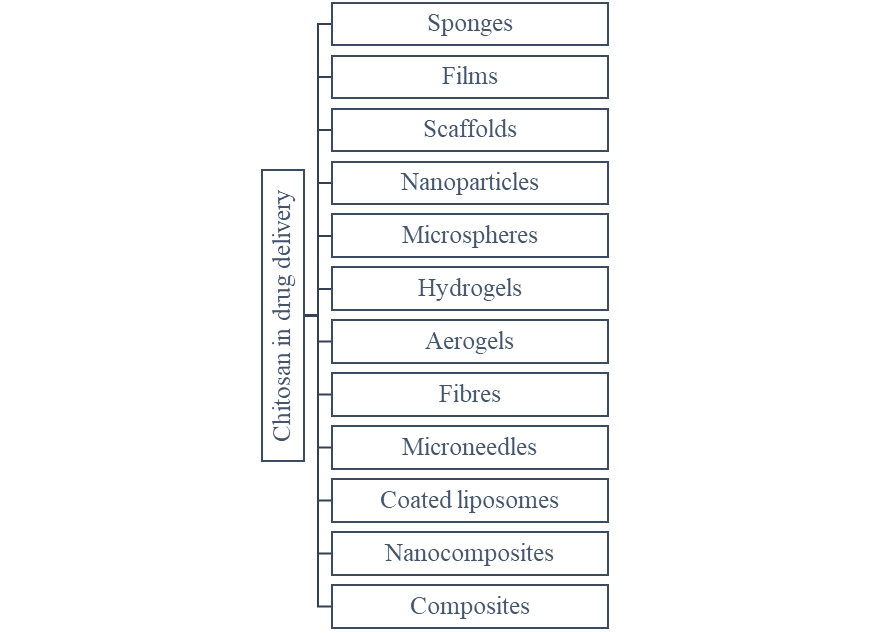
Figure 5. Examples of Chitosan presentations in drug delivery
Using Chitosan in Periodontal Treatment
The potential of chitosan as a therapeutic agent in periodontal therapy has been widely investigated, owing to its antimicrobial activity against periodontal pathogens and its bioadhesive characteristics, which improve the localised retention of drug delivery systems at the infected site. Further, its inclusion into biomaterials supports gingival and bone repair by encouraging the regeneration of damaged periodontal tissues.[13] Chitosan can be readily fabricated into various forms, including membranes, gels, nanofibers, beads, nanoparticles, scaffolds, and sponges, making it a versatile material for drug delivery applications (Figure 5) [21] It also exhibits antioxidant and antimicrobial properties (Figure 6).[8]
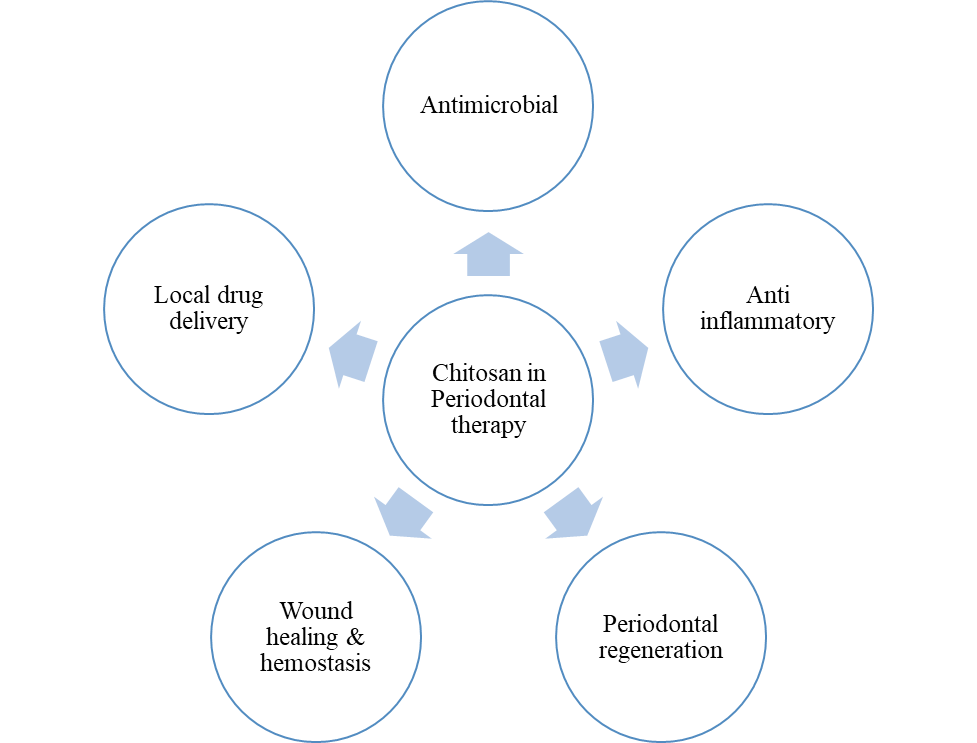
Figure 6. Applications of Chitosan in periodontal therapy
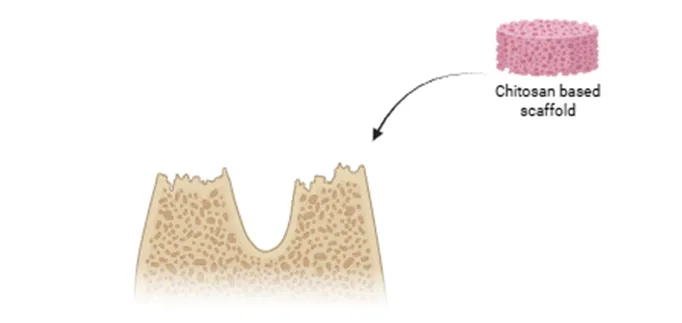
Figure 7. Application of chitosan-based scaffold for tissue regeneration (created with Biorender.com)
Local drug delivery
The effectiveness of periodontal therapy largely depends on the ability of the drug delivery system to provide a sustained and controlled release of the therapeutic agent. Since the continuous flow of gingival crevicular fluid can rapidly remove drugs from the periodontal pocket, maintaining an effective drug concentration at the site of infection remains a challenge.[22] A variety of local drug delivery systems (LDDS) have been developed for periodontal therapy, including irrigating systems, fibres, gels, strips, films, microparticles, nanoparticles, and low-dose antimicrobial formulations (Figure 8). These systems are designed to deliver antimicrobial agents directly to the infected subgingival periodontal pockets, ensuring high local drug concentrations while minimizing systemic exposure and reducing the risk of adverse effects elsewhere in the body.[23]
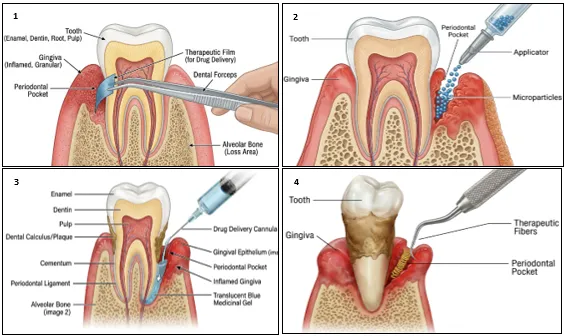
Figure 8. Various local drug delivery systems using Chitosan for periodontal therapy, including (1) Films (2) Microparticles (3) Gels and (4) Fibers for delivery into periodontal pockets. (Figure created using Scispace AI as an illustration aid)
Antimicrobial action
The antibacterial activity of chitosan is influenced by the structural differences between Gram-positive and Gram-negative bacteria. Under acidic conditions (pH < 6.5), protonated chitosan electrostatically binds to these negatively charged bacterial surfaces, making Gram-negative bacteria generally more susceptible. Although Gram-positive bacteria also possess negatively charged teichoic acids, studies suggest that chitosan's antibacterial activity is not solely due to electrostatic interactions. Low-molecular-weight chitosan (≤50 kDa) can penetrate bacterial cells and inhibit DNA transcription, indicating intracellular activity. Therefore, both the molecular weight and structural properties of chitosan influence its extracellular and intracellular antibacterial mechanisms.[24] The efficacy of chitosan nanoparticle gel as a supporting antibacterial agent was investigated by Savita et al. in 2025. In patients with chronic periodontitis, the adjunctive use of a 1% chitosan nanoparticle gel in conjunction with scaling and root planing greatly improved clinical outcomes and successfully inhibited the growth of periodontal bacteria.[25] Sreeja Sarkar et al in 2020 conducted a study that showed antimicrobial efficacy of 1% (w/v) chitosan gel against the Gram-negative periodontal pathogens such as P. gingivalis, T. forsythia, P. intermedia and F. nucleatum. Based on these findings, the authors suggest that chitosan has potential as a periodontal therapeutic agent and can be used as a drug-delivery vehicle as well as the active antimicrobial agent itself.[20]
Anti-inflammatory
Inflammation is the body's primary defense against microbial infections and plays a central role in periodontal disease. Chitosan and its derivatives help regulate this inflammatory response through multiple mechanisms. N-acetylglucosamine, a component of chitosan, has been shown to stimulate immune cells, including neutrophils, macrophages, and fibroblasts, involved in tissue repair.[26] Chitosan also inhibits the growth of major periodontal pathogens, including Porphyromonas gingivalis and Aggregatibacter actinomycetemcomitans.[27] In addition, it reduces inflammation by modulating prostaglandin E₂ production via the JNK signaling pathway and influences the expression of inflammatory mediators such as fibronectin, interleukin-6 (IL-6), and interleukin-1β (IL-1β). These combined effects contribute to its anti-inflammatory potential in periodontal therapy.[26]
Periodontal regeneration
Formulations containing chitosan stay on the application site for a long time. Additionally, it exhibits neovascularization induction and osteoconductivity, both of which promote faster bone development.[8]
Jan Kiryk et al. (2025), in their systematic review on functionalization strategies of chitosan-based scaffolds with growth factors for bone regeneration, reported that incorporating growth factors into chitosan scaffolds significantly enhances bone regeneration compared with chitosan alone. Among the various growth factors, BMP-2 showed the strongest and most consistent osteogenic potential by promoting osteoblast differentiation and mineralized bone formation. Other growth factors, including BMP-6, IGF-1, VEGF, PDGF, bFGF, and periostin, further supported regeneration by stimulating cell proliferation, angiogenesis, extracellular matrix remodeling, and collagen deposition.[28]
Wound healing and haemostasis
Wound healing is a complex and dynamic biological process essential for restoring the structure and function of damaged tissues. Over the past few decades, chitosan, a natural biopolymer derived from chitin, has gained considerable attention as a promising biomaterial for enhancing wound repair and tissue regeneration.[29] Chitin and chitosan possess antimicrobial and moisture-retaining properties that contribute to their broad biomedical applications. Their excellent biocompatibility and versatility enable them to be fabricated into various forms, including hydrogels, membranes, nanofibers, nanoparticles, scaffolds, and sponges, making them valuable materials for drug and gene delivery, wound healing, tissue engineering, and regenerative medicine.
CONCLUSION
The studies reviewed suggest that chitosan is a promising biomaterial in dentistry due to its ability to reduce microbial growth and support tissue regeneration. In periodontics, the use of chitosan, particularly when combined with antimicrobial agents, has been shown to enhance the reduction of bacterial biofilms and improve important clinical outcomes in patients with periodontitis, including decreased probing depth and reduced bleeding on probing. Chitosan has shown great potential in improving the biocompatibility and effectiveness of treatments. While the current evidence is promising, additional research is essential to enhance chitosan formulations and expand their therapeutic applications. Future developments in chitosan-based biomaterials may help provide novel, secure, and efficient treatment plans for a variety of dental issues.
REFERENCES




Aparna E., Ashik T. N., Muhammed Danish Haneefa, Jisha Mohanan*, Chitosan Based Biomaterials for Periodontal Therapy: Advances in Local Drug Delivery, Tissue Regeneration and Antimicrobial Applications, Int. J. Med. Pharm. Sci., 2026, 2 (9), 276-286. https://doi.org/10.5281/zenodo.22670836
 10.5281/zenodo.22670836