

We use cookies to ensure our website works properly and to personalise your experience. Cookies policy
1Assistant Professor, Shivlingeshwar College of Pharmacy, Almala Dist. Latur, Maharashtra, India-413520
2Shivlingeshwar College of Pharmacy, Almala Dist. Latur, Maharashtra, India-413520
3Research Scholar, School of Pharmacy and Research, People`S University, Bhopal-462037 MP, India
Mosquito-borne diseases such as malaria, dengue, chikungunya, Zika, and West Nile fever continue to impose a significant global public health burden, particularly in tropical and subtropical regions. The increasing incidence of these diseases, coupled with rising insecticide resistance and growing concerns regarding the adverse health and environmental effects of synthetic mosquito repellents, has intensified the demand for safer, eco-friendly alternatives. The present study aimed to formulate and evaluate a herbal mosquito repellent dhoop using plant-derived bioactive ingredients and natural binders, with emphasis on safety, combustion efficiency, and biological efficacy. Two formulations (F1 and F2) were prepared using neem powder (Azadirachta indica), bael leaf powder (Aegle marmelos), orange peel powder, limonene oil, camphor, charcoal, sawdust, ghee, acacia, and guar gum. The formulations were evaluated for physicochemical parameters, burning characteristics, smoke visibility, irritation potential, and larvicidal activity against mosquito larvae. Among the tested formulations, F2 demonstrated superior performance due to its optimized composition, higher neem content, inclusion of bael leaf powder, and enhanced biofuel system. F2 exhibited acceptable burning time (15–30 minutes), low ash content (2.3%), optimal moisture content (5.6%), near-neutral pH (7.6), visible yet non-irritating smoke, and satisfactory room-based mosquito repellency. Larvicidal evaluation revealed 80% mortality against 3rd–4th instar mosquito larvae, indicating significant biological activity. The combined results highlight the synergistic action of herbal bioactives and efficient combustion, supporting the potential of the optimized herbal dhoop as a safe, biodegradable, and effective alternative to conventional chemical mosquito repellents.
Mosquitoes are well-recognized vectors of several infectious diseases, including malaria, dengue, chikungunya, Zika virus disease, yellow fever, and West Nile fever, posing a major threat to global public health. These mosquito-borne diseases are responsible for substantial morbidity and mortality, particularly in tropical and subtropical regions, and their incidence has increased markedly over recent decades due to urbanization, climate change, global travel, and expansion of mosquito habitats(Chatterjee et al. 2023; ‘Dengue worldwide overview’ 2025). If we look on the global burden then as per WHO recent data According to reports submitted to the World Health Organization (WHO), the global incidence of dengue increased dramatically from 505,430 reported cases in 2000 to over 14.6 million cases in 2024. Notably, dengue is now endemic in more than 100 countries across all continents. In 2024 alone, the world experienced the highest number of dengue cases ever recorded within a single year, with ongoing transmission and an unprecedented surge resulting in more than 14.6 million reported cases and over 12,000 dengue-related deaths globally. The Region of the Americas accounted for a substantial proportion of this burden, reporting over 13 million cases to WHO. The actual magnitude of dengue infection is believed to be significantly underestimated, as the majority of infections remain asymptomatic or present with mild symptoms and are therefore under-reported. Modelling studies estimate approximately 390 million dengue virus infections annually, of which nearly 96 million manifests clinically. Furthermore, recent estimates suggest that nearly 5.6 billion people worldwide are at risk of infection with dengue and other arboviral diseases (Chatterjee et al. 2023; ‘Dengue’ n.d.). Given the magnitude of this public health challenge, mosquito vector control remains the most effective strategy for reducing disease transmission and associated mortality. Conventional mosquito control approaches primarily rely on chemical larvicides, adulticides, repellents, and insecticide-treated bed nets. Organophosphates and insect growth regulators have been extensively employed to target mosquito larvae belonging to the family Culicidae. However, the indiscriminate and prolonged use of chemical pesticides has resulted in the development of insecticide resistance among mosquito populations, along with significant adverse effects on non-target organisms and the environment (Chatterjee et al. 2023). Chemical-based mosquito control strategies, particularly topical repellents and fumigants, have been extensively employed to reduce human–mosquito contact. Most commercially available synthetic repellents contain active ingredients such as N, N-diethyl-meta-toluamide (DEET), permethrin, and synthetic pyrethroids. Although these compounds are effective in repelling mosquitoes, growing evidence indicates that their prolonged and indiscriminate use is associated with adverse effects on human health and the environment(Osimitz and Grothaus 1995). Reported health concerns include skin irritation, allergic reactions, respiratory discomfort, neurotoxicity, and, in rare cases, seizures, particularly in children and individuals with pre-existing sensitivities(Osimitz and Grothaus 1995). In addition to human health risks, continuous exposure of mosquitoes to synthetic insecticides has led to the widespread development of resistance, thereby reducing the long-term effectiveness of these control measures(Hemingway and Ranson 2000). Furthermore, chemical repellents and insecticides release toxic residues into air, water, and soil, negatively impacting non-target organisms such as pollinators, aquatic fauna, and beneficial insects, and contributing to ecological imbalance(Carvalho 2017; Sánchez-Bayo and Wyckhuys 2019). Given these limitations, there is an increasing global demand for safer, biodegradable, and environmentally sustainable alternatives to synthetic mosquito repellents. In this context, herbal mosquito repellent products have gained considerable attention. Herbal mosquito repellent dhoop represents a traditional, incense-based formulation developed using plant-derived bioactive compounds known for their mosquito-repellent properties. These products commonly contain ingredients such as neem (Azadirachta indica), citronella (Cymbopogon spp.), eucalyptus (Eucalyptus spp.), lemongrass (Cymbopogon citratus), tulsi (Ocimum sanctum), and clove (Syzygium aromaticum), all of which have been scientifically validated for their repellent, larvicidal, and insect growth–regulating activities (Chatterjee et al. 2023; Luker 2024). Unlike synthetic mosquito repellents, herbal mosquito repellent dhoop formulations are biodegradable, non-toxic, and generally considered safer for vulnerable populations such as children, elderly individuals, and pets. These formulations do not release harmful chemical fumes and therefore contribute to better indoor air quality during use. In addition to repelling adult mosquitoes, several plant-derived bioactive compounds are known to interfere with mosquito breeding, larval development, and metamorphosis, providing prolonged and multi-stage protection against mosquito populations. Neem (Azadirachta indica) was selected as a major constituent in the present formulation due to its well-documented efficacy and favorable safety profile. Supporting this selection, Valecha et al. (1996) conducted a field-based safety evaluation of neem oil used as a mosquito repellent, where a 1% neem oil formulation was applied under real-world conditions. Clinical examination of 156 adults and 110 children exposed to neem oil aerosols over a one-year period revealed no significant adverse effects, including skin irritation or respiratory complications. This evidence strongly supports the relative safety of neem-based mosquito repellents and justifies its inclusion as a primary bioactive ingredient in the present herbal mosquito repellent dhoop formulation(Valecha et al. 1996).
1.1 BACKGROUND OF MOSQUITO
1.1.1 Introduction
Mosquitoes belong to the family Culicidae under the order Diptera. The term “mosquito” originates from the Spanish word meaning “small fly.” Mosquitoes are among the most widespread and adaptable insects on Earth, with over 3,500 identified species distributed across diverse ecological regions, excluding extreme cold environments such as Antarctica (Becker et al. 2020; Chatterjee et al. 2023). Their evolutionary success is largely attributed to their adaptability, high reproductive capacity, and ability to exploit a wide range of habitats. Despite their small size, mosquitoes exert a profound impact on human health due to their role as efficient disease vectors. Several mosquito species have evolved specialized mechanisms to transmit pathogens, including protozoa, viruses, and nematodes, making them one of the deadliest animals to humans globally (Mendoza-Roldan et al. 2021; Chatterjee et al. 2023).
1.1.2 Physical Characteristics and Anatomy
Adult mosquitoes possess a slender, elongated body divided into three main regions: head, thorax, and abdomen. The head bears large compound eyes, segmented antennae, and a specialized piercing–sucking mouthpart known as the proboscis. In female mosquitoes, the proboscis is well developed and adapted for blood feeding, while males possess a shorter proboscis and feed primarily on nectar and plant juices. The thorax contains powerful flight muscles attached to a single pair of wings, enabling agile flight and producing the characteristic buzzing sound. The abdomen is flexible and expandable, allowing it to store blood meals and house reproductive organs essential for egg development.
1.1.3 Life Cycle and Reproduction
Mosquitoes undergo complete metamorphosis, progressing through four distinct developmental stages: egg, larva, pupa, and adult (Becker et al. 2020) (fig no. 1).
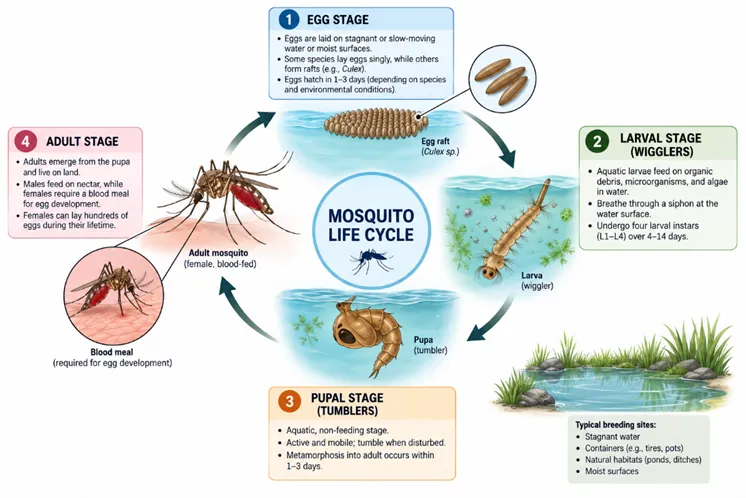
Figure no. 1: Life Cycle of Mosquito
1.1.4 Feeding Behaviour and Host Attraction
Mosquitoes exhibit hematophagous behaviour, with only females requiring blood meals for egg production. Both sexes primarily obtain energy from plant nectar and other sugar sources. Host-seeking behaviour in mosquitoes is guided by a combination of chemical, thermal, and visual cues. Key attractants include carbon dioxide exhaled by hosts, body heat, skin Odors such as lactic acid and ammonia, and visual contrasts such as dark-colored clothing (Takken and Knols 1999; Luker 2024).
1.1.5 Mosquito Bites and Their Effects
During feeding, a mosquito injects saliva containing anticoagulant and anti-inflammatory compounds into the host’s skin, preventing blood clotting. The host immune response to these salivary proteins results in localized itching, redness, and swelling due to histamine release (Ribeiro 1987). More importantly, infected mosquitoes can transmit pathogens during blood feeding, leading to severe and sometimes fatal diseases.
1.1.6 Mosquito-Borne Diseases
Mosquitoes are responsible for the transmission of several major human diseases that pose a serious global public health burden. Malaria, caused by Plasmodium parasites and transmitted through the bite of infected Anopheles mosquitoes, remains one of the leading causes of morbidity and mortality in tropical regions. Dengue fever, primarily spread by Aedes aegypti and Aedes albopictus, is a rapidly expanding viral disease characterized by high fever, severe joint pain, and, in severe cases, dengue hemorrhagic fever and shock syndrome. Zika virus disease, also transmitted by Aedes mosquitoes, gained global attention due to its association with congenital abnormalities such as microcephaly and other neurological disorders in newborns. Yellow fever is an acute viral hemorrhagic disease transmitted by mosquitoes, capable of causing jaundice, internal bleeding, organ failure, and high fatality rates in severe infections. West Nile fever, mainly transmitted by Culex mosquito species, can lead to neurological complications including encephalitis and meningitis, particularly in elderly and immunocompromised individuals. Chikungunya, another Aedes-borne viral disease, is characterized by sudden onset of fever and debilitating joint pain that can persist for months or even years, significantly affecting quality of life. Collectively, these mosquito-borne diseases highlight the critical need for effective and sustainable mosquito control strategies to reduce transmission and protect public health (Chatterjee et al. 2023; Luker 2024; ‘Dengue’ n.d.).
2. Experimental
2.1. MATERIALS
Neem Powder (Azadirachta indica)
Neem (Azadirachta indica), belonging to the family Meliaceae, is a fast-growing evergreen tree native to India and other tropical regions. Neem leaf or seed powder is widely used in herbal mosquito repellent formulations due to the presence of potent bioactive compounds such as azadirachtin, nimbin, nimbidin, flavonoids, tannins, and terpenoids. These constituents are known to exhibit strong insecticidal, growth-regulating, and mosquito-repellent properties (Chatterjee et al. 2023). When neem powder is incorporated into dhoop and burned, it releases volatile compounds that interfere with mosquito olfactory receptors, thereby masking human body odors and preventing host detection. In addition, neem smoke acts as a natural fumigant, creating an unfavorable environment for mosquitoes and providing effective protection against mosquito bites.
Bael Leaf Powder (Aegle marmelos)
Bael (Aegle marmelos), a medicinal plant belonging to the family Rutaceae, is native to India, Sri Lanka, and Southeast Asia and is extensively used in traditional medicine. Bael leaf powder is incorporated into herbal mosquito repellent dhoop because it contains several bioactive compounds such as cuminaldehyde, eugenol, limonene, citral, marmelosin (auraptene), flavonoids, and tannins. These constituents exhibit insect-repellent, antimicrobial, and fumigant properties (Sarkar et al. 2020). Upon burning, bael leaf powder releases aromatic vapors that disrupt mosquito sensory perception and create an unpleasant environment for mosquitoes, thereby enhancing the overall repellent efficacy of the dhoop formulation.
Acacia Powder (Gum Arabic)
Acacia gum, commonly known as gum Arabic, is a natural exudate obtained from Acacia senegal and Acacia seyal of the family Fabaceae. It is widely used in pharmaceutical and incense formulations due to its excellent binding, stabilizing, and film-forming properties. Acacia gum consists mainly of polysaccharides and glycoproteins, including arabinogalactan-protein complexes, galactose, rhamnose, and glucuronic acid, along with essential mineral salts(Sarkar et al. 2020). In herbal mosquito repellent dhoop, acacia gum serves as a natural binder that provides structural integrity, prevents cracking, and ensures slow and uniform burning. Its non-toxic and biodegradable nature makes it suitable for eco-friendly and safe indoor applications.
Limonene Oil (Citrus-Based Essential Oil)
Limonene oil, derived from citrus sources, contains active constituents such as limonene, citral, and linalool, which are known for their strong mosquito-repellent and aromatic properties (Fernando et al. 2024). In herbal mosquito repellent dhoop, limonene oil acts by interfering with mosquito olfactory receptors, thereby preventing mosquitoes from locating human hosts. In addition to its repellent action, it enhances the fragrance of the dhoop, making it pleasant for users while remaining irritating and repulsive to mosquitoes.
Orange Peel Powder
Orange peel powder is obtained from dried citrus peels and is rich in bioactive compounds such as limonene, flavonoids, and citric acid. Limonene, the major constituent, is a well-established natural mosquito repellent(Yisa Adeniyi Abolade et al. 2024). In dhoop formulations, orange peel powder not only enhances mosquito-repellent activity but also improves fragrance and provides antimicrobial benefits. Its presence contributes to smooth combustion and supports sustained smoke release during burning.
Camphor
Camphor is obtained from the wood and leaves of Cinnamomum camphora (family Lauraceae) or produced synthetically from turpentine oil. The major active compound, camphor (C₁₀H₁₆O), is a volatile monoterpene ketone with strong fumigant and insect-repellent properties, supported by minor components such as α-pinene and cineole(Chen et al. 2013). When used in mosquito repellent dhoop, camphor releases vapors that disrupt mosquito olfactory and nervous systems, leading to disorientation and repellence. Its slow sublimation ensures prolonged activity, while its antibacterial and antifungal properties help purify indoor air and enhance the overall fragrance of the formulation.
Sawdust
Sawdust is a by-product of wood processing industries and primarily consists of cellulose, hemicellulose, and lignin(Thomas et al. 2025). Due to its good combustibility, sawdust is used as a natural biofuel in herbal mosquito repellent dhoop. It supports slow and consistent burning, ensures uniform smoke release, and aids in shaping and stabilizing the dhoop sticks during preparation and storage.
Coal Tar (Anthracite)
Coal tar is a by-product obtained during the carbonization of coal in coke production and is rich in polycyclic aromatic hydrocarbons, phenolic compounds, and benzene derivatives, which provide high calorific value. In mosquito repellent dhoop formulations, coal tar is used as a supplementary biofuel to enhance sustained combustion and smoke generation, thereby supporting prolonged mosquito-repellent activity(Zhang et al. 2023).
Table 1: Composition of Herbal Mosquito Repellent Dhoop Formulation
|
S. No |
Ingredients |
Role |
F1 |
F2 |
|
1. |
Neem Powder |
Mosquito repellent Activity |
20 gm |
25gm |
|
2. |
Turmeric |
Anti-Bacterial Activity |
8 gm |
- |
|
3. |
Orange Peel Powder |
Repellent Activity |
8 gm |
- |
|
4. |
Orange oil |
Repellent Activity |
5ml |
5ml |
|
5. |
Camphor |
Biofuel/Fragrance |
3gm |
10gm |
|
6. |
Acacia |
Binder |
4gm |
5gm |
|
7. |
Charcoal |
Biofuel |
2gm |
10gm |
|
7. |
Saw Dust |
Biofuel |
- |
15gm |
|
8. |
Bails Leaves Powder |
Repellent Activity |
- |
10gm |
|
9. |
Ghee |
Binder and Biofuel |
- |
5ml |
|
10. |
Guar Gum |
Binder |
- |
5 gm |
|
11. |
Water |
Vehicle |
q.s |
q.s |
2.2 Formulation of Herbal Mosquito Repellent Dhoop
2.2.1 Collection and Preparation of Ingredients
Neem leaves or neem powder, orange peel powder, camphor, limonene oil, charcoal powder, and a natural binder such as cow dung or guar gum were used for the formulation. Fresh neem leaves and orange peels were collected, washed thoroughly, and shade-dried to preserve their bioactive constituents. After complete drying, the materials were ground separately into fine powders and passed through a suitable sieve to ensure uniform particle size. Camphor was crushed into small granules to facilitate even distribution during mixing.
2.2.2 Preparation of the Dry Phase
The dry phase was prepared by accurately weighing neem powder, orange peel powder, and charcoal powder in predetermined proportions. These ingredients were transferred into a clean and dry mixing vessel and blended thoroughly to achieve a homogeneous mixture. Charcoal powder served as a combustion-supporting agent, while neem and orange peel powders contributed primarily to the mosquito-repellent activity of the formulation.
2.2.3 Preparation of the Wet Phase
The wet phase was prepared separately by mixing limonene oil with a small quantity of purified water or ethanol to improve its dispersion throughout the formulation. Crushed camphor was gradually added to this mixture and stirred until uniformly distributed, enhancing the overall repellent efficacy of the dhoop.
2.2.4 Mixing and Dough Formation
The prepared wet phase was slowly incorporated into the dry mixture with continuous stirring to ensure uniform binding of all ingredients. A natural binder, such as cow dung or guar gum, was added as required to obtain the desired consistency. The mixture was kneaded thoroughly to form a smooth, pliable dough suitable for molding.
2.2.5 Molding and Shaping
The dough was molded manually into sticks or cone-shaped dhoop of uniform size and shape. Care was taken to ensure adequate compaction to allow uniform and controlled burning. The molded dhoop was air-dried under shade for 24–48 hours to prevent loss of volatile bioactive compounds.
2.2.6 Final Drying and Storage
After air drying, the dhoop sticks were further dried either under mild sunlight or in a drying chamber until complete removal of residual moisture. The dried dhoop was then stored in airtight containers at room temperature to preserve fragrance and repellent activity until further evaluation (Fig no. 2).
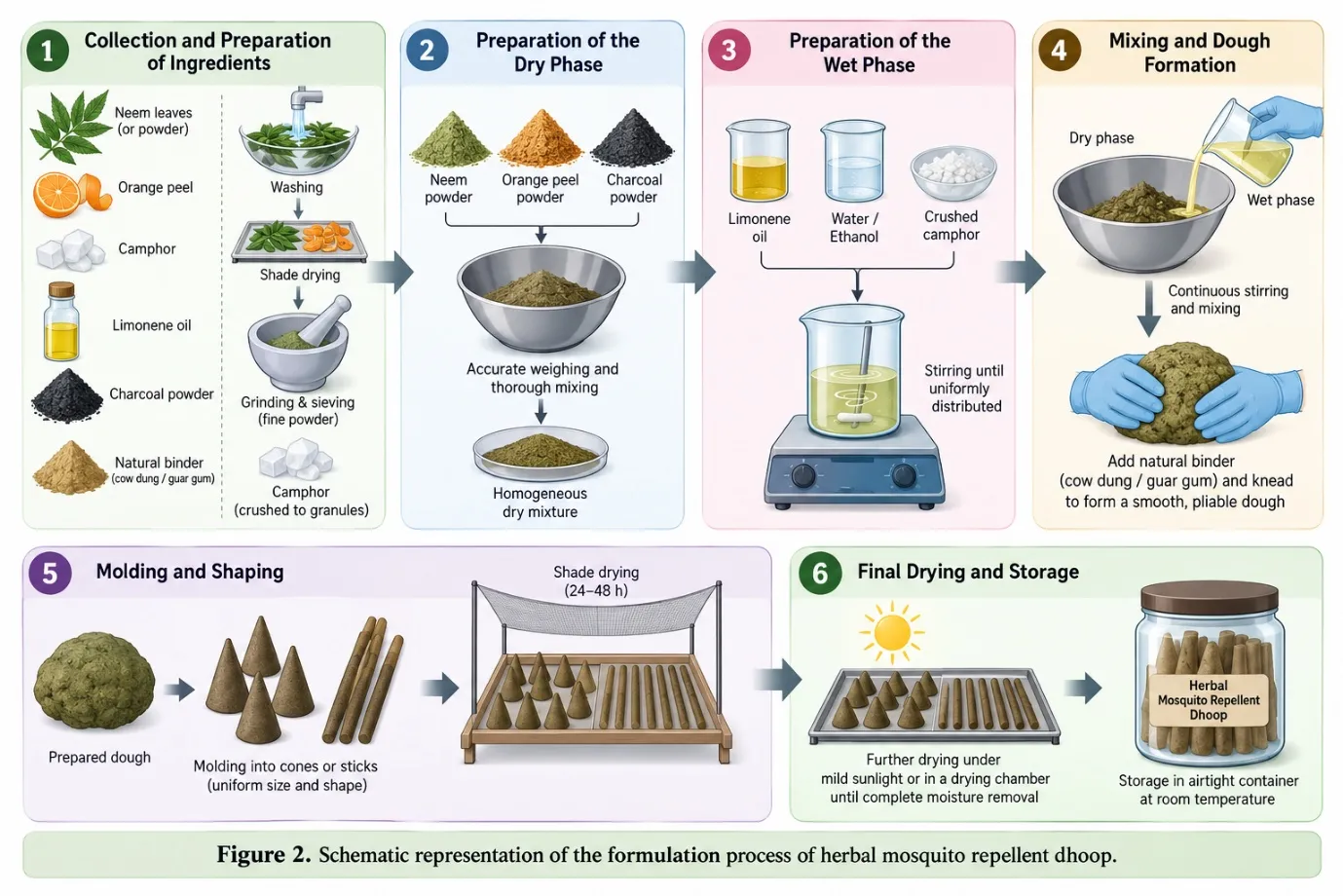
Figure 2. Illustration of the stepwise formulation process of herbal mosquito repellent dhoop
4. Evaluation Parameters
The prepared herbal mosquito repellent dhoop sticks were evaluated for various physicochemical, combustion, safety, and biological parameters to assess their quality, efficacy, and suitability for use.
Burning Time
The burning time test was performed to determine the duration for which the dhoop stick remained ignited, as prolonged burning ensures sustained release of mosquito-repellent compounds and extended protection. Each dhoop stick was ignited in a controlled environment, and the total burning duration was recorded using a stopwatch. The average burning time was calculated. An optimal burning time ranging between 20 and 60 minutes per stick was considered acceptable, depending on the formulation composition and size of the dhoop (Figure no. 3).
Ash Content
Ash content was evaluated to determine the amount of residue remaining after complete combustion of the dhoop stick. Lower ash content indicates efficient combustion and minimal use of inert or filler materials, reflecting better product quality. After complete burning, the residual ash was collected and weighed. Ash content was calculated as a percentage of the initial weight of the dhoop stick.
Moisture Content
Moisture content plays a crucial role in burning efficiency, shelf life, and resistance to microbial growth. Excess moisture can result in incomplete combustion and reduced repellent efficacy. To determine moisture content, a known weight of the dhoop stick was dried in a hot air oven at 105 °C for 3 hours, cooled in a desiccator, and reweighed. The percentage moisture content was calculated based on the weight difference before and after drying.
Smoke Visibility Test
The smoke visibility test was carried out to evaluate the density and dispersion of smoke produced during combustion. Adequate smoke generation is essential for effective mosquito repellency, whereas excessive smoke may cause discomfort to users. The dhoop stick was ignited in a controlled environment, and smoke density and dispersion were observed visually. The results were graded qualitatively using a visibility scale to ensure a balance between repellent efficacy and user comfort.
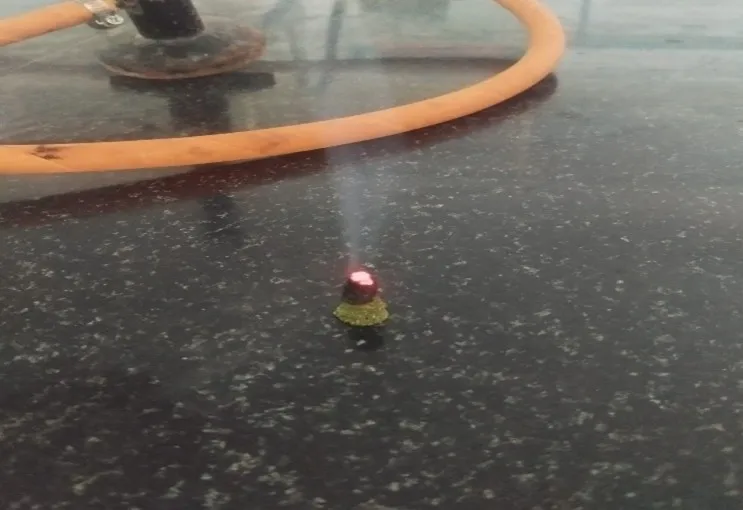
Figure no. 3: Smoke Generation Profile of the Formulated Herbal Incense (Dhoop)
Irritation Test
The irritation test was conducted to assess the safety of the dhoop smoke with respect to eye and respiratory irritation. During and after burning of the dhoop, users were observed for any signs of discomfort such as eye watering, coughing, breathing difficulty, or irritation. The absence of such symptoms indicated that the formulation was safe and suitable for indoor use.
pH Test
The pH of the dhoop formulation was determined to assess its chemical stability and safety. A small quantity of the powdered dhoop sample was dispersed in distilled water, and the pH was measured using a calibrated digital pH meter. A near-neutral pH was considered desirable for safe handling and storage (figure no. 4).
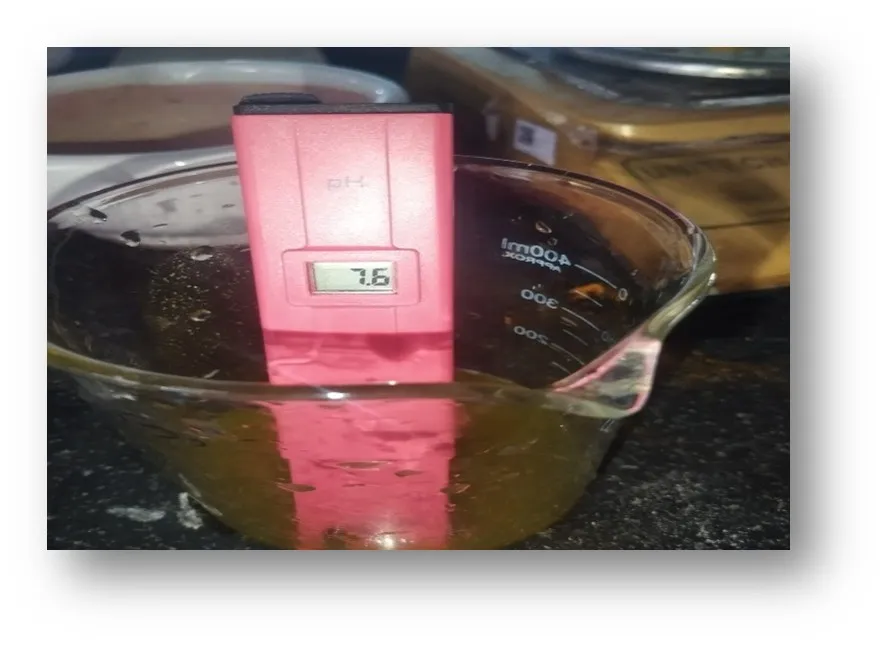
Figure no.4: pH Test of formulation
Larvicidal Activity
Larvicidal activity of the formulation was evaluated using 3rd or 4th instar mosquito larvae (Aedes, Anopheles, or Culex species). Groups of ten larvae were introduced into beakers or disposable plastic cups containing 100 mL of dhoop-treated medium or exposure to dhoop fog, depending on the test design. Three replicates were maintained for each test concentration (Table no. 2). Distilled water or solvent-treated water (DMSO or ethanol) served as the negative control. The experimental setup was maintained at room temperature (25 ± 2 °C) without providing food, and larvae were incubated for 24 hours. After the exposure period, larval mortality was assessed by observing the absence of movement even after gentle probing with a needle. Percentage mortality was calculated using the following formula:

Table no. 2: Larvicidal activity of herbal mosquito repellent dhoop (F2) against mosquito larvae
|
Sr. No |
Sample Code |
Concentration |
Total Larvae |
Number of Dead Larvae |
Mortality (%) |
|
1 |
Control |
-- |
10 |
1 |
10 |
|
2 |
Std Citronella Oil |
100 µL |
10 |
10 |
100 |
|
3 |
Dhoop (F2) |
-- |
10 |
8 |
80 |
The "Dhoop" sample showed 80% observed mortality, with a corrected mortality of 77.78%, indicating effective larvicidal activity and the result are shown in Table no. 2. The standard (citronella oil) achieved 100% corrected mortality, confirming its potency as a positive control. These results suggest that Dhoop has promising potential as a natural larvicide.
RESULTS AND DISCUSSION
The herbal mosquito repellent dhoop formulations (F1 and F2) were successfully prepared using plant-derived bioactive ingredients, natural binders, and biofuels. Both formulations were evaluated for physicochemical properties, combustion behavior, safety, and biological efficacy to identify the optimized formulation. Among the two batches, formulation F2 demonstrated superior overall performance and was selected for detailed evaluation. The improved efficacy of F2 over F1 can be directly correlated with differences in formulation composition (Table 1). F2 contained a higher concentration of neem powder (25 g vs. 20 g), which is rich in azadirachtin and related limonoids known for strong mosquito-repellent and larvicidal activity. In addition, F2 uniquely incorporated bael leaf powder (10 g), which is reported to possess insect-repellent and antimicrobial properties, thereby enhancing the biological activity of the formulation. In contrast, F1 relied primarily on turmeric and orange peel powder, which provide moderate repellent action but lack strong larvicidal potency. The combustion performance of F2 was markedly superior due to the inclusion of multiple biofuels such as sawdust (15 g), charcoal (10 g), camphor (10 g), and ghee (5 mL). This combination resulted in uniform burning and effective smoke generation, whereas F1 contained lower quantities of biofuels and lacked sawdust and ghee, leading to comparatively reduced combustion efficiency. The burning time of F2 ranged between 15–30 minutes, which, although slightly below the ideal range, was sufficient for short-duration indoor mosquito control and ensured rapid release of volatile repellent compounds. Physicochemical evaluation of F2 revealed desirable characteristics, including a dark green colour and pleasant odour, indicating the presence of natural herbal constituents and essential oils. The ash content of 2.3% reflects efficient combustion with minimal inert residue, while the moisture content of 5.6% supports formulation stability and resistance to microbial growth. The near-neutral pH of 7.6 indicates chemical stability and safety during handling and storage. Smoke visibility testing showed clearly visible smoke with adequate dispersion, which is essential for effective mosquito repellency. Importantly, the irritation test confirmed the absence of eye or respiratory discomfort during exposure, demonstrating that the formulation is suitable for indoor use. The safety profile of F2 can be attributed to the use of natural binders such as acacia and guar gum, along with the exclusion of harsh synthetic chemicals. The biological evaluation further validated the superiority of F2. Larvicidal activity studies showed 80% mortality against 3rd–4th instar mosquito larvae, corresponding to a corrected mortality of 77.78%. Although the standard citronella oil exhibited 100% mortality, the herbal dhoop demonstrated significant larvicidal efficacy, highlighting its potential as a natural larvicide. This activity is likely due to the combined action of neem-derived compounds, camphor vapors, and volatile constituents released during combustion. Room tests for mosquito repellency showed satisfactory results, confirming the effectiveness of the fumigant action against adult mosquitoes. Overall, the enhanced performance of F2 over F1 is attributed to its optimized composition, which includes higher neem content, the addition of bael leaf powder, increased biofuel concentration, and improved binder system. The synergistic interaction of herbal bioactives with efficient combustion characteristics resulted in superior mosquito-repellent efficacy, acceptable safety, and notable larvicidal activity. With minor optimization of burning duration, the F2 formulation has strong potential as an eco-friendly and effective alternative to conventional chemical mosquito repellents. The result of all Evaluation Parameters is arranged in table no. 3.
Table no. 3: Evaluation parameters and observed values of herbal mosquito repellent Dhoop(F2)
|
Test |
Observed Value |
|
Colour |
Dark green |
|
Odour |
Pleasant |
|
Smoke visibility |
Visible |
|
Burning Time |
Approx. 15 – 30 min |
|
Ash Value |
2.3% |
|
Moisture content |
5.6% |
|
pH |
7.6 |
|
Larvicidial Acitivity |
80% Mortality |
|
Mosquito repellent activity (Room Test) |
Satisfactory |
|
Irritation Test |
pass |
LIMITATIONS OF THE STUDY
The present study was conducted to develop and preliminarily evaluate a herbal mosquito repellent dhoop formulation using plant-based bioactive ingredients. Although the formulation demonstrated satisfactory physicochemical properties, mosquito repellency, and significant larvicidal activity, certain limitations must be acknowledged. Coal tar (anthracite) was used as a supplementary biofuel to enhance sustained combustion; however, detailed assessment of air toxicity, particulate matter, or gaseous emissions generated during burning was not performed. Given the known concerns regarding indoor air quality and potential health risks, especially for children and sensitive populations, the absence of air toxicity evaluation represents a limitation of the present study. Additionally, the binder concentration in the optimized formulation (F2) was relatively high, which resulted in increased compactness and reduced void spaces within the dhoop structure. While this improved mechanical strength and ensured uniform burning, it may have influenced smoke dispersion characteristics. A systematic optimization of binder concentration was beyond the scope of the current investigation. Furthermore, the evaluation was limited to selected laboratory-based tests, and standardized regulatory protocols recommended by international agencies were not employed. The larvicidal activity was assessed under controlled conditions using a limited number of larvae, and large-scale or field-based evaluations were not conducted.
Future Prospects and Further Research
Future studies should focus on comprehensive safety and efficacy assessments to strengthen the applicability of herbal mosquito repellent dhoop formulations. Detailed air quality and toxicity studies, including measurement of particulate matter, volatile organic compounds, and respiratory safety parameters, should be performed following guidelines prescribed by regulatory agencies such as the World Health Organization (WHO), Environmental Protection Agency (EPA), and ASTM standards. This would be particularly important for formulations intended for prolonged indoor use and for vulnerable populations such as children and the elderly. Further research may also explore optimization of binder concentration to achieve an optimal balance between structural integrity, smoke diffusion, and combustion efficiency. Comparative studies using alternative eco-friendly biofuels in place of coal tar could enhance the safety profile of the formulation. Long-term stability and shelf-life studies under different environmental conditions are recommended to evaluate product durability. In addition, large-scale field trials and room-based efficacy studies should be conducted to validate mosquito repellency under real-world conditions. Testing against multiple mosquito species and developmental stages would further strengthen the biological relevance of the formulation. Advanced analytical studies aimed at identification and quantification of active volatile compounds released during burning could provide mechanistic insights into repellent and larvicidal action. Combination studies incorporating additional bioactive herbs or essential oils may also help improve efficacy while maintaining environmental safety.
CONCLUSION
The present study successfully demonstrated the formulation and evaluation of a herbal mosquito repellent dhoop using plant-based bioactive ingredients and natural binders. Among the developed formulations, F2 exhibited superior physicochemical properties, combustion behavior, safety, and biological efficacy compared to F1. The optimized formulation showed acceptable burning time, low ash and moisture content, near-neutral pH, visible smoke generation, and absence of irritation during use. Furthermore, F2 demonstrated significant larvicidal activity with 80% mortality against mosquito larvae and satisfactory mosquito repellent efficacy in room tests. The enhanced performance of F2 can be attributed to its higher neem content, inclusion of bael leaf powder, and optimized biofuel–binder system, which ensured efficient release of volatile repellent compounds. Overall, the findings indicate that the formulated herbal dhoop is a safe, biodegradable, and eco-friendly alternative to conventional chemical mosquito repellents. Future studies focusing on long-term field evaluation, air toxicity assessment, and formulation optimization are warranted to further validate its practical applicability.
ACKNOWLEDGEMENT
The authors sincerely acknowledge the guidance and support of Miss. Kavita Shivkumar Sirgire, Assistant Professor, Shivlingeshwar College of Pharmacy, Almala, Latur, Maharashtra for their invaluable suggestions and continuous encouragement throughout the study. We also extend our gratitude to the laboratory staff and colleagues for their assistance in the preparation, evaluation, and analysis of the herbal mosquito repellent dhoop. Special thanks are due to Shivlingeshwar College of Pharmacy, Almala, Latur, Maharashtra for providing the necessary infrastructure and facilities to successfully carry out this research.
Declaration of competing interest
The Author declares no any competing interest.
Author Contributions
Conceptualization: Kavita Shivkumar Sirgire
Methodology: Sourav Singh, Prachi Dipak Dongare, Sonvane Vaishnavi Maruti, Dharashive Pradnaya Shivsamb
Investigation: Kavita Shivkumar Sirgire
Data Curation: Kavita Shivkumar Sirgire, Kiran C Rodage
Formal Analysis: Kavita Shivkumar Sirgire
Writing – Original Draft: Sourav Singh
Writing – Review & Editing: Miss. Kavita Shivkumar Sirgire, Kiran C Rodage, Sourav Singh
Visualization: Kavita Shivkumar Sirgire
Supervision: Kavita Shivkumar Sirgire
Project Administration: Kavita Shivkumar Sirgire
Ethics approval Not applicable
Consent to Participate Not applicable
Consent for publication Not applicable
Conflict of Interest The authors declare no conflicts of interest.
Data Availability Not applicable
Use of AI
We declared the use of ChatGPT Go for the cross checking of spelling and grammar
REFERENCES






Kavita Sirgire*, Sourav Singh, Kiran Rodage, Prachi Dongare, Vaishnavi Sonvane, Pradnya Dharashive, Pilot Development and Assessment of Neem Based Herbal Dhoop for Mosquito Repellency and Larvicidal Activity, Int. J. Med. Pharm. Sci., 2026, 2 (9), 489-501. https://doi.org/10.5281/zenodo.22971163
 10.5281/zenodo.22971163