
We use cookies to ensure our website works properly and to personalise your experience. Cookies policy
1Government Kamla Raja Girls P.G. (Autonomous) College, Gwalior
2SOS Botany Maharaja Chhatrasal Bundelkhand University, Chhatarpur
The rapid emergence of antimicrobial resistance (AMR) has rendered conventional antibiotics increasingly ineffective, particularly against the ESKAPE pathogens (Enterococcus faecium, Staphylococcus aureus, Klebsiella pneumoniae, Acinetobacter baumannii, Pseudomonas aeruginosa, and Enterobacter spp.). These multidrug-resistant organisms are among the leading causes of nosocomial infections worldwide, significantly elevating morbidity, mortality, and healthcare costs. The failure of existing treatment regimens underscores the urgent need for alternative antimicrobial strategies. Plant-derived phytochemicals, including alkaloids, flavonoids, terpenoids, phenolics, and saponins, have emerged as promising candidates due to their structural diversity, multi-target mechanisms, and lower propensity for resistance development. Recent studies highlight their ability to disrupt bacterial membranes, inhibit nucleic acid and protein synthesis, interfere with quorum sensing, and prevent biofilm formation. Additionally, phytochemicals such as resveratrol, curcumin, and diosgenin demonstrate synergistic interactions with conventional antibiotics, enhancing therapeutic efficacy and reducing required doses. Advances in nanotechnology-based formulations further improve solubility, bioavailability, and targeted delivery of these compounds, addressing key translational challenges. However, issues related to standardization, toxicity profiling, and clinical validation remain critical barriers to their integration into mainstream antimicrobial therapy. This review provides a comprehensive overview of phytochemicals with reported activity against ESKAPE pathogens, emphasizing their mechanisms of action, synergistic potential, and future prospects as adjuncts or alternatives to conventional antibiotics. Harnessing phytochemicals represents a sustainable and innovative approach in the global fight against AMR.
Antimicrobial resistance (AMR) represents a growing global health concern, particularly due to the rise of the ESKAPE pathogens—Enterococcus faecium, Staphylococcus aureus, Klebsiella pneumoniae, Acinetobacter baumannii, Pseudomonas aeruginosa, and Enterobacter species. These bacteria are notorious for causing hospital-acquired infections and exhibit high levels of multidrug resistance, leading to increased morbidity, mortality, and healthcare costs worldwide [1,2]. Their resistance is driven by sophisticated mechanisms such as efflux pump overexpression, biofilm formation, quorum sensing regulation, and enzymatic degradation of antibiotics, all of which contribute to persistent and difficult-to-treat infections [3–6]. These adaptive strategies enable bacteria to evade immune responses, reduce antibiotic penetration, and survive in hostile environments [4,7]. In response to the declining efficacy of conventional antibiotics, plant-derived phytochemicals have gained attention as promising alternatives. Compounds such as alkaloids, flavonoids, terpenoids, phenolics, and saponins have shown broad-spectrum antimicrobial activity and are often less prone to inducing resistance [8,9]. Their mechanisms of action include disrupting bacterial cell membranes, inhibiting protein and nucleic acid synthesis, interfering with quorum sensing pathways, inhibiting biofilm formation, and modulating efflux pump activity [9,10]. These diverse targets make phytochemicals valuable candidates for addressing the current antibiotic resistance crisis. Moreover, several phytochemicals exhibit synergistic interactions with conventional antibiotics, which can lower the required therapeutic doses and potentially reduce drug-associated toxicity. For instance, curcumin in combination with meropenem has demonstrated synergistic activity against carbapenem-resistant Klebsiella pneumoniae, enhancing antimicrobial efficacy in vitro [11]. Similarly, trans-resveratrol and curcumin have shown the ability to inhibit key virulence factors in methicillin-resistant Staphylococcus aureus (MRSA), including biofilm formation and toxin production, thereby sensitizing the pathogen to antibiotics [12,13]. In another study, curcumin combined with colistin significantly reduced both the minimum inhibitory concentrations (MICs) and biofilm-forming capacity of Pseudomonas aeruginosa [14]. These findings highlight the therapeutic potential of phytochemical-antibiotic combinations in tackling multidrug-resistant infections.
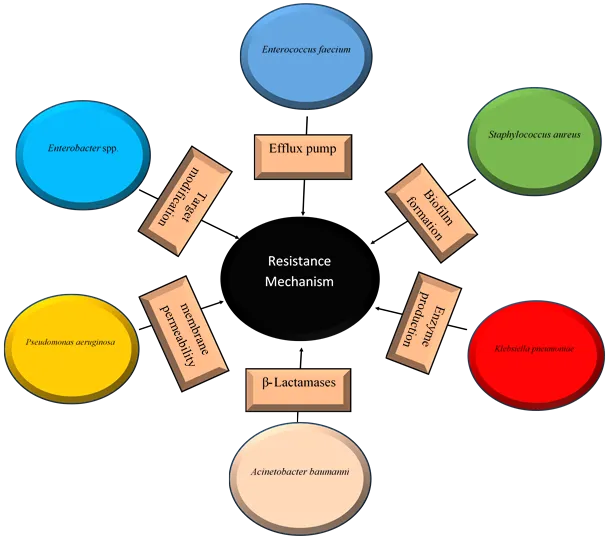
Figure 1: Overview of ESKAPE Pathogens and Their Resistance Mechanisms
Phytochemicals as Antimicrobial Agents
Phytochemicals are naturally occurring bioactive compounds produced by plants as part of their defence against herbivores, pathogens, and environmental challenges. These metabolites have recently garnered strong interest for their therapeutic potential, especially as antimicrobial agents effective against multidrug‑resistant organisms. Unlike many conventional antibiotics that target a single molecular site, phytochemicals often act on multiple targets, which helps lower the risk of resistance development [15]. Classes such as alkaloids, flavonoids, terpenoids, tannins, and saponins have shown inhibition of a broad spectrum of microbes, including clinically important ESKAPE pathogens [16]. Their structural diversity enables a variety of antimicrobial mechanisms, ranging from disruption of microbial membranes to suppression of virulence factors and interference in regulatory systems [17]. Together, these traits support phytochemicals as promising candidates for alternative or adjunctive antimicrobial therapies.
Overview of Plant Secondary Metabolites
Plant secondary metabolites are broadly classified into alkaloids, phenolics (including flavonoids, tannins, and coumarins), terpenoids (mono‑, sesqui‑, and triterpenes), and glycosides. Although not essential for primary metabolism, these compounds play crucial ecological roles in plant defence and adaptation [18]. Alkaloids, such as berberine and quinine, exhibit strong antibacterial activity through mechanisms including DNA intercalation and inhibition of protein synthesis, while flavonoids like quercetin and apigenin disrupt bacterial cell walls, modulate efflux pumps, and inhibit biofilm formation. Terpenoids (e.g. thymol, carvacrol) destabilize microbial membranes and impair respiration, whereas tannins and phenolic acids act by precipitating proteins and inhibiting enzyme activity. This structural and functional diversity imparts a wide spectrum of antimicrobial effects, allowing many plant‑derived compounds to selectively inhibit both Gram‑positive and Gram‑negative bacteria, including strains resistant to conventional antibiotics [19,20].
Mechanistic Basis of Antimicrobial Activity
The antimicrobial efficacy of phytochemicals often depends on their capacity to attack multiple cellular processes simultaneously, which helps reduce the likelihood of resistance. For example, terpenoids and saponins have been shown to compromise bacterial membranes and envelope integrity: saponins isolated from Achyranthus aspara inhibited Staphylococcus aureus growth in a dose‑dependent manner, consistent with actions on cell envelopes [21]. Flavonoids such as quercetin interfere with quorum sensing pathways and inhibit biofilm formation; in Pseudomonas aeruginosa PAO1, quercetin significantly reduced expression of QS genes (lasI, lasR, rhlI, rhlR), virulence factors, and biofilm formation at sub‑MIC concentrations [22]. Curcumin, especially when formulated (e.g. liposomes) or in combination with agents like honey, similarly disrupts QS‑regulated phenotypes, including motility, enzyme production, and biofilm formation, without necessarily killing cells outright [23,24]. Conessine has been identified as an inhibitor of multidrug efflux pumps in Pseudomonas aeruginosa, which can restore antibiotic accumulation and effectiveness [25]. Polyphenols more broadly (resveratrol, curcumin, etc.) also exert antimicrobial effects via inhibition of critical microbial enzymes and by inducing oxidative stress, for example through generation of reactive oxygen species, contributing to cellular damage [26]. Altogether, these multifaceted mechanisms highlight the promise of phytochemicals as scaffolds for developing next‑generation antimicrobials against multidrug‑resistant ESKAPE pathogens.
Phytochemicals Active Against ESKAPE Pathogens
Alkaloids
Alkaloids are a structurally diverse class of nitrogen‑containing secondary metabolites with well‑documented antimicrobial activity. Representative compounds such as berberine, sanguinarine, and related isoquinoline alkaloids exhibit inhibitory effects by binding to nucleic acids (DNA intercalation) and suppressing topoisomerase activity, thereby interfering with replication and transcription [21,22]. These compounds also disrupt cell division; for example, berberine inhibits bacterial FtsZ, a key protein in septum formation[14]. In addition, certain alkaloids function as efflux pump inhibitors (EPIs), enhancing intracellular accumulation of antibiotics and restoring drug effectiveness: resverpine (an indole alkaloid) enhances antibiotic susceptibility in multidrug‑resistant Acinetobacter baumannii and Stenotrophomonas maltophilia by inhibiting efflux pumps [14]. Collectively, the capacity of alkaloids to target multiple cellular processes and virulence determinants underscores their promise in combatting multidrug‑resistant ESKAPE pathogens.
Flavonoids
Flavonoids, including quercetin, apigenin, and catechin, show robust antimicrobial properties via multiple mechanisms, such as disrupting cell wall or membrane integrity, inhibiting nucleic acid synthesis, and attenuating quorum sensing [27]. Notably, quercetin has been demonstrated to strongly inhibit biofilm formation and virulence factor production in Pseudomonas aeruginosa — it reduces expression of QS genes (lasI, lasR, rhlI, rhlR), decreases pyocyanin, elastase, protease production, and suppresses biofilm mass even at sub‑MIC levels [28,29]. There is also emerging (though more limited) evidence of antibiofilm effects of quercetin against Acinetobacter baumannii, pointing toward its potential as a natural antibiofilm agent for multidrug‑resistant ESKAPE pathogens.
Terpenoids
Terpenoids such as thymol, carvacrol, and lupeol exert antimicrobial effects by disrupting bacterial membranes, impairing respiration, and inducing oxidative stress [29,30]. These compounds are especially effective against Gram-positive pathogens including Enterococcus faecium and Staphylococcus aureus, while also demonstrating inhibitory activity against Gram-negative ESKAPE pathogens such as Klebsiella pneumoniae and Pseudomonas aeruginosa [30]. Their multifaceted mechanisms contribute to membrane depolarization, biofilm reduction, and interference with bacterial energy metabolism, highlighting their potential as broad-spectrum antimicrobial agents.
Phenolics and Polyphenols
Phenolic compounds, including gallic acid, tannins, and curcumin, exert antimicrobial effects through protein precipitation, inhibition of essential microbial enzymes, and scavenging of free radicals that support bacterial survival [18]. In addition to these primary effects, polyphenols such as resveratrol and curcumin have been shown to suppress bacterial virulence factors and interfere with efflux pump activity, thereby increasing the susceptibility of pathogens like Escherichia coli and Enterobacter species to conventional antibiotics [26,30]. These mechanisms highlight the potential of phenolics as effective adjuncts in the treatment of infections caused by multidrug-resistant organisms.
Saponins
Alkaloids represent a diverse group of nitrogen-containing secondary metabolites with broad antimicrobial activity. Compounds such as berberine, quinine, and sanguinarine have been shown to act against Staphylococcus aureus and Klebsiella pneumoniae by intercalating into DNA, inhibiting topoisomerases, and disrupting cell division [15,16]. Their ability to modulate efflux pumps and impair bacterial virulence factors makes them particularly effective against multidrug-resistant strains of ESKAPE pathogens [18,23,25].
Other Bioactive Compounds
In addition to the above classes, coumarins, lignans, and essential oils contribute to antimicrobial defense against ESKAPE pathogens. For instance, coumarins have been shown to inhibit bacterial DNA gyrase, while essential oils rich in eugenol and cinnamaldehyde interfere with quorum sensing and biofilm development. Such compounds highlight the untapped reservoir of structurally diverse phytochemicals that can be harnessed as alternative or adjunct therapeutics in combating antimicrobial resistance.
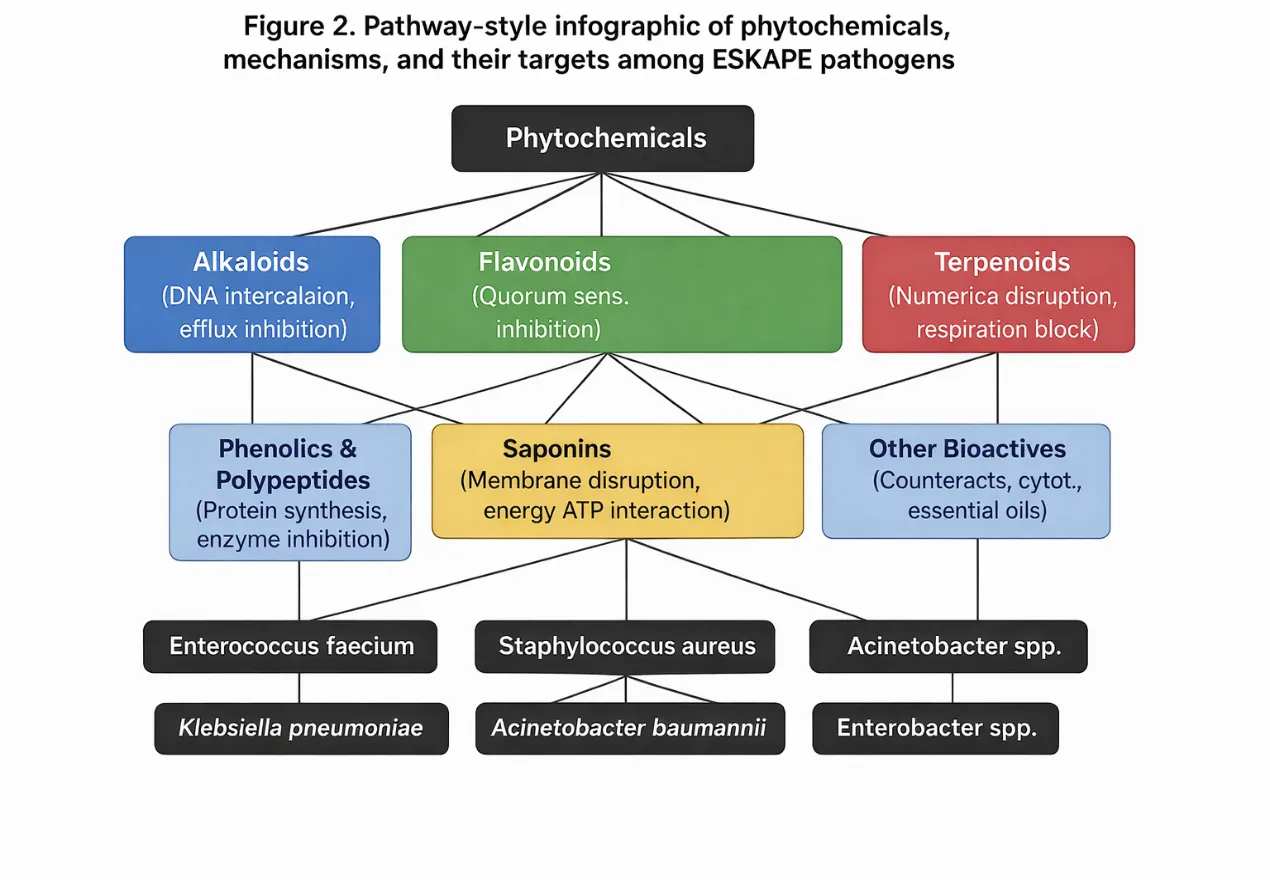
Figure 2: Pathway-style infographic of phytochemicals, mechanisms, and their targets among ESKAPE pathogens
Mechanisms of Action of Plant-Derived Compounds
Plant-derived compounds exert their biological effects through diverse mechanisms, targeting multiple cellular and molecular pathways:
Table 1: Mechanisms of Action of Plant-Derived Compounds
|
Mechanism of Action |
Phytochemicals Involved |
Description / Effect |
Example |
|
Cell Wall & Membrane Disruption |
Terpenoids, Saponins, Essential Oils |
Integrate into lipid bilayers, increase permeability, cause leakage and cell lysis |
Terpenoids disrupting bacterial membranes
|
|
Enzyme Inhibition |
Alkaloids, Flavonoids, Phenolics |
Inhibit key microbial or host enzymes, affecting DNA/protein synthesis and metabolism |
Flavonoids inhibiting DNA gyrase |
|
DNA/RNA Interference |
Alkaloids (Berberine, Quinoline) |
Intercalate into nucleic acids, preventing transcription and replication |
Berberine blocking bacterial DNA replication |
|
Oxidative Stress Induction |
Polyphenols, Quinones |
Generate reactive oxygen species (ROS), causing damage to lipids, proteins, nucleic acids |
ROS-induced apoptosis in cancer cells |
|
Anti-Quorum Sensing & Biofilm Disruption |
Flavonoids, Terpenoids, Phenolics |
Inhibit bacterial communication, reduce biofilm formation and virulence |
Flavonoids reducing biofilm in Pseudomonas |
|
Immunomodulatory Effects |
Polysaccharides, Flavonoids |
Enhance host defence via cytokine modulation, phagocytosis, or NK cell activity |
Polysaccharides from Fabaceae stimulating macrophages |
Synergistic Potential with Conventional Antibiotics
Plant-derived compounds exhibit remarkable synergistic potential when combined with conventional antibiotics, offering an effective strategy to combat antimicrobial resistance. Such synergy is achieved through diverse mechanisms, including inhibition of bacterial efflux pumps, increased membrane permeability, disruption of biofilms, and inhibition of resistance enzymes such as β-lactamases. By facilitating antibiotic entry, restoring sensitivity, and weakening microbial defence systems, phytochemicals like flavonoids, alkaloids, terpenoids, and phenolics significantly enhance antibiotic efficacy. This interaction not only reduces the required dosage of antibiotics but also minimizes adverse effects and delays the emergence of resistant strains, highlighting the therapeutic relevance of combining natural products with existing antimicrobial agents.
Advances in Phytochemical Delivery Systems
Despite their therapeutic promise, many phytochemicals are hindered by poor solubility, instability, and low bioavailability, which restrict their clinical translation. Advances in nanotechnology-based delivery systems have addressed these limitations by improving stability and pharmacokinetics. Liposomes, polymeric nanoparticles, and solid lipid nanoparticles have been shown to enhance solubility and protect bioactive compounds from degradation (7,9). Nano emulsions and micelles further increase dispersibility and intestinal absorption of hydrophobic phytochemicals, thereby improving systemic availability [16,18]. Biopolymer-based carriers such as chitosan and alginate provide biocompatibility and controlled release, making them suitable for safe therapeutic applications [19]. Moreover, ligand-functionalized nanocarriers allow site-specific targeting, minimizing systemic toxicity while maximizing therapeutic efficiency [20,23]. Collectively, these strategies significantly enhance the efficacy and safety of phytochemicals, bridging the gap between experimental findings and clinical application.
|
Delivery System |
Description / Advantage |
Examples of Phytochemicals |
Reference |
|
Liposomes |
Biocompatible lipid vesicles; enhance solubility, stability, and targeted delivery |
Curcumin, Quercetin |
Patra et al., 2018 |
|
Polymeric Nanoparticles |
Provide controlled release, protect against degradation, improve bioavailability |
Resveratrol, Epigallocatechin gallate (EGCG) |
Sharma et al., 2019 |
|
Solid Lipid Nanoparticles (SLNs) |
Stable carriers with high drug loading capacity; prolonged release |
Curcumin, Genistein |
Ansari et al., 2021 |
|
Dendrimers |
Highly branched nanostructures; improve solubility and allow surface modifications |
Quercetin, Naringenin |
Mousa & Bharali, 2019 |
|
Nanoemulsions |
Improve dispersibility of hydrophobic compounds; rapid absorption |
Curcumin, Thymol |
Patra et al., 2018 |
|
Micelles |
Amphiphilic carriers that solubilize poorly water-soluble compounds |
Resveratrol, Kaempferol |
Ansari et al., 2021 |
|
Biopolymer-based Systems |
Biodegradable, safe carriers using chitosan, alginate, or starch; enhance mucoadhesion |
Curcumin, Catechins |
Ansari et al., 2021 |
|
Ligand-functionalized Nanoparticles |
Provide targeted delivery, reduce systemic toxicity |
Curcumin, Paclitaxel (plant-derived alkaloid) |
Mousa & Bharali, 2019 |
Phytochemicals and Resistance Modulation
Phytochemicals play a crucial role in modulating antimicrobial resistance by targeting multiple resistance mechanisms in pathogenic microorganisms. Secondary metabolites such as alkaloids, flavonoids, terpenoids, and phenolics can act as efflux pump inhibitors, thereby preventing the extrusion of antibiotics and restoring drug sensitivity [18,23,25]. In addition, several compounds disrupt biofilm formation and quorum sensing, reducing bacterial virulence and enhancing the efficacy of conventional antibiotics [9,22,24]. Certain phytochemicals also inhibit resistance enzymes, including β-lactamases, thus protecting antibiotics from degradation [6,15]. Furthermore, by enhancing membrane permeability, phytochemicals facilitate antibiotic uptake and potentiate antimicrobial activity [16,19]. Collectively, these mechanisms highlight the potential of plant-derived compounds as resistance-modifying agents, offering a promising adjunct strategy to counter multidrug resistance.
Preclinical and Clinical Investigations
Preclinical and clinical studies provide essential insights into the therapeutic potential of phytochemicals, bridging the gap between laboratory research and clinical application. Preclinical investigations, including in vitro assays and in vivo animal models, have demonstrated antimicrobial, anticancer, antioxidant, and anti-inflammatory properties of numerous plant-derived compounds [19]. These studies help establish pharmacokinetics, toxicity profiles, and mechanisms of action, which are crucial for further clinical evaluation. Clinical trials have validated the safety and efficacy of several phytochemicals, such as curcumin, resveratrol, and quercetin, in managing infections, metabolic disorders, and inflammatory diseases [7,20]. However, challenges such as low bioavailability, variability in plant extracts, and limited large-scale clinical data restrict their widespread therapeutic use. Advances in delivery systems and standardization techniques are expected to overcome these hurdles, paving the way for integration of phytochemicals into mainstream medicine.
Challenges and Future Perspectives
Despite their immense therapeutic promise, the translation of phytochemicals into mainstream medicine faces several challenges that must be addressed for successful clinical application.
Standardization and Quality Control of Plant Extracts
One of the major limitations is the variability in phytochemical content due to differences in plant species, growing conditions, harvesting methods, and extraction techniques. Lack of standardized protocols often leads to inconsistent efficacy and safety profiles, highlighting the need for robust quality control measures and validated analytical techniques.
Regulatory and Translational Hurdles
Unlike synthetic drugs, phytochemicals and herbal formulations face complex regulatory pathways, which vary across countries. Issues related to patentability, large-scale production, reproducibility of clinical outcomes, and insufficient toxicological data further hinder their translation into approved therapeutics.
Integrating Phytochemicals into Antimicrobial Stewardship
With rising antimicrobial resistance, phytochemicals hold potential as antibiotic adjuvants. However, their integration into antimicrobial stewardship programs requires evidence-based clinical guidelines, multidisciplinary collaboration, and awareness among healthcare providers. Bridging this gap will demand rigorous clinical trials, advanced delivery systems, and stronger regulatory frameworks.
CONCLUSION
Summary of Current Evidence
Phytochemicals have emerged as promising alternatives and adjuncts in the fight against antimicrobial resistance, particularly against the multidrug-resistant ESKAPE pathogens. Evidence from in vitro, in vivo, and early clinical studies highlights their diverse mechanisms of action, including disruption of microbial membranes, inhibition of resistance enzymes, efflux pump suppression, and biofilm interference. Advances in nanotechnology-driven delivery systems have further improved their solubility, stability, and targeted activity, addressing major limitations of conventional plant extracts. Moreover, synergistic interactions between phytochemicals and antibiotics demonstrate their potential in restoring antibiotic efficacy and reducing resistance development.
Outlook for Phytochemicals in Combating ESKAPE Pathogens
Looking forward, phytochemicals represent a valuable resource for next-generation antimicrobial strategies. Their ability to modulate resistance mechanisms and enhance host immunity positions them as strong candidates for integration into antimicrobial stewardship programs. However, challenges related to standardization, bioavailability, regulatory approval, and large-scale clinical validation must be addressed to enable their widespread application. Future research should focus on systematic preclinical and clinical evaluations, development of advanced delivery systems, and translational frameworks. With continued innovation and multidisciplinary collaboration, phytochemicals hold significant promise as effective therapeutic tools in combating ESKAPE pathogens and mitigating the global antimicrobial resistance crisis.
REFERENCES

Mayank Singh*, Deepak Kumar Saini, R. P. Singh, Amita Arjariya, Plant-Derived Phytochemicals as Potential Therapeutic Agents Against ESKAPE Pathogens: Recent Advances, Int. J. Med. Pharm. Sci., 2026, 2 (7), 468-477. https://doi.org/10.5281/zenodo.21273925
 10.5281/zenodo.21273925